

Moderate Wine Consumption
in the Prevention of Metabolic Syndrome
and its Related Medical ComplicationsThis section is compiled by Frank M. Painter, D.C.
Send all comments or additions to: Frankp@chiro.org


FROM: Endocr Metab Immune Disord Drug Targets 2008 (Jun); 8 (2): 89–98
Ling Liu1 • Yu Wang • Karen S.L. Lam • Aimin Xu
Department of Medicine,
The University of Hong Kong,
L8-40, 21 Hong KongThe metabolic syndrome (MetS) encompasses a constellation of cardio-metabolic abnormalities associated with a high risk of developing type 2 diabetes and cardiovascular disease (CVD), the top killer in the ageing population. Recent studies have demonstrated multiple beneficial effects of moderate wine consumption in the protection against development of the MetS and its related medical complications. The association of moderate wine consumption with lower incidence of the MetS and atherosclerotic heart disease has been repeatedly documented in numerous epidemiological studies on diverse ethnic groups. In addition to the favorable effects of moderate ethanol intake on lipid profiles, polyphenols enriched in red wine possess multiple benefits on the MetS beyond alcohol through their anti-oxidant, anti-inflammatory, vascular-protective and insulin-sensitizing properties. Notable among these red wine polypheolic compounds is resveratrol, a phytoalexin that has recently attracted great attention due to its role in mimicking calorie restriction. This compound can act as a potent activator of the NAD(+)-dependent deacetylases sirtuins to expand the life span and to prevent the deleterious effects of excess intake on insulin resistance and metabolic derangement. In addition, resveratrol exerts its multiple protective effects against the MetS through stimulating AMP-activated protein kinase and promoting mitochondria biogenesis. In this review, we highlight the recent epidemiological and experimental evidences supporting the protective effects of moderate wine intake against the MetS and its associated cardio-metabolic complications, and discuss the molecular mechanisms underlying the multiple beneficial actions of red wine polyphenols with the focus on resveratrol.
From the FULL TEXT Article:
INTRODUCTION
As a consequence of excess calorie intake and physical inactivity, the prevalence of the metabolic syndrome (MetS, also called “X” syndrome or the insulin resistance syndrome) has rapidly increased to an epidemic level worldwide. In 2001, the National Cholesterol Education Program Adult Treatment Panel III (NCEP ATP III) introduced the metabolic syndrome [MetS] as a clinically useful description of a commonly observed clustering of cardio-metabolic risk factors, including central obesity, atherogenic dyslipidemia (e.g., high triglycerides and low HDL cholesterol), high blood pressure, and elevated blood glucose levels.
According to the ATP III criteria, a diagnosis of metabolic syndrome can be made when ≥3 of 5 metabolic risk factors are present in an individual patient. Based on this definition, approximately 10-30% of the adult population in industrialized countries suffer from the MetS. [1] In addition, the pro-inflammatory and pro-thrombotic states have recently been proposed as the key components of the MetS. [2] In particular, high sensitivity C-reactive protein (hs-CRP), an easily measurable biomarker of inflammation, adds to the prognostic value of the MetS at all levels of severity.
The MetS is associated with significantly increased risks for both diabetes and cardiovascular disease . In subjects with the MetS, relative risk for coronary heart disease ranges from 2 to 4 folds depending on the stage of progression. [3] When diabetes is not yet present, the risk of subjects with the MetS to develop type 2 diabetes is approximately 5-fold higher than those individuals without the syndrome. Once diabetes develops, cardiovascular risk increases further.
Cardiovascular mortality is now the major cause of death in diabetic patients. Furthermore, the MetS also heightens risks for fatty liver, athrititis, neurodegenerative and certain types of cancers. Therefore, reducing the risk components of the MetS through therapeutic interventions represents the most effective strategy to combat diabetes, cardiovascular mortalities as well as other obesity-related medical complications.
Despite the fact that calorie excess induces the MetS, some populations enriched with high fat diet, such as Greek and French, suffer relatively low incidence of coronary heart disease when compared to those with similar genetic background and classical cardio-metabolic risk factors. Growing evidence suggests that this so-called “French Paradox” phenomenon is attributed, at least in part, to the habit of regular wine consumption. Recent data from both animal-based studies and clinical investigations of diverse ethnic groups have consistently demonstrated the multiple beneficial effects of moderate wine intake in the protection against the development of the MetS and its related cardiovascular mortalities.
Resveratrol, a polyphenolic compound enriched in red wine, has recently attracted enormous attention because of its potential effects in mimicking calorie restriction to combat the ageing process induced by nutrient excess. [4] In this review, we highlight recent evidences from both basic and clinical studies supporting the beneficial effects of the polyphenolic constitutes from red wine in reducing the cardio-metabolic risks. In addition, the cellular mechanisms underlying the multiple metabolic actions of polyphenols will be discussed, with the particular focus on resveratrol.
Editor's Note: In 2016, a journal article [J Nutrition, Health & Aging] revealed that resveratrol, all by itself (as many supplement providers crammed it into their supplements) was not all that effective when it was severed from the many other red wine polyphenols found in grape-based wine. It (resveratrol) was effective BECAUSE of the synergy provided it by standing side-by-side with a spectrum of other polyphenols.
MAJOR BIOACTIVE COMPONENTS OF WINE
Wine is a term commonly used to refer to a diverse commodity class composed of the yeast fermentation products of the juice extracted from grapes. [5] Although wine is a product from fruit, the fermentation process induces a variety of chemical changes in the juice. Currently, over 500 chemical compounds have been identified in wine, of which 160 are esters, with the concentrations of the major components ranging between 10-1 and 10-6 mg/L. [6] Although the individual contribution of each compound is believed to have limited effect on human organoleptic (taste) perception, collectively their contribution may be very significant.
The number of aromatic and sapid (taste and mouth-feel) compounds extracted from grapes is relatively few when compared to the total number of compounds, however, these are the metabolic by-products of yeast fermentation. [6] The taste and mouth-feel sensations come primarily from a few compounds that have concentrations >100mg/L, including ethanol, organic acids, sugars, and glycerol. [6] Of all the components in the wine, ethanol and polyphenols have been identified as the major bioactive components involved in the cardio-metabolic protections. Ethanol is the most abundant form of alcohol found in wine. In general, ethanol concentrations in wine range between 10-13%. [6]
Polyphenols are a large and complex group of chemical compounds which have significant importance in determining the characteristics and quality of red wines. The concentrations of polyphenols in red wine are much higher than those in white wine, and this difference may account for the more pronounced protective effects of red wine against cardio-metabolic dysfunctions (discussed in detail below).
The polyphenolic components of wine can be roughly divided into two classes, namely, nonflavonoids and flavonoids. The nonflavonoids include hydroxybenzoic acids, hydroxycinnamic acids and stilbenes, while flavonoids encompasses flavonols as well as anthocyanins. In the non-flavonoids class, stilbenes have attracted most of the attention. Stilbenes, known to occur predominantly in spermatophytes, are the main phenolic antifungal phytoalexins which are usually synthesized in response to stress, injury, fungal infection and UV radiation. [6] The basic chemical structural skeleton of stilbenes is made up of two aromatic rings connected by a methylene bridge. Variations in the number and position of hydroxyl groups, the steric configurations, and the ability to form dimers, trimers or large polymers ensure a diversity in the number of stilbene related compounds. Resveratrol is the most extensively studied stilbene. [6]
BIOSYNTHESIS AND CHEMICAL PROPERTIES OF RESVERATROL
Resveratrol (3’,4’,5’ trihydroxystilbene) is a naturally occurring phytoalexin produced by some spermatophytes in response to injury, or fungal attack. [7] It is synthesized by the roots of Polygonum Capsidatum (“Kojokon” in Japanese) which have been used extensively in oriental folk medicine. [8] When invaded by fungi, resveratrol is synthesized from p-coumaroyl CoA and malonyl CoA. [9] Fungal infections are more common in cooler climates and as a consequence wine from grapes grown in cooler climates have higher concentrations of resveratrol. [10] The mechanisms responsible for resveratrol synthesis in healthy plants involve the generation of a chemical signal by the host to regulate the activity of stilbene synthase, an enzyme responsible for resveratrol biosynthesis termination. This regulation leads to the accumulation of resveratrol.
Resveratrol is present in a variety of plants, such as eucalyptus, spruce, lily, and also in some food such as mulberries and peanuts. The most abundant natural sources are Vitisvinifera, -labrusca, and -muscadine grapes which are used for the wine production. A fluid ounce of red wine contains approximately 160 Jg of resveratrol. Although grape skins contain the highest concentration of resveratrol (50-100 Jg per gram) [11], this compound is also found in the grape root, seeds, vines and stalks. [12]
Resveratrol exists as two isomeric forms, namely, cisand trans- isomers. [13] The basic chemical structure of resveratrol is made up of two phenol rings linked by a styrene double bond. The trans- form can undergo isomerisation to the cis-form when heated or exposed to ultraviolet irradiation. It is important to note that resveratrol, particularly its cisisoform, is readily degraded by exposure to light, heat, and oxygen. [9] The application of HPLC and gas chromatography together with mass spectrometry for the detection of resveratrol in wines have identified both the trans- and cisisomers in wines with a higher concentration of transresveratrol. [14] Interestingly, prior to fermentation, cisresveratrol was the major isoform. However, following fermentation, the end product contains greater amounts of trans-resveratrol. The relative amount of cis- and trans- resveratrol in wine is dependent on the duration of fermentation. Both cis- and trans-resveratrol can be produced by chemical synthesis and are now commercially available as a nutrient supplement.
ASSOCIATION OF ALCOHOL/WINE CONSUMPTION WITH INSULIN SENSITIVITY AND THE COMPONENTS OF THE METABOLIC SYNDROME
Numerous epidemiological studies have demonstrated the association of light-to-moderate alcohol consumption with improved insulin sensitivity. A cross-sectional analysis of 1,196 white, African-American, and Hispanic men and women from the Insulin Resistance and Atherosclerosis Study (IRAS) showed an inverse “U-shaped” relationship between alcohol intake and insulin sensitivity, as well as fasting insulin, the lipid and blood pressure measures. [15] This study also suggests that the enhanced insulin sensitivity associated with light-to-moderate alcohol consumption is the consequence of decreased body weight index (BMI) and central adiposity. A U-shaped relationship between the amount and frequency of alcohol consumption and fasting triglyceride, fasting glucose, hemoglobin A1c, and index of insulin resistance measurements was also reported in a cohort including 486 severely obese subjects. [16] These authors proposed that light to moderate alcohol consumption should not be discouraged in the severely obese. In a population-based study of clinically healthy men (n=391), alcohol consumption was found to be independently and positively associated with insulin-mediated glucose uptake, as measured by the euglycaemic hyperinsulinaemic clamp. [17] Notably, in a 10-year prospective study in Denmark with a sample of 2,916 men and 3,970 women, it was found that the moderate consumption of beer and spirits was associated with later high waist circumference, whereas moderate consumption of wine apparently had the opposite effect. [18] This study further highlights the additional benefit of wine consumption compared to other types of alcoholic drinks.
Another favorable effect of alcohol consumption is to increase plasma levels of HDL cholesterol, a key component of the MetS. [18] A linear association between alcohol and wine intake with the number of HDL particles has been repeatedly documented. [20, 21] Chronic consumption of red wine has also been shown to decrease the fasting concentration of LDL cholesterol in postmenopausal women. [22] Furthermore, moderate alcohol consumption is negatively associated with glucose intolerance and C-reactive protein (CRP), an inflammatory factor related to the MetS. [23]
Several recent studies have also addressed the relationship between alcohol consumption and the MetS as defined by the criteria of NCEP ATP III. In a cross-sectional study involving 8,125 participants from the Third US National Health and Nutrition Examination Survey, it was found that subjects who consumed 1 to 19 alcoholic drinks per month had a one-third lower risk of having the MetS, while those who consumed more than 20 drinks a month had about 66% lower prevalence of the syndrome compared to those nondrinkers. [24] In particular, alcohol consumption was inversely associated with the prevalence of the following three components of the MetS: low serum HDL cholesterol, elevated serum triglycerides, high waist circumference, as well as hyperinsulinemia. These associations are stronger among drinkers of wine than of liquor, suggesting that additional components in wine other than alcohol might play a role. Consistent with this, the association of alcohol consumption with a lower frequency of the MetS was also observed in another cohort including 4,510 white participants of the National Heart, Lung, and Blood Institute Family Heart Study. [25]
In a cross-sectional study based on the Canadian population, the frequency of alcohol consumption was significantly lower in subjects with the MetS compared to those without the MetS. [26] Among 6,805 women in Sweden, in comparison with nondrinkers, alcohol consumption of <12 and 12 to 23 g/d was associated with lower prevalence odds of one or more features of the MetS [OR (95% CI): 0.71 (0.63 to 0.81) and 0.78 (0.65 to 0.93), respectively, adjusting for age, bone density, perimenopausal status, family history of hypertension, and exercise]. [27] Data from the Korean National Health and Nutrition Examination Survey [28] also found that Korean men and women consuming 1 to 14.9 g/d of alcohol had 20% lower prevalence of the MetS than nondrinkers. On the other hand, this study also showed a significantly higher frequency of the MetS in those heavy drinkers, suggesting a “U-shaped” relationship between alcoholic consumption and this syndrome.
ALCOHOL/WINE CONSUMPTION AND THE INCIDENCE OF
DIABETES AND CARDIOVASCULAR DISEASE
Howard and colleagues have recently conducted a systematic meta-analysis of 32 published epidemiological studies to address the relationship between alcohol consumption and the incidence of type 2 diabetes. [29] This analysis found that the majority of these epidemiological surveys consistently demonstrated the beneficial effects of moderate alcohol consumption in reducing the risk and incidence of type 2 diabetes in diverse ethnic groups. Compared with no alcohol use, moderate consumption (one to three drinks per day) is associated with 33% to 56% lower incidence of diabetes. The reduced risk is seen both in men and in women, although it should be noted that few studies investigated this issue in women. From a mechanistic point of view, a protective effect of moderate alcohol consumption is compatible with findings that alcohol can enhance insulin sensitivity. Consistent with this, the protective effect of moderate alcohol intake against diabetes was also reported in another meta-analysis including 13 cohorts. [30]
The effect of high alcohol intake on the risk of type 2 diabetes is still a matter of debate. Several reports showed no obvious effects of heavy alcohol consumption on the risk of diabetes. [31, 321] By contrast, other studies demonstrated an increased risk of diabetes in high alcohol consumers. [33, 34] In a 20-year follow-up of the Finnish Twin Cohort Study involving 22,778 subjects, it was found that moderate alcohol consumption reduced the risk of type 2 diabetes, while binge drinking and high alcohol consumption increased the risk of the disease [35], suggesting a “U-shaped” relationship reminiscent of that observed between alcohol consumption and the MetS
Numerous studies have used a J-shaped or U-shaped curve to describe the relationship between alcohol use and cardiovascular mortality. [36] The nadir of the curves based on recent meta-analysis suggested optimal benefit at approximately half a drink per day. Fewer than 4 drinks per day in men and fewer than 2 per day in women appeared to confer benefit. Reductions in cardiovascular death and nonfatal myocardial infarction were also associated with light to moderate alcohol intake. Heavy drinking was associated with an increase in mortality, hypertension, alcoholic cardiomyopathy, cancer, and cerebrovascular events, including cerebrovascular hemorrhage.
Paradoxically, light-to-moderate alcohol use actually reduced the development of heart failure and did not appear to exacerbate it in most patients who had underlying heart failure. In a large-scale multinational casecontrolled study, zero alcohol consumption was shown to be a risk factor for myocardial infarction. [37] Additionally, regular and moderate alcohol intake with meals has been considered to form part of the Mediterranean diet [38] and may explain the beneficial effects of a Mediterranean lifestyle on cardiovascular dysfunctions.
ADDITIONAL BENEFITS OF RED WINE CONSUMPTION
OVER OTHER ALCOHOLIC BEVERAGES
Epidemiological Surveys
Mounting evidence suggests that red wine consumption has additional advantages over other types of alcoholic beverages in the protection against cardio-metabolic disorders. Alsace, a region of France where consumption of white wine is high, has a 50% higher mortality compared to the red wine drinking Mediterranean areas [39] despite people from Alsace having lower serum cholesterol levels. [40] The evidence supporting for a more pronounced protective effects of red wine compared with other alcoholic beverages was first emerged from the Copenhagen Heart Study, which was conducted prospectively over 12 years in 13, 285 men and women. [41]
This study showed that the cardiovascular mortality in subjects with light to moderate wine intake was 50% lower than those non-drinkers. On the other hand, beer and spirit drinker did not experience this benefit. These findings were reinforced when the same group conducted pooled cohort studies in which the type of alcohol consumed, smoking status, educational level, physical activity and BMI were assessed at baseline. [42] Compared with non-drinkers, light drinkers who avoided wine had a relative risk for death from all causes of 0.90 (96% CI: 0.82-0.99), whereas those wine consumers had s relative risk of 0.66 (95% CI: 0.55-0.77), further supporting the notion that wine intake has beneficial effects on all cause mortality that is additive to the protection afforded by alcohol.
A similar phenomenon was also observed in a study on 36,250 healthy French men, which showed moderate intake of wine, but not other forms of alcohol, reduced overall mortality from all-causes over 12-18 years. [43] Furthermore, a meta-analysis involving 209,418 subjects pooled from 13 study cohorts demonstrated that the risk reduction of vascular diseases associated with wine intake was more profound than beer consumption. [44] By contrast, a large prospective cohort study among 128, 934 adults of a Northern California prepaid healthcare program have failed to see any major additional benefits associated with red wine consumption. [45]
The discrepancy between these epidemiological investigations can be explained by differences in the risk factor patterns among beer, spirit and wine consumers [46], the pattern of alcohol consumption, the presence of other confounding lifestyle factors [47], or differences in socioeconomic status and distinct type of wine consumed. Notably, a greater reduction of cardiovascular risk associated with red wine consumption compared with other alcoholic beverages has always been observed in the Europeans, but not Americans. [48] There was increasing evidence suggesting that the type of red wine consumed from different country origin may influence the beneficial effects that is conferred. [49]
Randomized Human Trials
In addition to the aforementioned epidemiological data, the additional beneficial effects of red wine consumption compared with alcoholic beverages was also supported by numerous interventional studies in humans using both regular and de-alcoholized red wines. When healthy volunteers were given equivalent doses of red or white wine, red wine raised HDL-cholesterol and decreased LDL-cholesterol significantly greater compared with white wine. [50] In addition, plasma anti-oxidant status was increased after consumption of red wine, but decreased significantly after consumption of white wine. Another study on healthy volunteers demonstrated that consumption of red wine, but not white wine or vodka, increased coronary flow-velocity reserve. [51] In patients with coronary artery disease, 250 mL of regular or de-alcoholized red wine acutely decreased arterial stiffness as well as peripheral and central diastolic blood pressures0 [52]. Consumption of either regular or de-alcoholized red wine with the same volume (250 mL) has been shown to be equally effective in counteracting the smoking-induced increase in peripheral systolic blood pressure and in reducing adverse post-smoking arterial wave reflections. [53]
Alcohol-free red but not white wine significantly enhanced plasma antioxidant capacity in humans, primarily due to the high contents of polyphenolic compounds enriched in red wine. [54] Acute intake of either regular or de-alcoholized red wine, but not Japanese vodka, greatly improved endothelium-dependent vasodilatation in healthy volunteers [55], suggesting that the beneficial effects on vaso-reactivity are mediated entirely by other constitutes of red wine instead of ethanol. Another study by Karatazi and colleagues demonstrated that acute ingestion of red wine without alcohol led to even much higher flow-mediated vasodilatation than ingestion of regular red wine in patients with coronary artery disease. [56] On the other hand, Napoli and colleagues showed that consecutive consumption of red wine for two weeks (360 mL/day) significantly improved insulin resistance in patients with type 2 diabetes (as measured by euglycemic hyperinsulinemic clamp), but had no obvious effects on endothelial dysfunction. [57]
Experimental Evidences
Consistent with the aforementioned randomized human trials, in vitro and animal-based studies also support the notion that the constituents of red wine other than alcohol confer their protective activities against cardio-metabolic disorders. Administration of red wine or grape juice inhibited in vivo platelet activity and thrombosis in stenosed canine coronary arteries. [58] However, white wine did not possess such a protective activity, suggesting that the plateletinhibitory properties are mediated by some compounds present in red wine and grape juice, but not in white wine. In line with this, chronic consumption of alcohol-free red wine was sufficient to prevent arterial thrombosis in dietaryinduced hypercholesterolemic rats. [59] De-alcoholized red but not white wine decreased atherosclerosis in apolipoprotein E gene-deficient mice. [60] In cultured human mononuclear cells, pretreatment with red wine but not vodka inhibited the activation of nuclear factor (NF)-kappa-B induced by very low-density lipoproteins. [61]
MULTIPLE PROTECTIVE EFFECTS OF RED WINE POLYPHENOLS
AGAINST CARDIOMETABOLIC DISORDERS
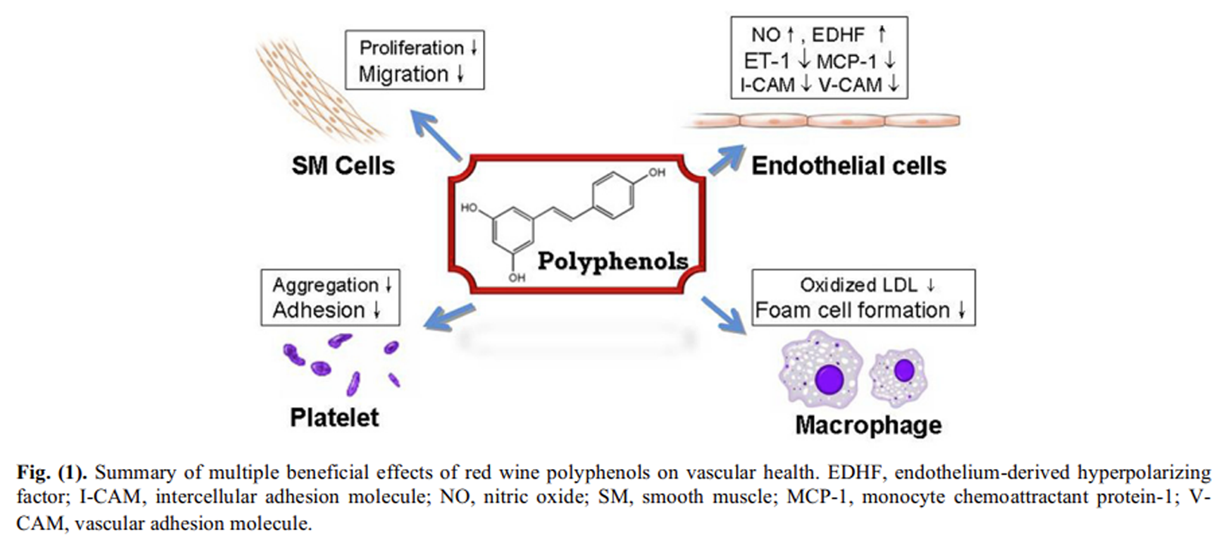
Figure 1 Red wine has much higher concentrations of polyphenols than white wines. This compositional difference has been proposed as a key mechanism to explain the “French paradox” phenomenon. Growing evidences suggest that polyphenolic compounds are the primary component conferring the additional beneficial effects of red wine beyond alcohol. In particular, numerous studies have demonstrated multiple beneficial effects of red wine polyphenols in the protection against vascular disease, a major complication of the MetS (Figure 1).
Anti-Oxidant Activities of Red Wine Polyphenols
The first demonstration of the specific benefit of polyphenols derived from red wine was reported in 1993 by Frankel and co-workers, showing that red wine diluted 1000-fold containing 10 αmol/L total phenolics inhibited LDL oxidation significantly more than α-tocopherol, a well-established antioxidant. [62] It is now generally accepted that the cardiovascular protective effects of red wine polyphenols are attributed, at least in part, to its anti-oxidant activities. [63] The anti-oxidant activity of red wine is directly proportional to the contents of the polyphenolic compounds. [64]
In atherosclerotic apolipoprotein E deficient mice, consumption of red wine or purified catechin or quercetin resulted in a significantly reduced susceptibility of LDL to oxidation and attenuated the progression of atherosclerosis. [65] The antiatherosclerotic effects of red wine polyphenols might be attributable in part to their ability to inhibit macrophage uptake of oxidized LDL, resulting in suppression of foam cell formation. [66]
Diverse polyphenols in red wine appear to possess different anti-oxidant capacities, which are related to their chemical structures. [63, 67] For example, quercetin was shown to inhibit LDL oxidation to a greater extent than catechin, although both of these polyphenols possess a similar arrangement of OH groups. The more potent antioxidant activity of quercetin against LDL oxidation is due to the 2-3 double bond and 4-oxo structure in its C ring.
Increased oxidative stress has recently been proposed as a key mechanism that links obesity with the major components of the MetS. [68] Therefore, the antioxidant activity of red wine polyphenols might also confer the protective effects against the development of the MetS.
Pleiotropic Actions of Polyphenols in the Endothelium System
The endothelium monolayer plays a key role in maintaining vascular homeostasis, through secreting a large number of bioactive substances which modulate vascular tone, coagulation, cell proliferation and inflammation. [69] Endothelial dysfunction, characterized by impaired nitric oxide (NO)-dependent vasodilatation, augmented vasoconstriction and elevated circulating biomarkers of endothelial injury (such as soluble E-selectin and VCAM-I), is intimately associated with insulin resistance and the MetS. Numerous studies on both human subjects and animal models have reproducibly demonstrated the protective effect of red wine polyphenols through enhancing the release of NO and promoting endothelium-dependent vasodilatation. [70, 71] The vasodilatory properties of red wine polyphenols may also account for the potent effects of these compounds in reducing blood pressures observed in both normal and hypertensive rats. [72, 73] In rats with chronic inhibition of NO and in angiotensin II-infused rats, two experimental models in which vascular oxidative stress mediated by the renin–angiotensin system play a major role in the development of hypertension, red wine polyphenols prevent hypertension, at least in part, by reducing vascular superoxide production.
Several mechanisms have been implicated in red wine polyphenols-mediated increase in NO production and improvement in endothelial dysfunctions. Firstly, red wine polyphenols can increase NO bioavailability through its antioxidant properties to scavenge superoxide. [6] Secondly, red wine polyphenols can enhance the activity of endothelial NO-synthase (eNOS) through inducing its phosphorylation at Ser1177. This effect of red wine polyphenols appears to be mediated by the redox-sensitive activation of PI3-kinase/Akt pathway. [74] Thirdly, chronic treatment of endothelial cells with red wine polyphenols increases eNOS expression through the transcriptional activation. [75, 76] A recent report suggests that resveratrol is the major ingredient in red wine polyphenols responsible for induction of eNOS expression, but does not account for the complete effect. [77]
The impaired eNOS activity in obesity has been proposed as a causal factor in developing the MetS. Mice with eNOS deficiency exhibit several features of the MetS, including hypertension, dyslipidemia, insulin resistance and elevated fibrinogen concentrations. [78] In humans, the genetic polymorphism of the eNOS gene are closely associated with several parameters characteristic of the MetS, including insulin resistance, inflammatory and oxidative stress markers, hypertension and albuminuria. [79] These findings raise the possibility that the protective effects of red wine polyphenols might be attributable in part to their ability to enhance the eNOS activity. In addition to induce the release of endothelial NO, red wine polyphenols modulate vascular tone through regulating other endothelial factors, such as inducing the production of endothelium-derived hyperpolarizing factor [74] and inhibiting the expression of endothelin-1, a major vasoconstrictor critically involved in coronary atherosclerosis. [80]
Another well-established effect of red wine polyphenols on the endothelium is to inhibit the cell activation and monocytes/leucocytes adhesion, through suppressing the expression of intercellular adhesion molecule 1 (ICAM-1) and vascular cell adhesion molecule 1 (VCAM-1). [71] Furthermore, red wine polyphenols have been reported to inhibit the expression of several other pro-atherosclerotic and prothrombotic factors, including monocyte chemoattractant protein-1 [81], vascular endothelial growth factor [82] and tissue factor. [83]
Suppressive Effects of Red Wine Polyphenols on
Smooth Muscle Proliferation and Migration
Augmented proliferation and migration of vascular smooth muscle cells are the key step of neointimal thickening and atherosclerotic lesion formation. At the site of the lesion formation, the most potent mitogenic and chemotactic agent for vascular smooth muscle cells is PDGF. Preincubation of vascular smooth muscle cells with red wine, but not white wine, inhibited the ligand binding and the subsequent tyrosine phosphorylation of the platelet-derived growth factor receptor (PDGFR), a key player in the pathogenesis of atherosclerosis. [84] As a consequence, red wine abrogated the ligand-induced recruitment of PDGFRassociated signaling molecules, PDGF-dependent downstream events such as ERK activation, cell proliferation and migration. In addition, red wine polyphenols have been shown to dose-dependently suppress rat smooth muscle proliferation through inhibition of P38 MAP kinase and downregulation of cyclin A expression, which in turn leads to decreased expression of the transcription factor ATF-1 and CREB (cAMP-responsive element). [85, 86] More recently, Oak and colleagues demonstrated that red wine polyphenolic compounds strongly inhibited pro-matrix metalloproteinase2 expression and its activation in response to thrombin via direct inhibition of membrane type 1-matrix metalloproteinase in vascular smooth muscle cells. [87]
Inhibition of Platelet Aggregation and Adhesion by Red Wine Polyphenols
Platelet adhesion, activation, and aggregation at sites of vascular endothelial disruption caused by atherosclerosis are key events in arterial thrombus formation. Mounting evidence suggest that this event can be suppressed by red wine polyphenols. Demrow and colleagues compared the effect of red and white wine and grape juice on platelet activity and thrombus formation in a dog model, and showed that red wine and grape juice were effective in inhibiting platelet aggregation and thrombus formation. [58] On the other hand, consumption of white wine did not produce such an effect. These authors also found that the amount of ethanol necessary to produce the anti-platelet and anti-thrombotic activity was markedly reduced when red wine rather than pure ethanol was given, suggesting that red wine contains platelet inhibitors in addition to ethanol. The purified components of red wine polyphenols (quercetin and catechin) have been shown to inhibit platelet function synergistically by antagonizing the intracellular production of hydrogen peroxide. [88] A more recent study showed that polyphenolic compounds inhibited platelet activation and aggregation through suppression of platelet endothelial cell adhesion molecule-1 (PECAM-1). [89]
RESVERATROL AS A CALORIE RESTRICTION
MIMETIC TO COMBAT THE METS
Among the major constituents of red wine polyphenols, resveratrol has been extensively investigated in the past decade due to its multiple therapeutic potential for a cluster of ageing-related diseases. The beneficial effects of resveratrol on cancer, autoimmune diseases, myocardial infarction, stroke and brain damage and neurodegenerative disorders have been discussed in several recent reviews. [4, 47] More recently, this compound regained tremendous research interest since the discovery that it activates sirtuin deacetylases and extends the lifespan of lower organisms as well as the rodent animal models. Mounting in vivo evidences suggest that resveratrol can mimic the actions of calorie restriction to protect the development of the MetS and its related complications.
Sirtuins as a Common Regulator of Calorie Restriction and the MEtS
It has recently been proposed that calorie restriction and the MetS are the opposite extremes of the same metabolic spectrum and involve an overlapping set of molecular regulators. [90] Firstly, the MetS is induced by excessive dietary intake while calorie restriction is caused by dietary restriction. Secondly, calorie restriction can antagonize the development of almost all the major component of the MetS, leading to improved glucose tolerance, decreased LDL-cholesterol and triacylglycerols, and increased HDL-cholesterol. [90] Thirdly, calorie restriction protects against many diseases associated with the MetS, such as cardiovascular disease, cancer, insulin resistance, diabetes and neurodegenerative disorders. [91, 92]
Furthermore, the MetS is associated with the accelerated ageing process whereas calorie restriction promotes longevity. Therefore, the MetS and calorie restriction can be regarded as lying at opposite ends of a balance, which can be tipped in either direction by dietary intake and physical activity. Based on this hypothesis, the molecular regulators that confer the favorable effects of calorie restriction might also contribute to the development of the MetS. In this connection, drugs targeting these molecular regulators will not only be useful in combating the ageing and its related diseases but also be effective in treating the MetS and its associated complications. Notably, recent data demonstrated that resveratrol can target several closely related key molecular regulators involved in this process, including sirtuins, PGC-1α and AMPK.
Sirtuins, named after the founding member, the Saccharomyces cerevisiae silent information regulator 2 (Sir2) protein [93], are a conserved family of nicotinamide adenine dinucleotide (NAD+) dependent deacetylases. [94] In lower organisms (such as yeast, worms and flies), overexpression of sirtuins are associated with extended lifespan. Among the seven members of mammalian sirtuins (SirT1-7), SirT1 shares highest homology to Sir2 and has been the focus of research in the past several years. In addition to its role in regulating the lifespan, sirtuins are the important regulators of glucose and lipid metabolism as well as insulin sensitivity through their direct actions on the major metabolic organs.
In adipose tissue, SirT1 promotes fat mobilization through inhibiting adipogenesis and increasing lipolysis [95]. This effect is mediated in part by SirT1-mediated suppression of the PPAR activity through deacetylation. In pancreatic β-cells, SirT1 enhances insulin secretion through inhibition of uncoupling protein 2 expression [96], and protects the cells against oxidative stress through deacetylation of FOXO proteins. [97] In the liver and skeletal muscle, SirT1 promotes mitochondria biogenesis and fatty acid oxidation through deacetylation and activation of the PPAR coactivator PGC1α (discussed in detail below).
Resveratrol as a Sirtuins Activator to Improve
Insulin Resistance and the MetS in Mice
In an in vitro screening for the activators of SirT1, resveratrol was identified as a potent stimulator of the deacetylase activity. [98] Subsequent studies demonstrated that resveratrol extends the lifespan of S. cerevisiae, Caenorhabditis elegans and Drosophila melanogaster in a Sir2-dependent manner. [99, 100] Two more recent studies have shown that resveratrol can counteract the actions of calorie excess in mammals and is effective in improving health and lifespan as well as in preventing the development of the MetS induced by high fat diet in mice. [101, 102]
Baur and colleagues investigated the effects of daily consumption of resveratrol (22.4mg/kg) in mice fed with high calorie diet [101] and their results showed that long-term treatment (6 months) shifted the physiology of middle-aged mice on a high-calorie diet towards that of mice on a standard diet and markedly increased their survival. Mostly strikingly, resveratrol treatment prevented high calorie diet-induced insulin resistance and organ pathologies, particularly fatty liver diseases. These changes were associated with increased mitochondrial number and improved motor functions. Microarray analysis revealed that resveratrol opposed the effects of the high calorie diet in 144 out of 153 significantly altered genes, most of which are involved in the ageing process and metabolism. In a concurrent study by Lagouge and colleagues, daily administration of resveratrol (400 mg/kg) was found to prevent obesity and insulin resistance in both high calorie diet-fed mice and KKy obese mice. Furthermore, treatment of mice with resveratrol significantly increased their aerobic capacity, as evidenced by their increased running time and consumption of oxygen in muscle fibers.
It is well established that mitochondrial dysfunction is causally associated with reduced longevity. In addition, impaired mitochondrial function that directs fatty acids towards storage, as opposed to oxidation, contributes considerably to intramyoecellular and hepatic lipid accumulation, which has been proposed as a key etiological factor in the pathogenesis of insulin resistance and the MetS. [103] In this connection, both studies by Baur et al. and Lagouge et al. demonstrated that the beneficial effects of resveratrol on longevity and metabolic profiles are mediated by SirT1-induced PGC-1α activation, which in turn leads to increased mitochondrial biogenesis and enhanced oxidative phosphorylation. [101, 102] In mice fed with high calorie diet, treatment with resveratrol led to increased mitochondrial number and enhanced capacity of oxidative phosphorylation in skeletal muscle as well as the liver in a SirT1-dependent manner. Mitochondrial biogenesis in liver and skeletal muscle is controlled, in large part, by the transcriptional co-activator PGC-1α. [104] Resveratrol enhanced PGC-1α activity through SirT1-mediated deacetylation [105], and also increased the protein expression of this transcriptional co-activator. [102]
AMPK as a Potential Mediator of the Resveratrol Actions
Another key mechanism mediating the beneficial effects of resveratrol on the lifespan extension and the MetS is the ability of this compound to activate AMPK, a highly conserved energy sensor involved in metabolic regulation as well as longevity. [106] Activation of AMPK leads to a series of beneficial metabolic consequences, including augmentation of fatty acid oxidation and glucose uptake in skeletal muscle, and inhibition of glucose production, lipogenesis and cholesterol synthesis in the liver. In addition, AMPK improves vascular health through activation of eNOS activity, thus leading to increased endothelial release of NO. [107] A more recent study showed that AMPK can activate PGC-1α through inducing PGC-1α phosphorylation at threonine-177 and serine-538, suggesting that AMPK promotes mitochondrial biogenesis through PGC-1α. [108]
AMPK is already a prime target for the treatment of the MetS and its related cardio-metabolic complications. Notably, metformin, a drug widely used for the treatment and prevention of the MetS, diabetes and cardiovascular dysfunctions, potently activates AMPK both in vitro and in vivo. [109]
Recent animal-based studies suggest that the beneficial effects of metformin on the MetS and vascular disorder are mediated, at least in part, by AMPK activation. [107, 110] Resveratrol has been shown to increase AMPK activity through inducing phosphorylation of its α catalytic subunit at threonine-17 in hepatocytes [111], myotubes [112] as well as Chinese Hamster Ovary (CHO) cells. [102]
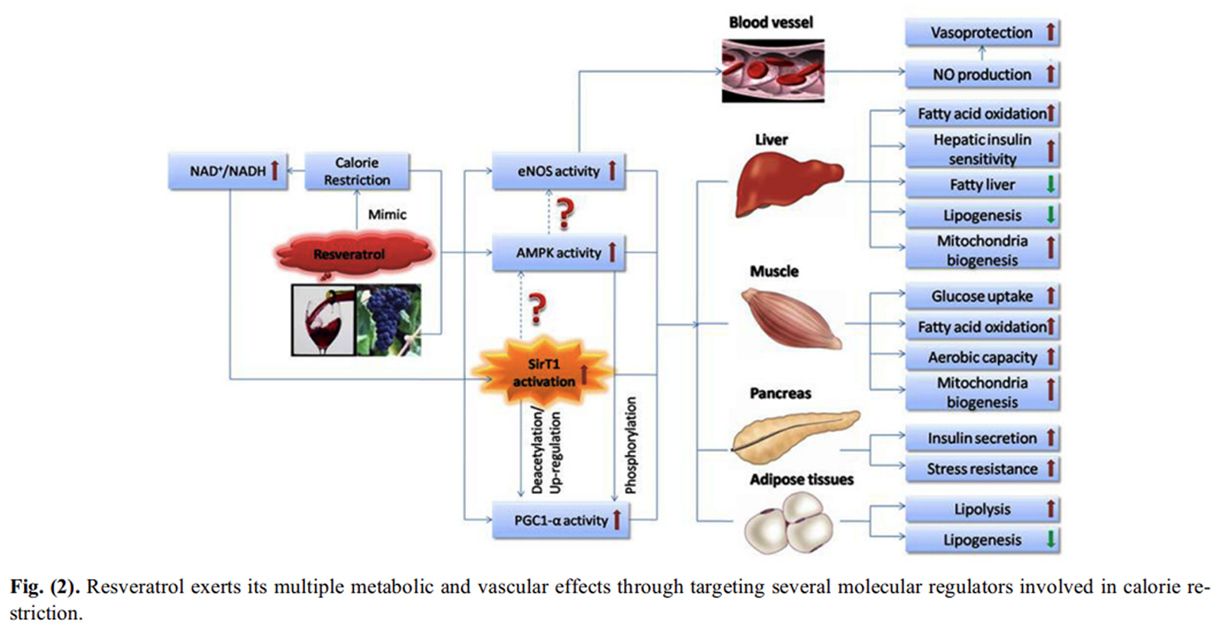
Figure 2 However, whether or not activation of AMPK by resveratrol is dependent on SirT1 has not been determined at this stage. In addition to activation of AMPK, a recent study suggests that resveratrol increases insulin sensitivity through repressing PTP1B transcription in a SirT1-dependent manner. [113] Taken together, these data demonstrated that resveratrol exerts its multiple beneficial effects on insulin sensitivity and metabolic profiles through targeting several closely related molecular regulators involved in calorie restriction (Figure 2).
SUMMARY AND FUTURE PROSPECTIVES
Mounting data from numerous epidemiological investigations, the randomized human trials and animal-based studies unanimously support the beneficial effects of moderate wine consumption in the prevention of the MetS and its associated cardio-metabolic complications, including insulin resistance, diabetes, vascular disorder and coronary heart disease. Besides the favorable effects of moderate ethanol intake on lipid profiles, polyphenols enriched in red wine exerts additional benefits beyond alcohol, through its antioxidant, anti-inflammatory, insulin-sensitizing and vasodilatory properties. Therefore, the multiple beneficial effects of red wine polyphenols might explain in part the “French Paradox” phenomenon.
Among the major constituents of red wine polyphenols, resveratrol represents the most promising ingredient that can prevent and delay the onset of a cluster of ageing-related diseases. The recent exciting discoveries that resveratrol can mimic calorie restriction to prevent the deleterious effects of excess calorie intake on longevity and metabolic profiles raises the possibility that this compound or its analogues can be used for the treatment of the leading causes of morbidity and mortality in the ageing population. Particularly striking is that resveratrol can act as an activator of sirtuins to counteract the development the major features of the MetS induced by high calorie diet, highlighting the notion that calorie restriction and the MetS are the two opposite extremities of the same metabolic spectrum and share the common molecular regulators.
Despite this promising progress, the pharmacokinetic data of resveratrol remains incomplete. The extremely rapid clearance rate of resveratrol from the circulation limits its bioavailability and therapeutic applications. Whether or not daily moderate consumption of red wine is sufficient to achieve an effective concentration in the circulation is still a matter of debate. It is also important to note that no single component can confer all the benefits of red wine polyphenols, but rather several components contribute synergistically through different mechanisms. The recent identification of procyanidins as a principal vasoactive component that mediates the vascular health of red wine polyphenols [114] warrants further comprehensive investigation of other red wine polyphenolic compounds and the synergistic interactions of these compounds in conferring their multiple health benefits on longevity, the MetS and its related complications.
References:Refer to the Full-Text article (see page 11)

Return to RESVERATROL
Since 8-31-2008
| Home Page | Visit Our Sponsors | Become a Sponsor |
Please read our DISCLAIMER |