

Long-Term, Multimodal Chiropractic Care and
Outcome Tracking in a Competitive Endurance
Athlete With Chronic Neck and
Low Back Pain: A Case ReportThis section is compiled by Frank M. Painter, D.C.
Send all comments or additions to: Frankp@chiro.org


FROM: Cureus 2026 (Oct 22); 18 (10): e118408 ~ FULL TEXT
OPEN ACCESS Jason A Rutkauskas • Shaan Rai
Integrative/Complementary Medicine,
Palmer College of Chiropractic,
Singapore, SGP.
A 51-year-old male IT executive and competitive endurance athlete (cyclist and half-Ironman competitor) presented with a six-month history of daily chronic neck pain associated with restricted cervical range of motion and episodic low back pain described as a compression sensation. Symptoms had a gradual onset, with no identifiable inciting injury.
Postural examination revealed forward head posture, a left-high shoulder, upper thoracic kyphosis, and anterior pelvic tilt. Full-spine radiographs demonstrated loss of normal cervical lordosis, small osteophytes at multiple levels, and mild thoracolumbar scoliosis with degenerative facet changes.
No medical diagnosis was established, as the patient was assessed and managed exclusively within a chiropractic setting. The chiropractic working impression was vertebral subluxation complex (VSC) involving the cervical, thoracic, and lumbosacral spine. The patient received chiropractic spinal adjustments, initially twice weekly and gradually tapered to approximately once weekly, over an intensive care phase of 30 visits, followed by a further course of lower-frequency maintenance care (40 cumulative visits at the last formal review, with care ongoing).
Patient-rated global-change scores for neck pain, low back pain, and overall mobility indicated sustained improvement relative to the pre-care baseline, beginning at the first checkpoint and continuing through 40 visits, although some fluctuations were observed.
Paraspinal thermography showed reduced cervical asymmetry at the 30-visit review, with a broadly similar lumbar pattern. In contrast, heart rate variability (HRV) parameters were paradoxically lower at the 30-visit review than at baseline, coinciding with a self-reported period of acute occupational stress preceding that recording.
This case report describes patient-perceived improvement, together with qualitatively assessed improvements in range of motion, during a structured, long-term course of chiropractic care in a highly active patient exposed to cumulative mechanical loading. It also highlights the limitations of interpreting adjunctive autonomic and thermal measures in isolation from concurrent lifestyle stressors and patient-rated outcomes.
Keywords: athletic performance; chiropractic; endurance athlete; gonstead; heart rate variability (hrv); spinal adjustments; spinal manipulation treatment; vertebral subluxation complex.
From the FULL TEXT Article:
Introduction
It is commonly assumed that endurance athletes carry a lower burden of musculoskeletal dysfunction because of their overall fitness; however, repetitive, asymmetric, and prolonged loading patterns associated with cycling, running, and resistance training can themselves contribute to compensatory spinal dysfunction, particularly when combined with sedentary occupational postures. Case-control biomechanical data in recreational cyclists have demonstrated significantly increased spinal inclination and reduced lumbar lordosis compared with non-cyclist controls, suggesting that cycling-specific postural adaptations may contribute to overuse spinal complaints. [1] Forward head posture and reduced cervical lordosis have also been documented in sedentary, desk-based populations. In a standing-desk intervention study, greater forward head posture was associated with increased neck discomfort and a reduced craniovertebral angle. [2]
Within chiropractic practice, dysfunction of the spinal motion segment is frequently described using the construct of the vertebral subluxation complex (VSC), a theoretical model encompassing neurological, muscular, ligamentous, and vascular components of segmental dysfunction. This terminology remains a chiropractic clinical construct rather than a medically validated, reliably diagnosable entity. Both the underlying construct and its use as a stand-alone working diagnosis have been critically appraised within and outside the profession. [3, 4] In this report, the VSC label is used strictly as the treating chiropractor's working clinical impression, considered in the context of non-specific radiographic findings and the explicit absence of a medical diagnosis, as no physician participated in the assessment of the patient's spinal complaints.
This report describes a course of chiropractic care in a 51-year-old competitive endurance athlete with chronic mechanical neck and low back pain, using patient-rated outcome measures, postural assessment, paraspinal thermography, and heart rate variability (HRV) as adjunctive tracking tools throughout an intensive care phase and a subsequent extended maintenance-care phase.
To our knowledge, this case contributes to the published chiropractic case literature by providing a multimodal, long-term outcome-tracking description of care in a competitive endurance athlete with combined cervical, thoracic, and lumbar postural dysfunction. This specific combination appears to be infrequently reported, although long-term chiropractic maintenance-care case reports exist in non-athletic populations. This report follows the CARE case-report reporting guidelines. [5]
Case Presentation
A 51-year-old male IT executive presented with a chief complaint of chronic neck pain occurring daily for more than six months, accompanied by restricted cervical range of motion, as well as episodic low back pain and a subjective sensation of lumbar compression that persisted for several hours at a time. Symptoms had a gradual onset, with no specific mechanism of injury reported. There was no prior surgical history related to the complaint, no other relevant medical diagnoses, and no current medication use. The patient had not previously sought treatment for these complaints. Regarding lifestyle factors, the patient reported no tobacco, alcohol, or substance use. He described a high level of athletic activity as a competitive cyclist and half-Ironman (triathlon) competitor, training six to seven times per week across cycling, running, swimming, and resistance training. Occupationally, he reported standing for two to three hours at a stretch and experiencing high levels of self-reported stress, while also spending long periods in a sedentary work environment.
On postural examination, forward head posture, a left-high shoulder, upper thoracic hunching, and anterior pelvic tilt were noted. Cervical range of motion was mildly restricted in right and left rotation (left rotation painful), mildly to moderately restricted in left lateral flexion (painful), and mildly restricted in right lateral flexion; all other cervical ranges were within normal limits.
Lumbar extension was mildly restricted with reported tightness at the thoracolumbar junction; all other lumbar ranges were within normal limits. Standing pelvic nutation-counternutation motion was mildly restricted, with an irregular, non-smooth movement quality noted on observation. In the prone position, right knee flexion was mildly restricted with compensatory low back movement (pain-free), and right hip internal rotation was mildly restricted. Deep tendon reflexes were graded 0 (no reflex elicited) bilaterally at C6 and C7 on a 0-3+ scale (2+ normal, 1+ diminished, 3+ or higher hyperreflexive), recorded in the clinical notes as 0/2; all other reflexes were within normal limits. No orthopedic special tests were recorded as performed.
Full-spine radiographs (anteroposterior and lateral views) were obtained on Day 0 and interpreted by an independent radiologist. Cervical spine imaging demonstrated preserved vertebral body and disc space heights, small osteophytes at C4, C6, and C7, loss of normal cervical lordosis, normal alignment of the atlanto-axial joint, and kyphosis at the cervicothoracic junction, with no paravertebral soft-tissue abnormalities.
Thoracic spine imaging demonstrated preserved vertebral body and disc space heights, small osteophytes throughout the thoracic spine, intact pedicles, and mild thoracolumbar scoliosis with left-sided convexity centered at T11/T12.
Lumbosacral imaging demonstrated preserved vertebral body and disc space heights, small osteophytes throughout the lumbar spine, intact pedicles, normal sacroiliac joints, and normal appearances of the sacrum and coccyx. Facet joint alignment was satisfactory, with sclerotic changes in the lower lumbar facet joints considered likely degenerative in nature. The bony pelvis and hip joints were normal.
No advanced imaging (MRI or CT) was obtained. Based on the patient's history, the treating chiropractor did not clinically suspect central or space-occupying pathology, and the radiographic findings did not indicate a need for further imaging. However, the absent C6 and C7 reflexes described above were not further investigated (see Diagnostic Assessment). The original radiographic films were no longer available in digital imaging and communications in medicine (DICOM) format. The only surviving copies were photographs of the films taken on a viewing light box at the referring imaging center, which had since ceased operation. These photographic reproductions did not meet the resolution and image-quality standards required for journal figure reproduction and are therefore not included as figures in this report. The radiographic findings presented above were taken from the independent radiologist's written report and corroborated by the treating chiropractor's review of the films at the time of care.
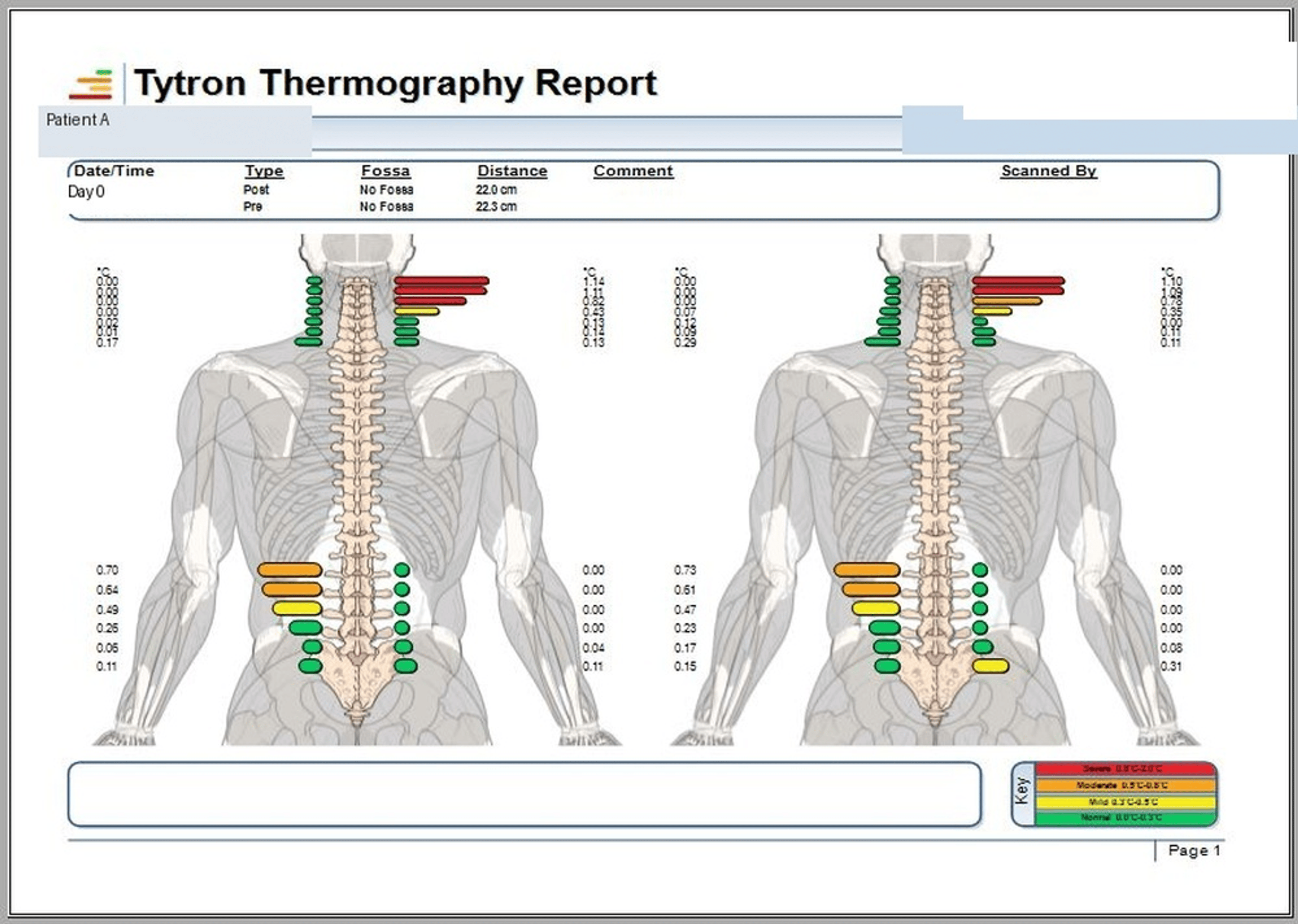
Figure 1 A computerized paraspinal infrared thermography scan (Tytron) and an HRV recording were obtained at the initial visit as adjunctive assessment tools. Baseline thermography demonstrated a moderate-to-severe thermal asymmetry pattern in the cervical paraspinal region, most pronounced on the right, together with a mild-to-moderate lumbar asymmetry pattern (Figure 1). Baseline HRV was assessed using the INSiGHT™ neurological scanning system (CLA Inc. (Chiropractic Leadership Alliance), Council Bluffs, IA). The recording demonstrated an adaptability reserve score of 79, an Autonomic Balance Index (ABI) of 86 (categorized as “Balanced”), an Autonomic Activity Index (AAI) of 74 (“Good”), and a resting heart rate of 63 beats per minute.
The overall autonomic pattern was classified as Zone 1, indicating adequate but lifestyle-affected adaptability according to the device's proprietary classification system. This classification does not have an independently established, population-based normative reference. See Diagnostic Assessment for further discussion of the technical and scientific references and licensing status of these device-specific indices.
Timeline

Table 1 Table 1 presents the course of the patient care timeline (expressed in days relative to the initial consultation (Day 0) to preserve patient anonymity).
Diagnostic assessment
No medical doctor was involved in the assessment of this patient's spinal complaints. Diagnostic imaging was obtained through an independent radiological referral, and the clinical assessment was conducted exclusively within a chiropractic setting. Radiographic findings were non-specific and included degenerative osteophytic changes, loss of cervical lordosis, and mild thoracolumbar scoliosis; these findings did not establish a discrete medical diagnosis. The treating chiropractor's working clinical impression was VSC of the cervical, thoracic, and lumbosacral spine, based on postural, range-of-motion, reflex, and radiographic findings. As discussed above, VSC is presented explicitly as a chiropractic clinical construct describing a pattern of segmental spinal dysfunction, rather than as a medical diagnostic entity. Findings consistent with this pattern are not pathognomonic for any single underlying cause.
The absence of elicitable bilateral deep tendon reflexes at C6 and C7, together with cervical osteophytic changes at C4, C6, and C7 and kyphosis at the cervicothoracic junction, raises differential diagnostic considerations, including cervical radiculopathy and degenerative cervical myelopathy. No further neurological examination beyond deep tendon reflex testing, such as assessment of upper motor neuron signs, Hoffmann's sign, or gait, was performed, and no advanced imaging (MRI) was obtained to formally investigate or exclude these possibilities. No medical referral was made. The patient did not report red-flag symptoms, including progressive or bilateral limb weakness, bowel or bladder changes, or gait disturbance, during more than 40 visits of ongoing care. His symptoms and range of motion also improved clinically over the same period. However, these observations do not replace a formal diagnostic work-up, and the absence of further investigation is acknowledged as a significant limitation of this retrospective, single-examiner case report (see Limitations). Readers should not infer that absent reflexes of this nature can safely be managed without further investigation.
The clinical presentation was interpreted as potentially reflecting cumulative mechanical loading associated with intensive multidisciplinary endurance training, including cycling, running, swimming, and resistance training, combined with prolonged static occupational postures. An apical, upper-chest breathing pattern, rather than diaphragmatic breathing, was observed during the early visits. This pattern was not formally assessed or instrumented and is therefore reported as a qualitative clinical observation, not as evidence of a specific autonomic mechanism.
Paraspinal thermography and HRV were used strictly as adjunctive, non-diagnostic tracking tools throughout care. Neither measure is a validated outcome measure for spinal pain, and both are discussed descriptively rather than as evidence of a specific physiological mechanism. The inter- and intra-examiner reliability of paraspinal thermographic interpretation has been reported as fair to good, depending on the scan classification [6, 7], while the mechanisms underlying changes in HRV following chiropractic care remain incompletely understood. [8]
The Adaptability Reserve Score, ABI, AAI, and five-zone classification reported above are proprietary, device-specific HRV indices generated by the INSiGHT™ system (CLA Inc.), rather than measures with an independently published derivation or validation in the peer-reviewed literature. A literature search covering the specific calculation, scoring, and interpretation methods underlying these indices, as well as the manufacturer's published and promotional materials, did not identify an independent technical or scientific reference supporting these methods. Accordingly, no such reference is cited here. The absence of independently identifiable supporting documentation is acknowledged as a limitation of the HRV component of this report (see Limitations).
Therapeutic intervention
All adjustments were delivered by the treating chiropractor using high-velocity, low-amplitude (HVLA) thrusts with a normal line of drive. Three techniques were used, depending on the spinal region.(1) The Thompson drop technique was used for the cervical, thoracic, and lumbopelvic spine, with standard pisiform and/or thenar contact on the spinous process, transverse process, or mammillary body in the lumbar spine, or at the lamina-transverse junction in the cervical spine.
(2) The Diversified technique was used for thoracic adjustments, employing either a crossed-pisiform contact (with the thrust-hand pisiform on the transverse process and the opposite hand stabilizing a contralateral body structure) or a double-thenar contact (contacting both sides of the spinal segment). For cervical adjustments, body-left and body-right misalignments were addressed using a lamina-transverse contact with the thrust hand.
(3) The Gonstead technique was used for the lumbar spine, where Gonstead listings and palpation guided the selection of the listing, followed by a side-posture push adjustment using spinous process or mammillary body contact. It was also used for the pelvis, where listings and palpation guided the adjustment, with contact made on the posterior superior iliac spine or ischial spine using the hypothenar region of the thrust hand.The available clinical records do not specify which technique was used at each visit, the individual spinal segments adjusted at each visit, or whether any soft-tissue interventions or exercise adjuncts were provided. No formal adverse-event monitoring protocol was documented. The initial intensive care plan specified twice-weekly adjustments, tapering to approximately once weekly, with a planned total of 30 visits over 16 weeks. In practice, this intensive phase, together with a period of reduced treatment frequency around Day 130, extended to approximately 37 weeks (visit 1: Day 0; final adjustment of this phase: Day 266). Following completion of the intensive phase and re-examination, the patient elected to continue with a further chiropractic maintenance-care plan at a reduced frequency of approximately once weekly. By the fourth wellness checkpoint, 10 additional visits had been completed under this plan, bringing the cumulative total to 40 visits by Day 371. Maintenance care was ongoing at the time of writing. No other changes to the treatment plan were required during the intensive phase of care.
Follow-up and outcomes
Table 2 Outcomes were tracked at four wellness checkpoints (10, 20, 30, and 40 visits) using a patient-rated 0-10 global rating of change scale for neck pain, low back pain, and overall mobility (0 = worse than before care, 5 = no change, 10 = best/most improved), alongside periodic weight-bearing balance assessment, repeat postural screening, and follow-up thermography and HRV recording at the 30-visit checkpoint. As this scale measures perceived change rather than symptom intensity at a fixed point, it has no baseline value by definition. A summary of outcome measures is presented in Table 2.
At the 10-visit checkpoint (Day 76), the patient reported improved cervical range of motion and resolution of neck pain during activity. The weight-bearing balance differential, which was 8.1 kg right-heavy at the initial visit, was recorded as 0.4 kg left-heavy immediately before the 10-visit adjustment and 7.0 kg left-heavy immediately afterward. This represented a 6.6 kg increase in measured asymmetry following a single adjustment, the largest single-session change recorded across all checkpoints. This finding is reported descriptively rather than interpreted, as the clinic's dual-scale weight-bearing system has not been evaluated for test-retest reliability in this patient. A single-session change of this magnitude may reflect measurement variability as much as a genuine postural shift.
At the 20-visit checkpoint (Day 182), the patient described his overall condition as “night and day” in terms of mobility, pain, cycling performance, and recovery from training. A repeat postural screen at this point showed a mild right lateral shift, with improved anterior body translation compared with baseline. Cervical and lumbopelvic range of motion had improved, with all measured ranges within normal limits. The patient also reported being able to stand for three hours without pain.
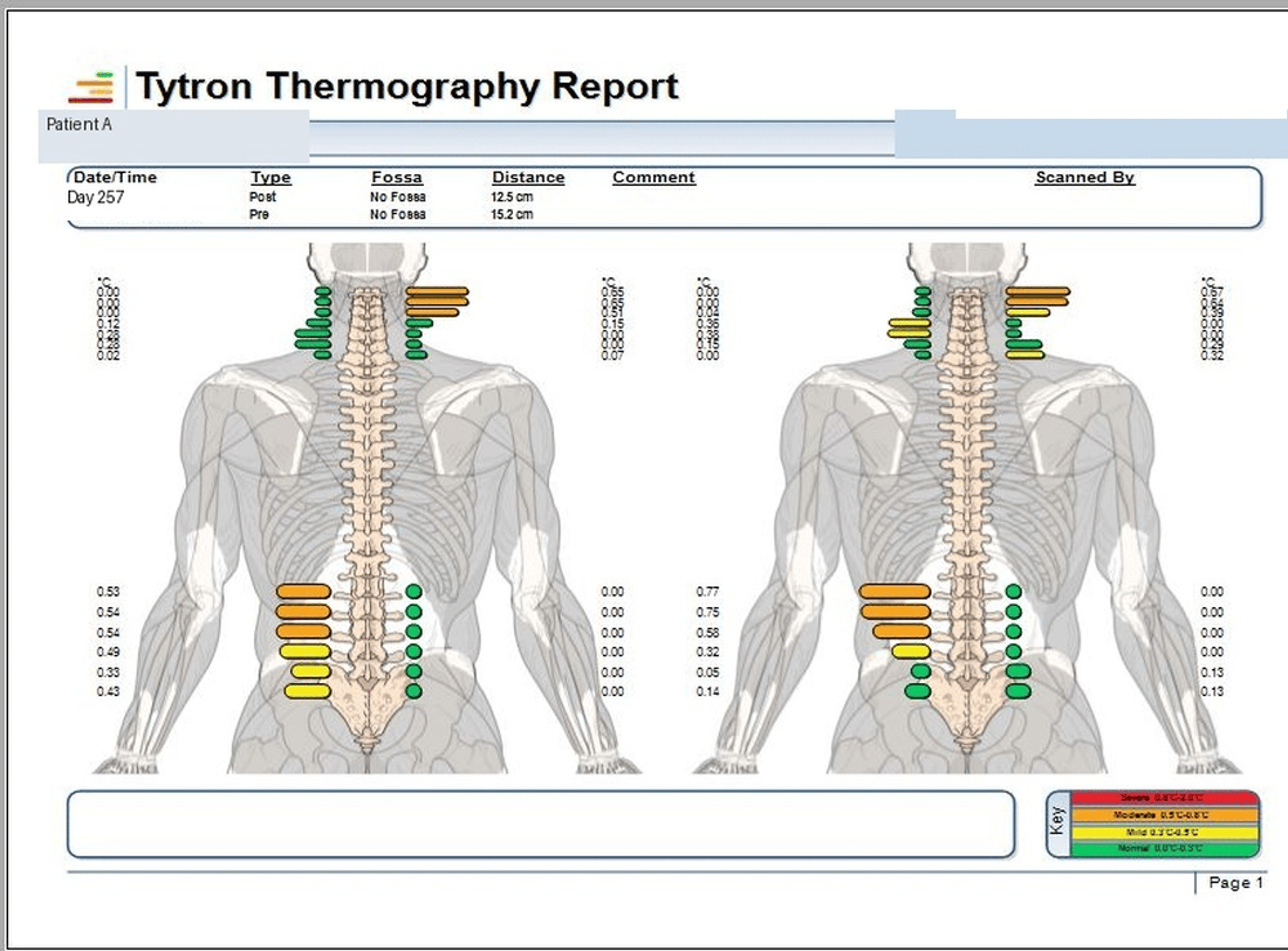
Figure 2 At the 30-visit checkpoint (Day 257), patient-rated global-change scores remained favorable relative to pre-care status, although they were modestly lower than at the 20-visit checkpoint (neck pain 8/10, low back pain 8/10, and overall mobility 8/10). The patient additionally reported improved posture, better mood, and an improvement in overall quality of life since starting care. Follow-up paraspinal thermography at this checkpoint showed reduced cervical paraspinal asymmetry compared with baseline, with the right-sided cervical differential decreasing from the severe band (approximately 1.1°C) to the moderate band (approximately 0.65°C). The lumbar pattern remained broadly similar to baseline (Figure 2). In contrast, follow-up HRV recording demonstrated a lower adaptability score (60 versus 79 at baseline) and a markedly reduced Autonomic Balance Index (32, categorized as “Highly Unbalanced,” versus 86 at baseline), while the Autonomic Activity Index and resting heart rate remained unchanged. This finding coincided with the patient's report of unusually high work-related stress in the days preceding the recording and is discussed further below. Following this checkpoint, the patient elected to continue with a maintenance chiropractic care plan at a reduced frequency of approximately once weekly, citing improved performance and faster recovery during cycling training with regular adjustments. At the 40-visit checkpoint (Day 371), patient-rated scores were the highest recorded throughout the course of care for neck pain (9/10) and overall mobility (9/10), while the low back pain score remained at 8/10. The patient reported no ongoing neck or low back pain, with only mild stiffness attributed to his training load. The weight-bearing balance differential at this checkpoint was recorded as 2.9 kg left-heavy immediately before adjustment and 0.3 kg left-heavy immediately afterward, representing the smallest post-adjustment differential recorded during the course of care.
No adverse events or side effects were reported at any point during the course of care. At the time of writing, the patient remains on maintenance chiropractic care at an approximately weekly frequency, with a further course of up to 30 visits planned, subject to reassessment. No referrals to other healthcare providers were made. Following this checkpoint, the patient elected to continue with a maintenance chiropractic care plan at a reduced frequency of approximately once weekly, citing improved performance and faster recovery during cycling training with regular adjustments. At the 40-visit checkpoint (Day 371), patient-rated scores were the highest recorded throughout the course of care for neck pain (9/10) and overall mobility (9/10), while the low back pain score remained at 8/10. The patient reported no ongoing neck or low back pain, with only mild stiffness attributed to his training load. The weight-bearing balance differential at this checkpoint was recorded as 2.9 kg left-heavy immediately before adjustment and 0.3 kg left-heavy immediately afterward, representing the smallest post-adjustment differential recorded during the course of care.
No adverse events or side effects were reported at any point during the course of care. At the time of writing, the patient remains on maintenance chiropractic care at an approximately weekly frequency, with a further course of up to 30 visits planned, subject to reassessment. No referrals to other healthcare providers were made.
Discussion
This case report describes an extended course of chiropractic spinal adjustment, comprising an intensive care phase and a subsequent maintenance-care phase, in a middle-aged competitive endurance athlete presenting with chronic mechanical neck and low back pain in the context of substantial combined training and occupational demands. Over 40 visits, the patient reported meaningful subjective improvement in pain and mobility, accompanied by clinician-observed improvements in cervical and lumbopelvic range of motion (graded qualitatively as mild or moderate restriction rather than measured instrumentally). These improvements were sustained, with some fluctuation, through the most recent checkpoint. This pattern is characteristic of naturalistic, case-based outcome tracking and should be interpreted cautiously in the absence of a comparison group or blinded assessment.
The role of high-volume endurance training as a contributor to spinal dysfunction is plausible but cannot be established from this single case. Repetitive loading patterns and posture-specific demands, particularly those associated with cycling, have been linked to measurable postural adaptations, including reduced lumbar lordosis, in case-control biomechanical studies. [1] The combination of intensive training and prolonged static occupational postures, as observed here, may represent a compounding rather than protective mechanical load on the spine. Athletes are often assumed to have a lower musculoskeletal risk by virtue of their overall fitness; however, this case is consistent with the alternative view that unaddressed spinal dysfunction may accumulate within the context of a high-training-load lifestyle. It also suggests that early attention to spinal health may be relevant to athletes specifically because of, rather than despite, their training volume.
Two adjunctive measures used in this case merit specific comment. First, paraspinal infrared thermography was used descriptively to track thermal asymmetry throughout care. Thermography is not a validated outcome measure for spinal pain or vertebral subluxation, and reported inter-examiner reliability for its interpretation ranges from fair to good, depending on the pattern being classified. [6, 7] In this case, cervical asymmetry decreased between baseline and the 30-visit checkpoint, while the lumbar pattern remained broadly similar. This finding is consistent with the patient's reported improvement in cervical symptoms, although no causal relationship with chiropractic care can be established. There was no control group, and the reported reliability of thermographic interpretation ranges from fair to good; therefore, the observed change may partly reflect measurement variability.
Second, HRV parameters were paradoxically less favorable at the 30-visit checkpoint than at baseline. This finding contrasts with the patient's improved self-reported status and is presented without minimization. Based on the patient's own report, a plausible explanation is confounding by acute occupational stress during the days immediately preceding the recording. This interpretation is consistent with the recognized sensitivity of HRV to immediate psychological and physiological stressors, independent of the underlying course of care. [8] Taken together, the thermography and HRV findings point in different directions, underscoring the need for caution when using either measure as a stand-alone indicator of progress during chiropractic care. Patient-rated outcomes should be prioritized when they diverge from adjunctive autonomic or thermal findings.
During the maintenance-care phase, the patient self-reported achieving a top-three placement in his age category at a cycling competition, which he described as atypical for him, having previously identified as a “mid-pack” competitor. He attributed this achievement in part to ongoing chiropractic care. This observation is reported as a single, patient-attributed real-world performance outcome rather than a validated outcome measure. Competitive placement is influenced by numerous factors unrelated to spinal health, including training progression, the competitor field, race conditions, and taper timing. Consequently, no causal inference can be drawn from this case regarding the relationship between chiropractic care and athletic performance. The observation is included because it reflects the patient's perceived value of continued care and may serve as a hypothesis-generating observation for future controlled research in athletic populations.
This case adds to the literature a multimodal, longitudinally tracked description of chiropractic care spanning an intensive phase and an extended maintenance phase in an athletic patient with combined cervical, thoracic, and lumbar postural dysfunction. It also highlights a practical lesson for clinicians using adjunctive autonomic and thermal measures in case documentation: these tools may usefully supplement, but should not replace, patient-rated outcome measures. Discordant findings from adjunctive measures should be reported transparently, together with plausible clinical explanations and appropriate caveats, rather than omitted.
Limitations
Limitations of this report include its single-case design and the absence of a documented differential diagnostic work-up for the absent bilateral deep tendon reflexes at C6 and C7. No further neurological examination, advanced imaging, or referral was undertaken to investigate this finding (see Diagnostic Assessment). Additional limitations include the lack of visit-level documentation specifying the techniques used, the spinal segments adjusted, and adverse-event monitoring; the absence of validated, condition-specific patient-reported outcome measures, such as theNeck Disability Index (NDI) [9] for the cervical complaint,
the Oswestry Disability Index (ODI) [10] for the low back complaint,
or the Bournemouth Questionnaire (BQ) [11] as a combined measure, none of which were administered in this case;
and reliance on non-blinded, single-examiner postural and thermographic assessments.
Further limitations include the absence of published test-retest reliability data for the dual-scale weight-bearing system used, which is relevant to the single-session increase in balance differential observed at the 10-visit checkpoint; minor inconsistencies between internal clinic records and billing records regarding the exact visit counts and dates at the 30-visit checkpoint, as noted in the Timeline; and the inherent limitations of paraspinal thermography and HRV as non-specific, non-validated adjunctive tools. These include the proprietary nature of the specific HRV indices used and the absence of independent published references supporting their derivation and interpretation (see Diagnostic Assessment). The temporal association between chiropractic care and symptomatic improvement described in this report does not establish causation. In particular, the patient-reported competitive cycling result should not be interpreted as evidence of a performance benefit attributable to care.
Patient perspective
The patient described his outcome in his own words as feeling like “night and day” in terms of mobility, pain, cycling performance, and recovery since starting chiropractic care. He also reported “much better awareness of bad posture and easier to catch them” before they became painful. He noted overall improvements in posture, mobility, mood, and quality of life throughout care.
During ongoing maintenance care, the patient reported achieving a top-three placement in his age category at a recent cycling competition, a first for him, as he had typically placed mid-pack. He attributed this achievement in part to continued chiropractic care and described his performance and recovery as better with regular adjustments. On this basis, he elected to continue maintenance care at an approximately weekly frequency.
Conclusions
In this patient, a competitive endurance athlete with chronic mechanical neck and low back pain and combined training and occupational spinal loading, a structured, extended course of chiropractic spinal adjustment, comprising an intensive phase and an ongoing maintenance phase, was associated with sustained patient-perceived improvement over 40 visits. Adjunctive thermographic findings showed reduced cervical asymmetry, while the lumbar pattern remained broadly similar to baseline. HRV findings were less favorable at one checkpoint, illustrating the importance of interpreting these adjunctive measures in the context of concurrent lifestyle stressors and alongside, rather than as substitutes for, patient-rated outcomes. Further controlled research is needed to clarify the role of chiropractic care and adjunctive autonomic monitoring in athletic populations exposed to cumulative mechanical spinal loading.
References:
Patti A, Giustino V, Messina G, et al.:
Effects of cycling on spine: a case-control study using a 3D scanning method.
Sports (Basel). 2023, 11:23-5.
10.3390/sports11110227Lee H, Lee Y:
Effects of postural changes using a standing desk on the craniovertebral angle, muscle fatigue, work performance, and discomfort in individuals with a forward head posture.
Healthcare (Basel). 2024, 12:4-6.
10.3390/healthcare12232436Mirtz TA, Morgan L, Wyatt LH, Greene L:
An epidemiological examination of the subluxation construct using Hill's criteria of causation.
Chiropr Osteopat. 2009, 17:13.
10.1186/1746-1340-17-13Homola S:
Chiropractic vertebral subluxations.
Focus Altern Complement Ther. 2010, 15:13-4.
10.1211/fact.15.1.0005Riley DS, Barber MS, Kienle GS, et al.:
CARE guidelines for case reports: explanation and elaboration document.
J Clin Epidemiol. 2017, 89:218-35.
10.1016/j.jclinepi.2017.04.026Owens EF Jr, Hart JF, Donofrio JJ, Haralambous J, Mierzejewski E:
Paraspinal skin temperature patterns: an interexaminer and intraexaminer reliability study.
J Manipulative Physiol Ther. 2004, 27:155-9.
10.1016/j.jmpt.2003.12.019McCoy M, Campbell I, Stone P, Fedorchuk C, Wijayawardana S:
Intra-examiner and inter-examiner reproducibility of paraspinal thermography.
PLoS One. 2011, 6:e16535.
10.1371/journal.pone.0016535Zhang J, Dean D, Nosco D, Strathopulos D, Floros M:
Effect of chiropractic care on heart rate variability and pain in a multisite clinical study.
J Manipulative Physiol Ther. 2006, 29:267-74.
10.1016/j.jmpt.2006.03.010Vernon H, Mior S:
The Neck Disability Index:
A Study of Reliability and Validity
J Manipulative Physiol Ther 1991 (Sep); 14 (7): 409–415Fairbank JC, Couper J, Davies JB, O'Brien JP:
The Oswestry low back pain disability questionnaire.
Physiotherapy. 1980, 66:271-3.Bolton JE, Humphreys BK:
The Bournemouth Questionnaire:
A Short-form Comprehensive Outcome Measure. II.
Psychometric Properties in Neck Pain Patients
J Manipulative Physiol Ther 2002 (Mar); 25 (3): 141-148
Return to CASE STUDIES
Since 11-23-2026
| Home Page | Visit Our Sponsors | Become a Sponsor |
Please read our DISCLAIMER |