

Satisfaction and Interpersonal Process of Care Experience
of Parents with Children Under Chiropractic CareThis section is compiled by Frank M. Painter, D.C.
Send all comments or additions to: Frankp@chiro.org


FROM: J Chiropractic Medicine 2026 (Sep 30): 25 ~ FULL TEXT
OPEN ACCESS Joel Alcantara and Ryan Whetten
International Chiropractic Pediatric Association,
Media, Pennsylvania, United States.
Objective: The purpose of this study was to examine the satisfaction and interpersonal process of care (IPC) experience of parents with children receiving chiropractic care.
Methods: In this prospective cohort study, the IPC experience of parents was assessed with the IPC-18 at study entrance and following a course of chiropractic care for their child. The study population was a convenience sample of educated parents (n = 671) with an average age of 36.27 years. Data were collected in the United States from December 2016 to December 2017. Parental satisfaction was also assessed with the RAND visit-specific satisfaction instrument (VSQ9) at follow-up. In addition to descriptive statistics, we utilized the Wilcoxon signed rank test and the Kruskal-Wallis test to compare means at 2 and ≥3 independent groups, respectively. Random forest modeling determined factors predictive of overall VSQ9 scoring.
Results: Overall, parents reported a favorable IPC experience in terms of communication, decision making, and interpersonal style with their child's chiropractor and the chiropractor's staff. High ratings of satisfaction were also measured with the VSQ9 (ie, mean score of 92.86; range: 0 = poor, 100 = excellent). The most important predictors for overall VSQ9 rating of satisfaction were parental ratings of satisfaction and effectiveness of chiropractic, that the chiropractor elicited parental concerns and responded and allowed the parent to voice what was important and explained the results of tests.
Conclusion: The parental satisfaction and interpersonal experience of parents with a child under chiropractic care were positive. Factors predictive of overall parental satisfaction were ratings of effectiveness of chiropractic care and subdomains of communication (ie, elicitation of parental concerns and responding to those concerns, explaining the results of tests and examinations).
Keywords: Chiropractic; Patient Outcome Assessment; Patient Satisfaction; Patient-Centered Care; Pediatrics.
From the Full-Text Article:
INTRODUCTION
Parents’ perspectives on the care of their children are part of the definition of evidence-based practice in health care. Parental satisfaction reflects the balance between parents’ expectations for ideal care for their child and their perception of the actual, available care. [1] Given parents’ substantial role in deciding all aspects of their child’s life, including health care, parental satisfaction with their child’s health care is of paramount importance. [2]
Parental experience, a closely or directly related concept to parental satisfaction, is a process indicator of the interpersonal aspects of the quality of health care a parent perceives in their child’s care. [3] Parental satisfaction and parental experience, like patient satisfaction and patient experience, are becoming established outcome indicators and tools for assessing a health care system’s quality and informing what acceptable approaches to pediatric patient care are. [4, 5]
Chiropractic care for children is a significant part of chiropractic practice and of children’s health. [6] Of the practitioner-based alternative therapies, spinal manipulation as performed by chiropractors is the most commonly used alternative health care approach for children in 2007 and 2012 in the United States. [7, 8] Children with pain, [9] mental health issues, [10] autism, [11] inflammatory bowel disease, [12] and attention deficit hyperactivity disorder, [13] just to list a few, commonly utilize the services of chiropractors.
Despite the need for more information on parental satisfaction and experience with their child’s chiropractic care, to the best of our knowledge, such information is not routinely collected or integrated on parents’ values and preferences in the chiropractic care of children. Although numerous studies may have measured satisfaction in patients undergoing chiropractic care, [14] we are aware of only 3 studies [15–17] measuring parental satisfaction in the chiropractic care of children.
Miller et al [15] found that, of 783 mothers surveyed on their satisfaction with their infants’ chiropractic care, 90.9% (n = 712) rated their satisfaction as ≥8 on an 11-point scale (ie, 0 = not satisfied, 10 = very satisfied). Navrud et al [16] found that 75.1% (n = 295) of their parent respondents reported scores of 10/10 (completely satisfied) with their child’s chiropractic care. Furthermore, Navrud et al [16] also found that parent satisfaction was significantly positively correlated with improvement in their child’s care and significantly negatively correlated with distress and sleep quality after chiropractic care.
In a mixed methods study of parental experience with chiropractic care for their child (n = 26,601) in Australia, 99.14% indicated being well-informed and involved in the decisions about the care of their child. Furthermore, 98.4% said they noticed or their child reported an improvement after chiropractic care was provided. The majority (99.6%) of parents were also of the opinion that chiropractic care benefitted their child. In the qualitative part of the study, the most common themes were improvements in their child’s general health or well-being, improvements in their child’s pain complaints, and improvements in sleep. [17]
Parents provide unique insights into their child’s health and the health care received. Such insights can identify barriers and facilitators to access to care, areas for improvement, and gaps in information that could improve patient care. [18–20] Given the scarcity of studies on parental satisfaction and interpersonal process of care (IPC) experience in pediatric chiropractic, this study was implemented with the aim of assessing the parental satisfaction and parental IPC experience with their child’s chiropractic care and identifying the most important factors in predicting overall parent satisfaction.
Additionally, we examined parent and child sociodemographic and clinical information germane to their child’s chiropractic care. Given the high satisfaction and positive experience of chiropractic patients in general [14] and the high utilization of chiropractic services for the pediatric population, [7, 8] we hypothesize that parents will be highly satisfied and have good experience with their child’s chiropractic care. Furthermore, positive clinical outcomes and involvement in the clinical decision-making process for their child’s care will be predictive for parental satisfaction.
Therefore, the purpose of this study was to examine parents' satisfaction and IPC experiences among parents of children receiving chiropractic care.
METHODS
Study Design
This was a cross-sectional study.
Ethics
This study was approved by the institutional review board of Life University (Marietta, GA, USA).
Survey
A letter of invitation was sent out via email to members of the International Chiropractic Pediatric Association (ICPA) to participate in a prospective cohort study within a practice-based research network (PBRN) to examine the satisfaction and interpersonal process experience of parents with children under chiropractic care.
Chiropractor participation was based on the following criteria:(1) The chiropractor is in good standing with the chiropractor’s licensing board where applicable or the chiropractor graduated from a college accredited by the Council on Chiropractic Education (CCE) or CCE-equivalent accredited chiropractic college and
(2) agreed to the ICPA terms of PBRN participation (ie, not use participation for practice-building or patient marketing).Participating chiropractors were asked to recruit parent/child dyads for the purpose of this study. Inclusion criteria for parent participation were that the parent
(1) had a child (ie, ≤17 years of age) under chiropractic care,
(2) provided consent for study participation, and
(3) was capable of reading and replying to survey questions in the English language.The surveys were implemented online using Survey Monkey. [21]
Upon study entrance (T1), parent respondents completed a survey to provide their sociodemographic information for themselves and their child along with clinical information about their child’s care (ie, motivation for care, duration of complaint, and previous medical and alternative therapy care). Additionally, the parent respondents completed the Interpersonal Processes of Care (IPC-18) questionnaire [22] to examine their IPC experience with their child’s care.
Following a course of chiropractic care (T2) for their child, the parent respondents were asked to rate their satisfaction (ie, not very satisfied to very satisfied) with their child’s chiropractic care and the effectiveness (ie, not very effective, not effective, neutral, effective, very effective) chiropractic care for their child. Also, at T2, the parents responded to the RAND visit-specific satisfaction instrument (VSQ9) survey [23] and a comparative survey with the IPC-18. [22]
The IPC-18 [22] is licensed under a Creative Commons Attribution-Non-Commercial-ShareAlike 4.0 International License (CC-BY-NC-SA). [24] and is available without charge or written permission. The validity of the IPC-18 has been demonstrated with a well-fitting second order factor model and measurement invariance across 4 racial/ethnic/language groups. [22] Additional evidence of the instrument’s validity was provided by the association of the IPC-18 scales with measures of patient satisfaction, including whether associations varied by race, ethnicity, and language. [25]
The IPC-18 assesses the IPC experience of patients during care in 3 broad domains (and subdomains):communication (lack of clarity; elicited concerns, responded; explained results),
decision making (decided together), and
interpersonal style (emotional support, compassion; discriminated due
to race/ethnicity; disrespectful office staff).Response to the 18 items is based on 5-level responses that are transformed numerically for scoring (1 = never, 2 = rarely, 3 = sometimes, 4 = usually, 5 = always). Each subdomain score is a mean of the individual scored items within that domain. The greater the mean score for a subdomain, the greater the measure.
Items of the IPC-18 were adapted when appropriate for the purpose of this study such that questions directed to the patient were reworded for the parent respondents and the doctor was specified as the child’s chiropractor, for example, the item “How often did you and your doctors work out a treatment plan together?” to “How often did you and your child’s chiropractor work out a treatment plan together?”
The RAND VSQ9 [23] is a 9-item questionnaire adapted by the American Medical Group [26] from the visit rating questionnaire used in the RAND Medical Outcomes Study. [27] Responses to the 9 items utilizes a 5-level scale that can be linearly transformed for analysis (ie, poor = 0%, fair =25%, good = 50%, very good = 75%, excellent = 100%). Similar to the IPC-18, VSQ9 items were adapted for this study. For example, the item “Explanation of what was done for you” was adapted to “Explanation of what was done for your child.”
Given the nature of the study (ie, survey research), confounders are present and related to the parent respondents in terms of sociodemographic variables (ie, age, gender, education), culture, lifestyle, economic factors (ie, insurance coverage and access the care), knowledge of and previous experience with chiropractic care, perceived treatment effects, and the impact of care for their child.
Bias (ie, selection bias, sampling bias, and response bias) from the convenience sample was mitigated with defined inclusion and exclusion criteria, a large sample size, and the diversity of respondents given the study setting of a PBRN. Such biases and confounders can impact the accuracy of the findings and conclusions and ultimately threaten the validity and generalizability of the study findings. These are acknowledged as study limitations.
Statistical Analysis
In this study, the following lines of inquiry were explored based on the parental responses to the IPC-18 and VSQ9:(1) What was the distribution of responses of parent respondents to the IPC-18
at T1 and T2?
(2) What was the distribution of responses of parent respondents to the IPC-18
with respect to gender, age, and educational level?
(3) Was the change in parental response to the IPC-18 over the course of care
(ie, from T1 to T2) significant?
(4) What was the distribution of the parental response to the VSQ9
instrument at T2?
(5) What factors were the most important in predicting the overall
sum of VSQ9 responses?

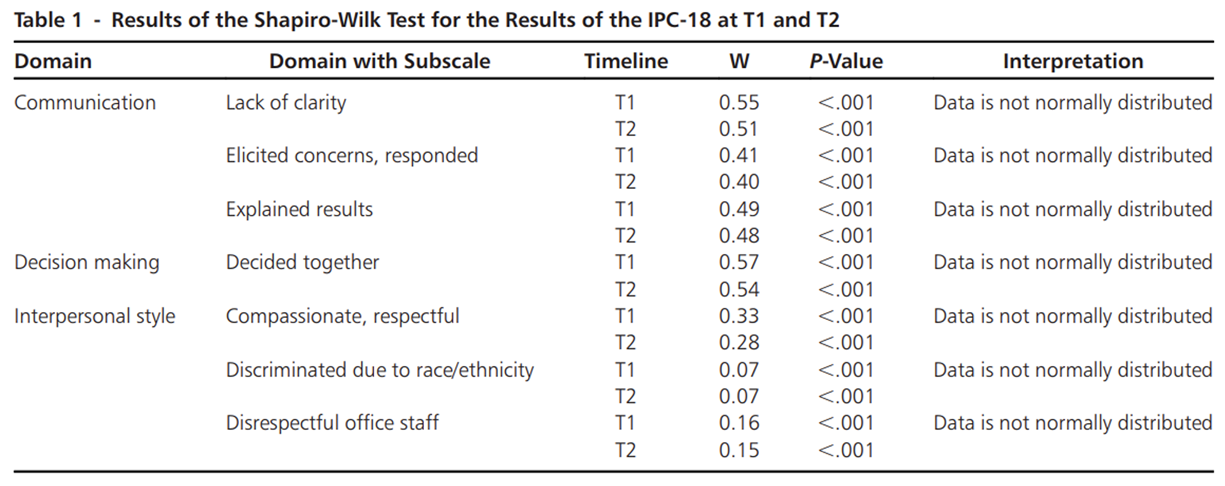
Table 1 In addition to descriptive statistics (ie, means, frequencies, proportions), [28] the Shapiro-Wilk test was performed to address the normality of our data (see Table 1). [29] Given the lack of normality of the data, nonparametric tests were utilized as appropriate. The Wilcoxon signed rank test was applied to compare parental response means to the IPC-18 based on gender and from T1 to T2. [30]
The Kruskal-Wallis test was applied to examine mean scores to the IPC-18 with ≥3 independent groups (ie, parental age group, parental education). [31] How the frequency of respondents to items of the IPC-18 changed from T1 to T2 was assessed using chi-square statistics. [32] To assess the most important factors in predicting both the overall mean scores of the VSQ9, random forest regression was applied. [33] Random forest regression is a predictive modeling tool that constructs an ensemble of decision trees from bootstrap samples of the data.
Decision trees are prediction algorithms that are sourced from hundreds if not thousands of decision trees and averaged to result in a single prediction. The results of random forest analysis are readily interpretable with the variable importance plot (VIP) and partial dependence plot (PDP).
VIPs are an effective way to compare the performance of independent variables (ie, sociodemographic information, IPC-18 subdomains) to predicting our variable of interest, the sum of the VSQ9 scores.
PDPs facilitate the visualization of linear and nonlinear relationships between identified important variables to the dependent variable. Random forest analysis was performed with the statistical platform R. [34] Statistical significance was set at p < .05.
RESULTS
A sample of 679 parents completed the surveys. Upon further inspection of the parental responses, 8 parents satisfied the criteria with a child under chiropractic care. However, given the multigenerational population of patients in some chiropractic practices, the age of their children was >17 years. The responses of these 8 parents were removed from the analysis. Therefore, a total of 671 parents made up our study respondents. The parents’ average age was 36.27 years (SD = 7.06) with more females (n = 615, 91.65%) than males (n = 56, 8.35%). The largest group of parental respondents were highly educated with a baccalaureate degree (n = 240, 35.77%) followed by some college (n = 144, 21.46%), master’s degree (n = 118, 17.59%), associate’s degree (n = 82, 12.22%), high school (n = 52, 7.75%), PhD/doctorate (n = 26, 3.87%) and some high school (n = 9, 1.34%). The mean number of visits at T1 was 11.43 (n = 376, SD = 13.10, range: 1–150) and at T2 was 42.72 (n = 376, SD = 43.57.01). An average of 5.35 (SD = 10.07, n = 641) visits was completed from T1 to T2. Note that approximately 6% (n = 40) of the responses pertaining to number of visits were removed due to incorrect input.
The majority of parents (n = 442, 65.87%) indicated that their child was not concurrently under medical care, whereas the remainder (n = 229, 34.13%) indicated their child was concurrently under medical care. Parents were motivated to bring their child to the chiropractor for wellness care (n = 333, 49.63%), followed by a combination of wellness care and to address a physical complaint not associated with a medical diagnosis (n = 136, 20.26%), wellness care and to address a physical complaint associated with a medical diagnosis (n = 95, 14.15%), to address a physical complaint associated with a medical diagnosis (n = 55, 8.19%), and to address a physical complaint that is not associated with a medical diagnosis (n = 52, 7.75%).
According to the parents, their children (mean age = 5.70, SD = 4.84, male = 333, female = 338) attended chiropractic care as the parents were prior or concurrent patients (n = 295, 43.96%), they were referred by family member(s)/friends (n = 237, 35.32%), read about chiropractic care on the internet/magazines (n = 59, 8.79%), referred by another health care provider (ie, massage therapist, naturopath) (n = 36, 5.36%), referred by another chiropractor (n = 22, 3.28%), and referred by a medical provider (n = 22, 3.28%).
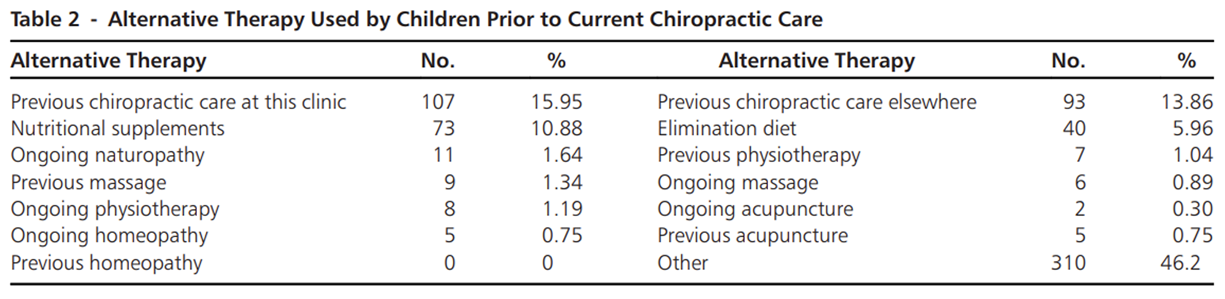
Table 2 When asked if their child received alternative therapy (including chiropractic) elsewhere prior to their child’s current chiropractic care, almost 25% (n = 167) of the parents responded yes, whereas 504 (75.11%) responded no. The alternative therapies used by children prior to chiropractic presentation are summarized in Table 2.
When asked if there has ever been a discussion about the use of chiropractic care for their child with their child’s medical provider, the majority (n = 374, 55.74%) said no, whereas 297 (44.26%) said yes. A follow-up question was asked if their child’s medical provider was supportive of the use of chiropractic care. Of the 297 respondents that indicated yes to discussions about chiropractic care with their child’s medical provider, 37 (12.45%) indicated that the medical provider was not supportive/not very supportive, 96 (32.32%) were neutral and 161 (54.21%) were supportive/very supportive. Three (1.00%) respondents indicated that no discussion had taken place with their medical provider. Of the 374 respondents that indicated that no discussions had taken place about chiropractic care for their child, 8 (2.13%) indicated that their child’s medical provider was not supportive/not very supportive, 37 (9.89%) indicated a neutral response, and 27 (7.22%) indicated their child’s medical provider was supportive/very supportive. Three hundred two (80.75%) indicated that no discussion had taken place about the use of chiropractic for their child.
At T2, the parent respondents were asked if their child’s chiropractic care was effective. The majority (653, 97.32%) indicated that chiropractic was effective/very effective, 12 (1.79%) indicated a neutral response, whereas 6 (0.89%) indicated that chiropractic was not effective/not very effective. When asked to rate their satisfaction with their child’s chiropractic care, the majority of respondents (n = 658, 98.06%) indicated that they were satisfied/very satisfied, 11 (1.6%) were neutral, and 2 (0.30%) were not satisfied/not very satisfied.
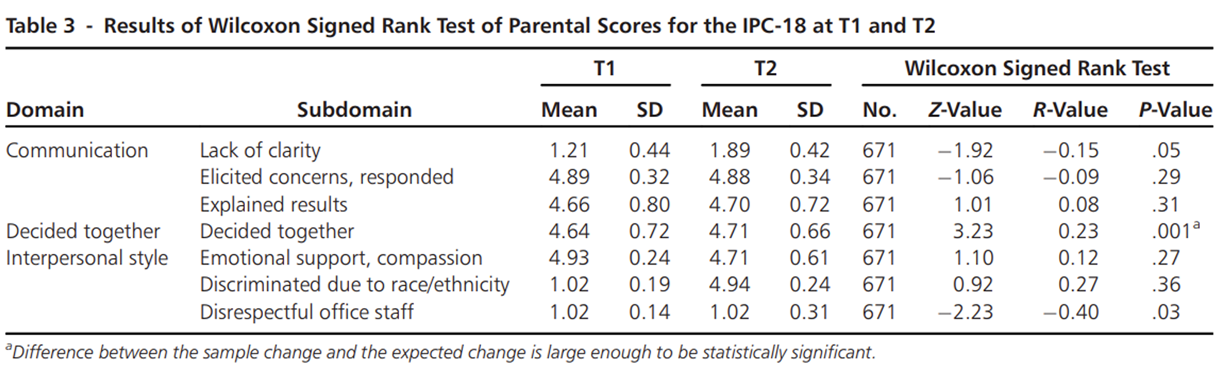
Table 3 The results of the IPC-18 parental responses at T1 and T2 are shown in Table 3, along with the results of the Wilcoxon signed rank test. At T1 and T2, the respondents provided favorable ratings with respect to their communication, shared decision making, and IPC experience with their child’s chiropractor. The parents provided assessments that indicated their child’s chiropractor never/rarely spoke too fast or used difficult-to-understand words. Furthermore, the parents indicated that their child’s chiropractor usually/always elicited their concerns, took their concerns seriously, allowed them to say what the chiropractor thought was important and explained the results of tests and physical examination.
In terms of decision making, the parents assessed their child’s chiropractor as usually/always asked if they would like to help decide upon a treatment plan and that they and their child’s chiropractor worked out a treatment plan together. In terms of interpersonal style, the parents indicated that their child’s chiropractor was usually/always concerned about their feelings, respected them, and treated them as an equal. The parents indicated that their child’s chiropractor never/rarely paid less attention to them because of their race or ethnicity or that they felt discriminated against because of their race/ethnicity. Finally, the parents indicated that the chiropractic office staff never/rarely were rude, talked down to them, gave them a hard time, or had a negative attitude toward them.
The Wilcoxon signed rank test found no statistically significant difference in the median scores for many of the subdomains of the IPC-18 from T1 to T2 except for decision making and disrespectful office staff. The Wilcoxon signed rank test found that there was a significant medium difference between the above 2 subdomains from T1 to T2. However, an examination of the mean scores of these 2 subdomains and invoking the ½ SD as the minimally clinically important difference (MCID), [35] the MCID (ie, ½ SD) for decided together ranges from 0.33 to 0.36. The difference in mean scores of decided together from T1 to T2 was 0.07, a value less than ½ SD. For the subdomain of disrespectful office staff, the mean scores from T1 to T2 did not differ. Therefore, the change in mean scoring for the subdomains of decision making and disrespectful office staff was not clinically significant.
Table 4
Table 5
Table 6
Table 7
Table 8
page 7
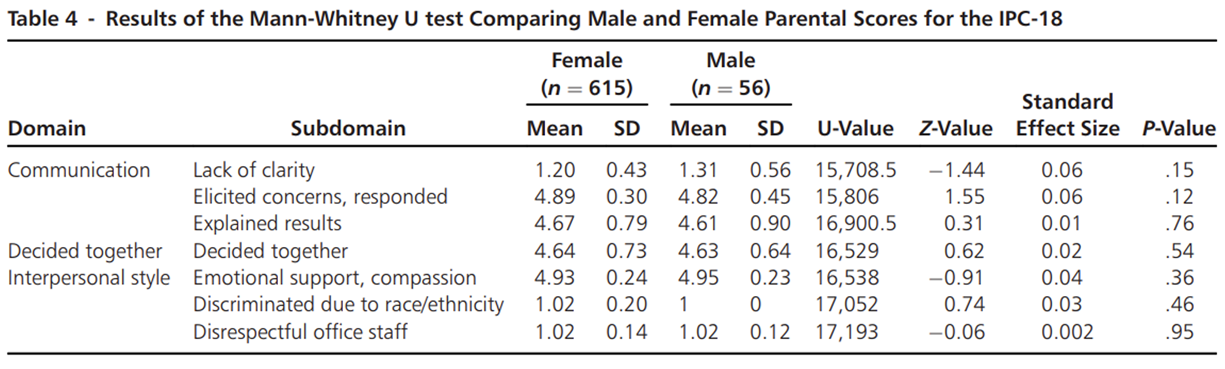
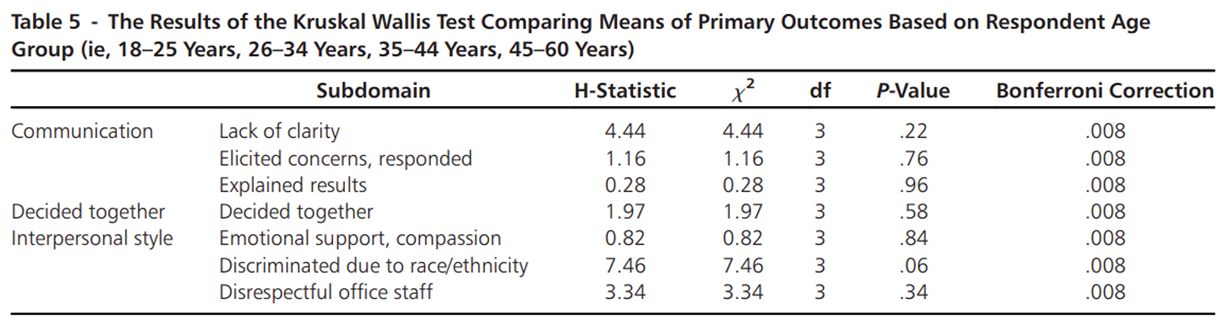
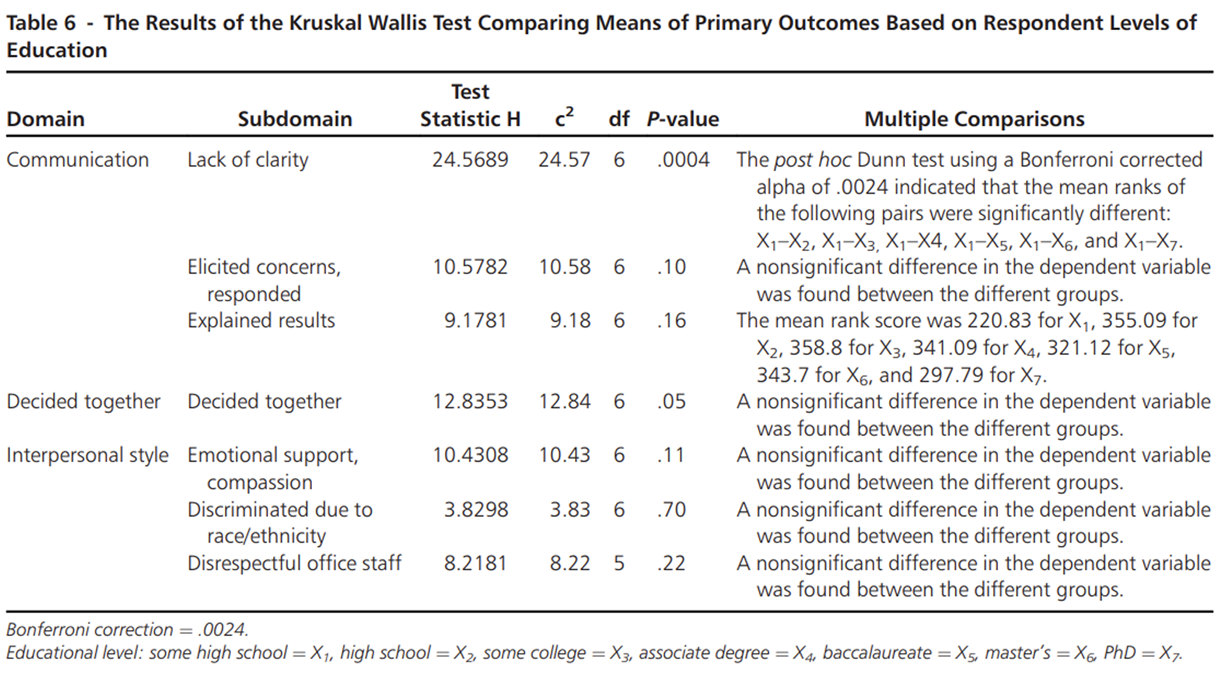
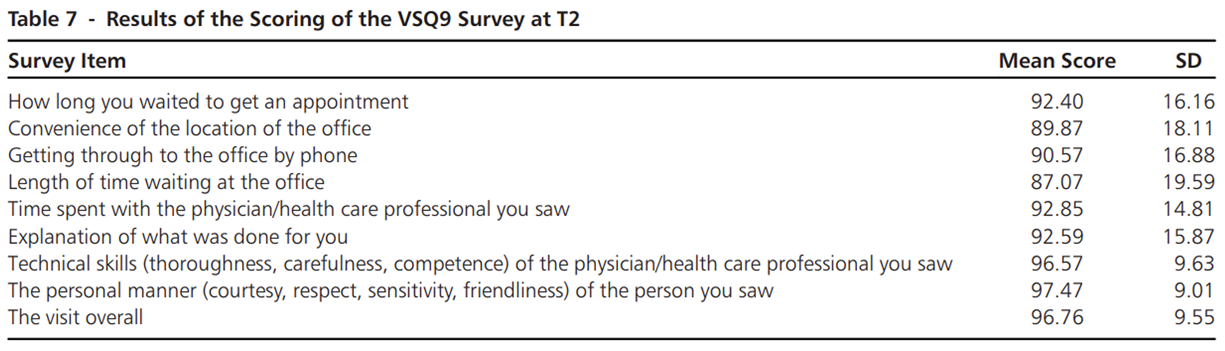
Table 9 Comparison of the mean scores of the IPC-18 based on parental gender (see Table 4) using the Mann-Whitney test and parental age group (ie, 18–25 years, 26–34 years, 35–44 years, 45–60 years) (see Table 5) using the Kruskal-Walis test found no statistically significant differences in all the subdomains of the IPC-18. Comparison of mean scores to the IPC-18 based on the educational level achieved by parents found significant differences in the subdomain of lack of clarity (see Table 6). The mean rank score for respondents with some high school education was statistically significantly different from those respondents with other types of educational levels. The results of the VSQ9 survey at T2 are shown in Table 7. The item scoring means ranged from 87.04 (SD = 19.59) (ie, length of time waiting at the office) to 97.44 (SD = 9.01) (ie, the personal manner [courtesy, respect, sensitivity, friendliness] of the person you saw) with an overall mean scoring of the items at 92.86 (SD = 10.44) indicating high specific visit satisfaction.
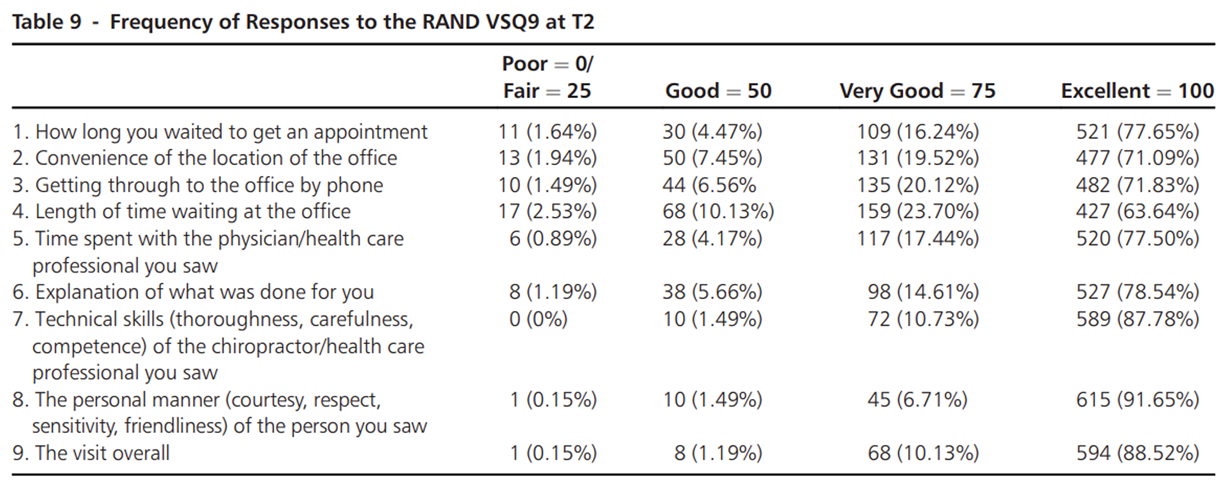
The change in the number of respondents providing a certain response (ie, never, rarely, sometimes, usually, always) to items on the IPC-18 from T1 to T2 provided some interesting insights into parents providing a favorable or less than favorable rating with their IPC experience with their child’s chiropractic care. For both the IPC-18 and RAND VSQ survey responses, certain levels of responses (ie, never, rarely, sometimes, usually, always) for certain items lacked sufficient counts in the frequency of respondents. To increase interpretability of our initial exploration of the data, the frequency counts of adjacent levels of responses in the IPC-18 and VSQ9 questionnaires were collapsed (see Tables 8 and 9). For all items in both questionnaires in Tables 8 and 9, large numbers of parents rated their satisfaction and IPC experience with their child’s chiropractic care in a favorable manner. For example, in the IPC-18 survey, only 0.89% (n = 6) of respondents at T1 and 1.49% (n = 10) of respondents at T2 indicated as always being discriminated against by race/ethnicity, whereas only 6.25% (n = 42) of respondents at T1 and 4.17% (n = 28) of respondents at T2 indicated as rarely/sometimes/usually/always being disrespected by clinic staff.
In the RAND VSQ9 survey, respondent ratings of poor/fair ranged from 0% (ie, technical skills [ie, thoroughness, carefulness, competence] of the chiropractor) to 2.53% (ie, length of time waiting at the office). However, in certain domains or items, a substantial number of parent respondents reported less than ideal ratings. For example, in the decision-making domain of the IPC-18, up to 26.97% (n = 181) of respondents indicated as never/rarely or sometimes being part of the shared decision-making process. This provides justification for further exploration of the responses to the IPC-18 and VSQ9 and ultimately to examine the important factors for improving parent satisfaction and IPC experience of parents with their child’s chiropractic care. The results of the chi-square goodness of fit significance testing for the frequency of responses to the IPC-18 instrument from T1 to T2 demonstrated no significant differences in any of the items from T1 to T2 (see Table 8).
The change in the number of respondents providing a certain response (ie, never, rarely, sometimes, usually, always) to items on the IPC-18 from T1 to T2 provided some interesting insights into parents providing a favorable or less than favorable rating with their IPC experience with their child’s chiropractic care. For both the IPC-18 and RAND VSQ survey responses, certain levels of responses (ie, never, rarely, sometimes, usually, always) for certain items lacked sufficient counts in the frequency of respondents. To increase interpretability of our initial exploration of the data, the frequency counts of adjacent levels of responses in the IPC-18 and VSQ9 questionnaires were collapsed (see Tables 8 and 9).
For all items in both questionnaires in Tables 8 and 9, large numbers of parents rated their satisfaction and IPC experience with their child’s chiropractic care in a favorable manner. For example, in the IPC-18 survey, only 0.89% (n = 6) of respondents at T1 and 1.49% (n = 10) of respondents at T2 indicated as always being discriminated against by race/ethnicity, whereas only 6.25% (n = 42) of respondents at T1 and 4.17% (n = 28) of respondents at T2 indicated as rarely/sometimes/usually/always being disrespected by clinic staff. In the RAND VSQ9 survey, respondent ratings of poor/fair ranged from 0% (ie, technical skills [ie, thoroughness, carefulness, competence] of the chiropractor) to 2.53% (ie, length of time waiting at the office).
However, in certain domains or items, a substantial number of parent respondents reported less than ideal ratings. For example, in the decision-making domain of the IPC-18, up to 26.97% (n = 181) of respondents indicated as never/rarely or sometimes being part of the shared decision-making process. This provides justification for further exploration of the responses to the IPC-18 and VSQ9 and ultimately to examine the important factors for improving parent satisfaction and IPC experience of parents with their child’s chiropractic care. The results of the chi-square goodness of fit significance testing for the frequency of responses to the IPC-18 instrument from T1 to T2 demonstrated no significant differences in any of the items from T1 to T2 (see Table 8).
To inform the strategies for improving the visit-specific satisfaction of parents with their child’s care, a random forest analysis was performed to examine the predictability of respondents’ sociodemographic information, clinical variables provided regarding their children’s chiropractic care and responses to the IPC-18 items and VSQ9 to the overall mean response to items of the VSQ9. The number of predictors randomly sampled at each split (ie, mtry) was 21. The number of trees built (ie, ntrees) was set at 500 trees and the tree stopping criteria was set at 5 and the model performance was evaluated with a separate test set at 20%.
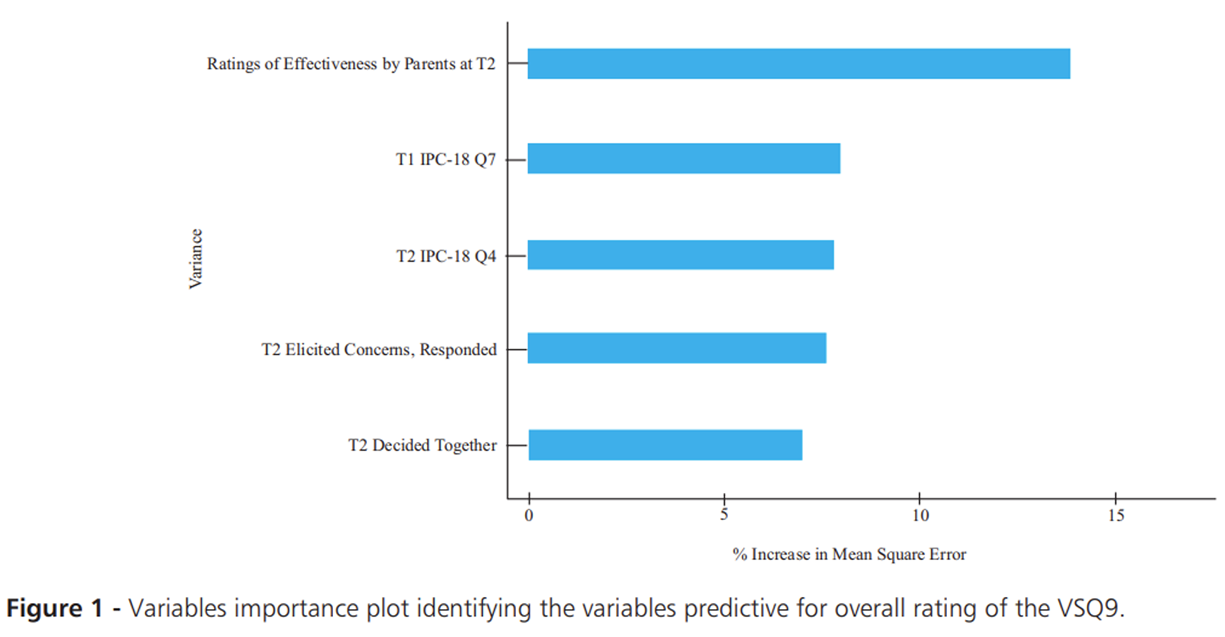
Figure 1 The VIP demonstrating the most important variables predictive for overall rating of the VSQ9 is shown in Figure 1. The 5 most important variables predictive for overall mean response to items of the VSQ9 were (in descending order) parental rating of effectiveness of their child’s chiropractic care at T2, the IPC-18 item 7 at T1 (How often did doctors clearly explain the results of your physical exam?), the IPC-18 item 4 at T2 (ie, How often did doctors let you say what you thought was important?), the subdomain of communication, “Elicited concerns, responded” at T2 and the subdomain of decision making at T2 decided together.
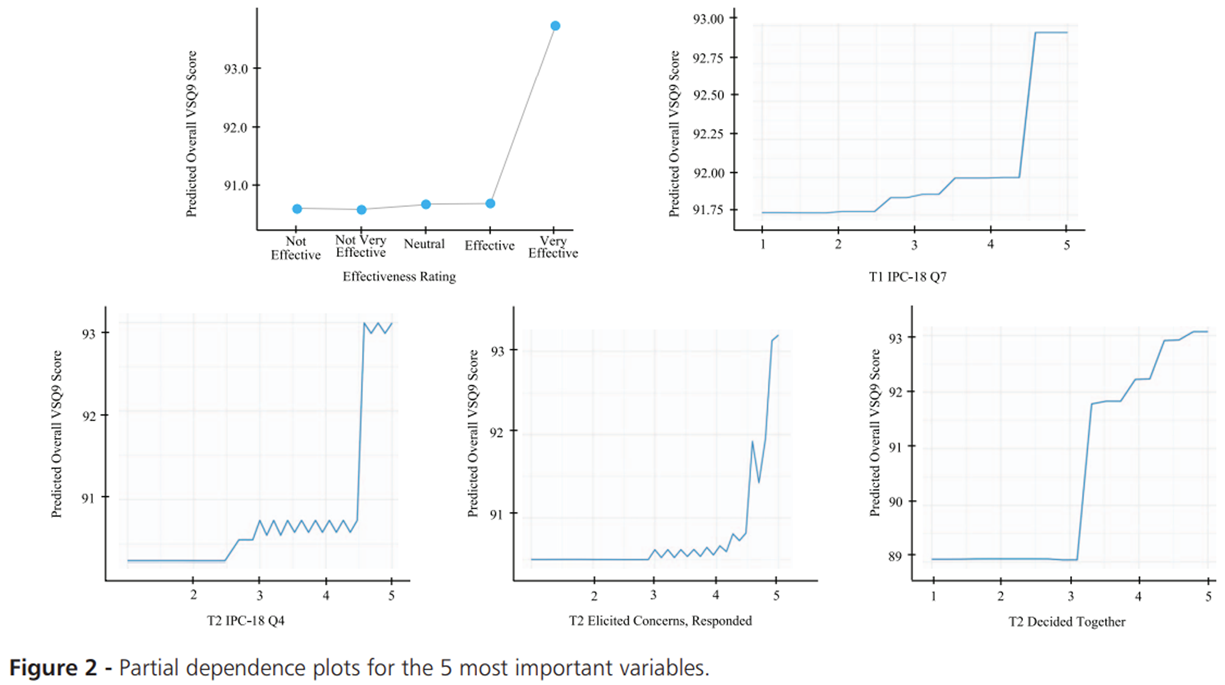
Figure 2 The PDPs for the 5 most important variables are shown in Figure 2. For all 5 independent variables, their relationship with the dependent variable demonstrated an exponential growth curve. We observe the predicted change in the overall VSQ9 scoring as minimal and shown as a plateau until the scoring of the independent variable reaches a threshold and a steep increase in the predicted VSQ9 scoring is observed. For example, for the subdomain of elicited concerns, responded, at a mean scoring of 1–4 units, the predicted VSQ scoring is maintained at approximately 90.5 units. As the mean scoring for the subdomain surpasses 4.5 units, the predicted VSQ9 scoring sharply increases to 93 units.
DISCUSSION
In addition to gaining insights into the satisfaction and interpersonal process experience of parents with their child’s chiropractic care, this study provided a glimpse into the patterns and utilization of chiropractic services by parents for their children. The mean age (ie, 36.51 years) of our parent respondents, the predisposition toward a female gender, and attainment of high levels of education are consistent with previous studies involving parents participating in studies within the ICPA PBRN. [36–40]
Wellness care, defined as the provision of health care to optimize function and adaptation to enhance a person’s quality of life and well-being [41] also resonates with previous studies examining the motivation for the chiropractic care of children. [6, 36–40] Our findings confirm that parents who utilize alternative therapies are also more likely to use some form of alternative therapy for their child. [42] Also confirmed by this study was the parent’s decision to use alternative therapy for their child as highly influenced by a parent’s social network, made up predominantly of family and friends [43, 44] and, to some extent, the family’s medical provider. [37, 38, 45, 46]
We found a relatively large group of respondents indicating that the use of chiropractic services for their child was not discussed with their child’s medical provider. There may be several reasons for this that can involve both the parent and the medical provider. On the part of the provider, there may be time constraints, the focus of the visit may not include the use of alternative therapies, and there may be a lack of knowledge about alternative therapies to discuss adequately or a hesitancy to discuss the use of alternative therapy with parents due to opinions of its ineffectiveness and lack of support. [47, 48] On the part of the parent, there may be a hesitancy to discuss the use of alternative therapies with their child’s medical provider for fear of a negative response from the provider. [49]
In this study, when the use of chiropractic for the child was discussed with the medical provider, the parents indicated that their child’s medical provider was supportive with their child’s chiropractic care. This is counter to the findings by others on the beliefs and attitudes of pediatricians about the chiropractic care of children as mostly negative. [50, 51]
Despite our study within a pediatric chiropractic context, our findings on the factors predictive for high satisfaction and optimum interpersonal process experience may have universal application toward improving the quality of a health care intervention. Our findings of high satisfaction on the part of parents are consistent with the literature on high satisfaction by chiropractic patients in general. [14] Although numbers of studies on patient experience have been published, [52–58] these previous studies did not utilize the IPC-18.
To the best of our knowledge, this is the third study to utilize the IPC-18 to examine the IPC experience within the chiropractic context. Stone and Alcantara [59] described the care of an 11-year-old male with complaints of headaches concomitant with a medical diagnosis of autism, attention deficit hyperactivity disorder, and obsessive-compulsive disorder. The use of the IPC-18 demonstrated the patient’s father as experiencing a positive interpersonal process with his son’s health care. The IPC-18 has been applied to examine the IPC experience among pregnant and nonpregnant female chiropractic patients. [60]
A high IPC experience with chiropractic care was documented. The RAND VSQ9 has also been applied in pregnant and nonpregnant female patients [61] and nonpregnant female and male [62] chiropractic patients receiving the Webster technique. These chiropractic patients indicated high visit-specific patient satisfaction with their care. Our study demonstrated the clinical and research utility of the IPC-18 and RAND VSQ9 to assess the IPC experience and visit-specific satisfaction of parents with children under chiropractic care.
Our efforts to explore parental responses to the IPC-18, the change in responses to the IPC-18, and the responses to the VSQ9 accomplished 2 primary objectives. First, we provided evidence that parents with a child attending chiropractic care have dominantly positive, cooperative, equitable, and consistent experiences with chiropractors and their office staff.
Second, we examined a number of variables (ie, age, gender, and educational level) that may affect measures with the IPC-18. Whereas the gender of parents has been acknowledged as capable of impacting the satisfaction of parents with their child’s medical care, the findings are not always consistent. [63] Furthermore, according to Foldager Jeppesen et al, [64] little is known about the impact of sociodemographic variables on parental satisfaction, and when known, the available evidence is mixed.
In the present chiropractic study, we found that female and male respondents did not differ in a statistically significant manner to their responses to the IPC-18 (see Table 4). In terms of parental age, Galanis et al [65] found that older parents were less satisfied with pediatric hospital services than younger parents, whereas Hagen et al [66] found the opposite.
In this chiropractic study, we found no differences in the scoring of the IPC-18 with respect to parental age group (see Table 5). In terms of parental education, Tsironi and Koulierakis [67] found that university-educated parents were more satisfied with parental participation in hospital care than less educated parents, but other studies have found that parents with higher education generally tend to be less satisfied with pediatric hospital care.
In this study, the mean scores of the subdomains of lack of clarity (H-statistic = 8.54, χ2 (3) = 8.54, p = .0360) were statistically significantly different based on educational level. Those parents achieving some high school education with a mean rank score of 563.56 was different from parents with high school (mean rank score of 353.69), some college (mean rank score of 319.6), associate’s degree (mean rank score of 328.69), baccalaureate (mean rank score of 335.59), master’s degree (mean rank score of 338.23) and PhD/doctorate (mean rank score of 329.38) (see Table 6).
Our findings confirm the conflicting results on the impact of sociodemographic variables on parental satisfaction. This may be related to the differences between studies in terms of parental characteristics in general, the sociodemographics of the children, the different clinical presentations, and interventions/health care services provided.
This study provides guidance for improving the quality of care in chiropractic clinics as informed by our analysis using random forest. Our use of the VSQ9 instrument aimed to capture parents’ perspective on the quality of their child’s chiropractic care in terms of access, chiropractor characteristics, and overall satisfaction. Parents’ satisfaction with their child’s care may be influenced by many factors, and random forest analysis identified numbers of factors important to predicting the VSQ9 scoring, foremost of which in this study is the impact of chiropractic care.
In addition to ratings of parental satisfaction, the most important variable predictive of the VSQ9 scores were ratings of effectiveness. This should come as no surprise given that the 2 are intertwined and mutually influential. High ratings of parental satisfaction and effectiveness of the chiropractic intervention provided to children suggests that chiropractic care is meeting the needs and wants of parents for their child’s care and consistent with evidence-based practice. [68]
Parental ratings of their child’s chiropractor to elicit concerns and respond to parental concerns, how often their child’s chiropractor allowed parents to voice what they thought was important in their child’s chiropractic care, and how often their child’s chiropractor clearly explained the results of their child’s physical examination findings reflects the importance of communication between parents and their child’s chiropractor.
Parents have a unique perspective of their child’s health, and concerns about their child’s health are pivotal in the motivation or decision making to seek care and contacting health care professionals. [69] According to Reijneveld et al, [70] the prevalence rate of concerns among parents in clinical practice can be very high, at least on initial visits. For example, in developmental surveillance during pediatric preventive care visits, the majority of US primary care physicians report the use of eliciting parental concerns on development as a tool. [71] As in medical care, eliciting parental concerns that can be addressed with chiropractic care is important for numbers of reasons. The process helps in the early detection and more accurate diagnosis of potential problems in the child and leads to prompt intervention(s). [72]
When the chiropractor responds to parents’ health concerns and allows parents to voice what they thought was important in their child’s chiropractic care, parents feel heard and validated, and this empowers them to be more proactive in advocating for their child’s health. This, in turn, builds trust and facilitates open communication between parents and the chiropractor. Responding to parental concerns demonstrates empathy on the part of the chiropractor, assuages parental stress and anxiety, enhances treatment adherence, and ultimately leads to better health outcomes for the child. Explaining to parents the results of their child’s physical examination findings keep parents informed and encourages them to be involved in the clinical decision-making process in the care of their child. [73, 74]
Limitations
Limitations include participant biases (ie, recall bias, unidentifiable response bias, and possible intentional misreporting of behaviors). The chiropractors involved in our study were members of a professional organization with the mission to establish and advance the chiropractic family lifestyle. As such, there is an element of self-selection among chiropractors and the types of patients for whom they provide care. Furthermore, our use of convenience sampling leads to selection bias, sampling bias, and response bias. These factors threaten the generalizability of our findings to the general population of parents with a child under chiropractic care. The prospective cohort design of our study makes cause and effect inferences difficult as it is observational in nature. [75]
Strengths
In terms of strengths, this study provides data obtained in a PBRN and, thus, have great external validity. Our use of random forest analysis to predict the factors important for parental satisfaction with their child’s chiropractic care provides a stable, robust, and interpretable model that has competitive predictive accuracy with traditional techniques with minimal model tuning.
Compared with traditional statistical techniques of regression, the advantages of random forest regression stem from the use of bootstrap sampling and the decision tree infrastructure of the ensemble. Bootstrap sampling provides a diversity of model predictions that improve the overall model stability regardless of the stability of the models within the ensemble. This provides robustness to influential/high leverage points present in the data that, in traditional techniques, potentially jeopardize model interpretability.
Bootstrap sampling allows for an artificial examination of hundreds (if not thousands) of varied samples of observations. Ensemble models, such as random forest utilize many simple models to dictate an overall prediction for observations. The using of decision trees to construct the ensemble (ie, the forest) renders advantages related to the elimination of traditional model fit assessment.
The recursive splitting nature of the decision tree model required no distributional assumptions, residual diagnostics testing, collinearity screening, removal of influential/high leverage points, variable selection, or model regularization. [76]
CONCLUSION
This study found that parents with a child attending chiropractic care reported high parent satisfaction and good interpersonal experience with their child’s chiropractic care. Parental ratings of a chiropractor’s effectiveness in caring for their child, eliciting parental concerns and responding to those concerns, allowing parents to say what was important to their child’s care, and explaining the results of tests and physical examination to the parent were the most important predictors of overall visit-specific parent satisfaction.
Funding
This study was funded by the International Chiropractic Pediatric Association (Media, PA, USA).
Competing Interests
The authors declare no competing interests.
Artificial Intelligence
No generative artificial intelligence tools were used to prepare this manuscript.
Contributorship
Concept development: JA. Design: JA, RW.
Supervision: JA.
Literature search: JA, RW.
Data collection/processing: JA, RW.
Analysis, interpretation: RW, JA.
Writing: JA, RW.
Critical review: JA, RW.
References:
Manzoor F, Wei L, Hussain A, Asif M, Shah SIA.
Patient satisfaction with health care services: an application of physician’s behavior as a moderator.
Int J Environ Res Public Health. 2019;16(18):3318.
doi:10.3390/ijerph16183318Naeem B, Nasim J, Anwar A, et al.
Assessment of parental satisfaction with paediatric health services in public sector tertiary hospitals within a low-income setting using Patient Satisfaction Questionnaire (PSQ-18).
BMJ Paediatr Open. 2024;8(1):e002418.
doi:10.1136/bmjpo-2023-002418Larson E, Sharma J, Bohren MA, Tunçalp Ö.
When the patient is the expert: measuring patient experience and satisfaction with care.
Bull World Health Organ. 2019;97(8):563–569.
doi:10.2471/BLT.18.225201Loureiro F, Antunes V.
Instruments to evaluate hospitalised children parents’ satisfaction with nursing care: a scoping review.
BMJ Paediatr Open. 2022;6(1):e001568.
doi:10.1136/bmjpo-2022-001568Polakova K, Ahmed F, Vlckova K, Brearley SG.
Parents’ experiences of being involved in medical decision-making for their child with a life-limiting condition: a systematic review with narrative synthesis.
Palliat Med. 2024;38(1):7–24.
doi:10.1177/02692163231214414Alcantara J, Ohm J, Kunz D.
The Chiropractic Care of Children
J Altern Complement Med. 2010 (Jun); 16 (6): 621–626Black LI, Clarke TC, Barnes PM, Stussman BJ, Nahin RL.
Use of Complementary Health Approaches Among
Children Aged 4–17 Years in the United States:
National Health Interview Survey, 2007–2012
Natl Health Stat Report. 2015 (Feb 10); (78): 1–19Barnes PM, Bloom B, Nahin RL.
Complementary and Alternative Medicine Use Among
Adults and Children: United States, 2007
Natl Health Stat Report. 2008 (Dec 10); (12): 1–23Groenewald CB, Beals-Erickson SE, Ralston-Wilson J, Rabbitts JA.
Complementary and Alternative Medicine Use
by Children with Pain in the United States
Acad Pediatr. 2017 (Sep); 17 (7): 785–793Wang C, Preisser J, Chung Y, Li K.
Complementary and alternative medicine use among children with mental health issues: results from the National Health Interview Survey.
BMC Complement Altern Med. 2018;18(1):241.
doi:10.1186/s12906-018-2307-5Nath D.
Complementary and alternative medicine in the school-age child with autism.
J Pediatr Health Care. 2017;31(3):393–397.
doi:10.1016/j.pedhc.2016.12.001Ceballos C, Bao R, Dunkin D, Song Y, Li XM, Benkov K.
Complementary and alternative medicine use at a single pediatric inflammatory bowel disease center.
Gastroenterol Nurs. 2014;37(4):265–271.
doi:10.1097/SGA.0000000000000050Sinha D, Efron D.
Complementary and alternative medicine use in children with attention deficit hyperactivity disorder.
J Paediatr Child Health. 2005;41(1–2):23–26.
doi:10.1111/j.1440-1754.2005.00530.xNewell D, Holmes MM.
Patient Experience and Satisfaction With Chiropractic Care:
A Systematic Review
J Patient Experience 2024 (Dec 25): 11:23743735241302992Miller JE, Hanson HA, Hiew M, Lo Tiap Kwong DS, Mok Z, Tee YH.
Maternal Report of Outcomes of Chiropractic Care for Infants
J Manipulative Physiol Ther. 2019 (Mar; 42 (3): 167–176Navrud IM, Miller J, Bjørnli ME, Feier CH, Haugse T.
A Survey of Parent Satisfaction with
Chiropractic Care of the Pediatric Patient
J Clinical Chiropractic Pediatrics 2014 (Nov); 14 (3): 1167–1171Keating GM.
Parent Reports of Chiropractic Care for Children:
A Preliminary Report from 22,043 Parents in Australia
J Clin Chiro Peds. 2021; 20 (1): 1731–1732Devoy E, Swann J, Thompson J.
Parents’ lived experience of health care for children with long-term conditions.
Br J Child Health 2022;3(3):119–125.
doi:10.12968/chhe.2022.3.3.119Smith J, Cheater F, Bekker H.
Parents’ experiences of living with a child with a long-term condition: a rapid structured review of the literature.
Health Expect. 2015;18(4):452–474.
doi:10.1111/hex.12040Smith J, Swallow V, Coyne I.
Involving parents in managing their child’s long-term condition: a concept synthesis of family-centered care and partnership-in-care.
J Pediatr Nurs. 2014;30(1):143–159.
doi:10.1016/j.pedn.2014.10.014Survey Monkey Inc.
http://www.surveymonkey.comStewart AL, Nápoles-Springer AM, Gregorich SE, Santoyo-Olsson J.
Interpersonal processes of care survey: patient-reported measures for diverse groups.
Health Serv Res. 2007;42(3, part 1):1235–1256.
doi:10.1111/j.1475-6773.2006.00637.xCenter for Aging in Diverse Communities.
University of California San Francisco. Interpersonal Process of Care (IPC).
Accessed July 7, 2025.
https://cadc.ucsf.edu/interpersonal-processes-care-ipcNápoles AM, Gregorich SE, Santoyo-Olsson J, O’Brien H, Stewart AL.
Interpersonal processes of care and patient satisfaction: do associations differ by race, ethnicity, and language?
Health Serv Res. 2009;44(4):1326–1344.
doi:10.1111/j.1475-6773.2009.00965.xAmerican Medical Group.
Accessed February 28, 2025. https://www.amga.orgRAND Health.
The 36-item Short Form Survey from the
RAND Medical Outcomes StudyCalculatorSoup. 2006–2024.
Statistics calculator. Accessed July 12, 2024.
https://www.calculatorsoup.com/calculators/statistics/
statistics.phpStatistics Kingdom. 2017–2024.
Shapiro-Wilk test calculator. Accessed July 7, 2025.
https://www.statskingdom.com/shapiro-wilk-test-
calculator.html#google_vignetteStatistics Kingdom. 2017–2024.
Wilcoxon signed rank test calculator. Accessed July 7, 2025.
https://www.statskingdom.com/175wilcoxon_signed_ranks.htmlStatistics Kingdom. 2017–2024.
Kruskal Wallis test calculator. Accessed July 7, 2025.
https://www.statskingdom.com/kruskal-wallis-calculator.htmlStatistics Kingdom. 2017–2024.
Chi-square test calculator. Accessed July 7, 2025.
https://www.statskingdom.com/310GoodnessChi.htmlBreiman, L.
Random forests. Machine Learning 2001;45:5–32.
doi:10.1023/A:1010933404324R Core Team. 2024.
R: A language and environment for statistical computing.
R Foundation for Statistical Computing.Norman GR, Sloan JA, Wyrwich KW.
Interpretation of changes in health-related quality of life: the remarkable universality of half a standard deviation.
Med Care 2003;41:582–592.
doi:10.1097/01.MLR.0000062554.74615.4CAlcantara J, Ohm J, Kunz D.
The Safety and Effectiveness of Pediatric Chiropractic:
A Survey of Chiropractors and Parents in a
Practice-based Research Network
Explore (NY) 2009 (Sep–Oct); 5 (5): 290–295Alcantara J, Ohm J, Alcantara J.
Comparison of pediatric self reports and parent proxy reports utilizing PROMIS: Results from a chiropractic practice-based research network.
Complement Ther Clin Pract. 2017;29:48–52.
doi:10.1016/j.ctcp.2017.08.003Alcantara J, Lamont AE, Ohm J, Alcantara J.
The Quality of Life of Children
Under Chiropractic Care Using PROMIS-25:
Results from a Practice-Based Research Network
J Altern Complement Med. 2018 (Apr); 24 (4): 378–384Alcantara J, Whetten A, Alcantara J.
Comparison of child report and parent-proxy report using PROMIS-25 in the chiropractic care for children.
Complement Ther Med. 2020;52:102406.
doi:10.1016/j.ctim.2020.102406Alcantara J, Whetten A, Ohm J, Alcantara J.
The quality of life of children under chiropractic care as measured by the PROMIS parent-proxy short forms.
Complement Ther Clin Pract. 2020;39:101134.
doi:10.1016/j.ctcp.2020.101134Hawk C, Schneider M, Evans MW Jr, Redwood D.
Consensus Process to Develop a Best-Practice Document
on the Role of Chiropractic Care in Health Promotion,
Disease Prevention, and Wellness
J Manipulative Physiol Ther. 2012 (Sep); 35 (7): 556–567Kim JH, Nam CM, Kim MY, et al.
The use of complementary and alternative medicine (CAM) in children: a telephone-based survey in Korea.
BMC Complement Altern Med. 2012;12:46.
doi:10.1186/1472-6882-12-46Latte-Naor S, Sidlow R, Sun L, Li QS, Mao JJ.
Influence of family on expected benefits of complementary and alternative medicine (CAM) in cancer patients.
Support Care Cancer. 2018;26(6):2063–2069.
doi:10.1007/s00520-018-4053-0Stub T, Kristoffersen AE, Overvåg G, et al.
An integrative review on the information and communication needs of parents of children with cancer regarding the use of complementary and alternative medicine.
BMC Complement Med Ther. 2020;20:90.
doi:10.1186/s12906-020-02882-yStussman BJ, Nahin RR, Barnes PM, Ward BW.
U.S. physician recommendations to their patients about the use of complementary health approaches.
J Altern Complement Med. 2020;26(1):25–33.
doi:10.1089/acm.2019.0303Greene BR, Smith M, Allareddy V, Haas M.
Referral patterns and attitudes of primary care physicians towards chiropractors.
BMC Complement Altern Med. 2006;6:5.
doi:10.1186/1472-6882-6-5Stubbe DE.
Complementary and alternative medicine: If you don’t ask, they won’t tell.
Focus (Am Psychiatr Publ). 2018;16(1):60–62.
doi:10.1176/appi.focus.20170052Patel SJ, Kemper KJ, Kitzmiller JP.
Physician perspectives on education, training, and implementation of complementary and alternative medicine.
Adv Med Educ Pract. 2017;8:499–503.
doi:10.2147/AMEP.S138572Koithan M.
Let’s talk about complementary and alternative therapies.
J Nurse Pract. 2009;5(3):214–215.
doi:10.1016/j.nurpra.2008.12.011Canadian Paediatric Society.
Chiropractic care for children: Controversies and issues.
Paediatr Child Health. 2002;7(2):85–104.
doi:10.1093/pch/7.2.85Misra SM, Jaber O, Long C.
Chiropractic care in children: a review of evidence and safety.
Clin Pediatr (Phila). 2024:99228241305202.Hays RD, Sherbourne CD, Spritzer KL, et al.
Experiences with Chiropractic Care for
Patients With Low Back or Neck Pain
J Patient Exp 2020 (Jun); 7 (3): 357–364Guedry SE, Langley BO, Schaefer K, Hanes DA.
Patient experience of chronic illness care and complementary integrative health use: a cross-sectional study of patients with hypermobility spectrum disorders (HSD) and Ehlers-Danlos syndromes (EDS).
Disabil Rehabil. 2023;45(21):3549–3559.
doi:10.1080/09638288.2022.2131003To D, Southerst D, Atkinson-Graham M, et al.
Enhancing patient-centred chiropractic care in Canada: identifying barriers, enablers, and strategies through a qualitative needs assessment.
Chiropr Man Therap. 2024;32(1):37.
doi:10.1186/s12998-024-00560-1Young KJ, Young HC, Field J.
A qualitative analysis of free-text patient satisfaction responses in Care Response, a database of patient-reported outcome and experience measures.
Chiropr Man Therap. 2024;32(1):2.
doi:10.1186/s12998-023-00528-7Hjertstrand J, Palmgren PJ, Axén I, Eklund A.
The Nordic Maintenance Care Program:
Patient Experience of Maintenance Care-
A Qualitative Study
Chiropractic & Manual Therapies 2021 (Aug 2); 29: 28Funabashi M, Pohlman KA, Goldsworthy R, et al.
Beliefs, perceptions and practices of chiropractors and patients about mitigation strategies for benign adverse events after spinal manipulation therapy.
Chiropr Man Therap. 2020;28(1):46.
doi:10.1186/s12998-020-00336-3Xue CC, Zhang AL, Lin V, Myers R, Polus B, Story DF.
Acupuncture, chiropractic and osteopathy use in Australia: a national population survey.
BMC Public Health. 2008;8:105.
doi:10.1186/1471-2458-8-105Stone LL, Alcantara J.
Resolution of chronic headaches, improved sociability, health and physical behavior in a child with autism, ADHD and obsessive compulsive disorder following chiropractic care to reduce vertebral subluxation: a case report and review of literature.
J Pediatr Matern & Fam Health - Chiropr. 2019;2019:63–70.Alcantara J.
The Sense of Coherence and Associated Factors of the
Lived Experience of Pregnant Patients Attending Care
in a Chiropractic Practice-Based Research Network
PhD dissertation, Lismore, NSW, AU.
Southern Cross University; 2024.Alcantara J, Nazarenko AL, Ohm J, Alcantara J.
The Use of the Patient Reported Outcomes Measurement
Information System and the RAND VSQ9 to Measure the
Quality of Life and Visit-Specific Satisfaction of Pregnant
Patients Under Chiropractic Care Utilizing
the Webster Technique
J Altern Complement Med. 2018 (Jan); 24 (1): 90–98Alcantara J, Ohm J, Alcantara J.
The use of PROMIS and the RAND VSQ9 in chiropractic patients receiving care with the Webster Technique.
Complement Ther Clin Pract. 2016;23:110–116.
doi:10.1016/j.ctcp.2015.05.003Jacobzon A, Engström Å, Gustafsson SR, Andersson M.
Parents’ perceptions of care quality at child health centres: A cross-sectional study from Sweden.
J Clin Nurs. 2025;34(1):218–229.
doi:10.1111/jocn.17339Foldager Jeppesen S, Vilhjálmsson R, Åvik Persson H.
Parental satisfaction with paediatric care with and without the support of an eHealth device: a quasi-experimental study in Sweden.
BMC Health Serv Res. 2024;24(1):41.
doi:10.1186/s12913-023-10398-7Galanis P, Bilali A, Pouliou K, Matziou V.
Factors associated with parents’ satisfaction with care provided in a neonatal intensive care unit in Greece.
J Neonatal Nurs. 2016;22(4):177–184.
doi:10.1016/j.jnn.2016.01.005Hagen IH, Iversen VC, Nesset E, Orner R, Svindseth MF.
Parental satisfaction with neonatal intensive care units: a quantitative cross-sectional study.
BMC Health Serv Res. 2019;19(1):37.
doi:10.1186/s12913-018-3854-7Tsironi S, Koulierakis G.
Factors affecting parents’ satisfaction with pediatric wards.
Jpn J Nurs Sci. 2019;16(2):212–220.
doi:10.1111/jjns.12239Fernando S, Whetten A, Alcantara J.
Use of the evidence-based practice attitude and utilization survey to determine the use of evidence-based practice by chiropractic students.
J Chiropr Educ. 2025;39:eJCE-21-4.
doi:10.7899/JCE-21-4Grimberg A, Cousounis P, Cucchiara AJ, Lipman TH, Ginsburg KR.
Parental concerns influencing decisions to seek medical care for a child’s short stature.
Horm Res Paediatr. 2015;84(5):338–348.
doi:10.1159/000440804Reijneveld SA, de Meer G, Wiefferink CH, Crone MR.
Parents’ concerns about children are highly prevalent but often not confirmed by child doctors and nurses.
BMC Public Health. 2008;8:124.
doi:10.1186/1471-2458-8-124Sices L, Feudtner C, McLaughlin J, Drotar D, Williams M.
How do primary care physicians manage children with possible developmental delays? A national survey with an experimental design.
Pediatrics. 2004;113(2):274–282.
doi:10.1542/peds.113.2.274Heath G, Montgomery H, Eyre C, Cummins C, Pattison H, Shaw R.
Developing a tool to support communication of parental concerns when a child is in hospital.
Healthcare (Basel). 2016;4(1):9.
doi:10.3390/healthcare4010009Aarthun A, Øymar KA, Akerjordet K.
Parental involvement in decision-making about their child’s health care at the hospital.
Nurs Open. 2018;6(1):50–58.
doi:10.1002/nop2.180Brady PW, Giambra BK, Sherman SN, et al.
The parent role in advocating for a deteriorating child: a qualitative study.
Hosp Pediatr. 2020;10(9):728–742.
doi:10.1542/hpeds.2020-0065Andrade C.
Research design: cohort studies.
Indian J Psychol Med. 2022;44(2):189–191.
doi:10.1177/02537176211073764Langsetmo L, Schousboe JT, Taylor BC, et al.
Advantages and disadvantages of random forest models for prediction of hip fracture risk versus mortality risk in the oldest old.
JBMR Plus. 2023;7(8):e10757.
doi:10.1002/jbm4.10757
Return to PEDIATRICS
Return to PATIENT SATISFACTION
Since 10-19-2026
| Home Page | Visit Our Sponsors | Become a Sponsor |
Please read our DISCLAIMER |