

Impact of Chiropractic Care on Opioid Use for Noncancer
Spine Pain: Systematic Review and Meta-analysisThis section is compiled by Frank M. Painter, D.C.
Send all comments or additions to: Frankp@chiro.org


FROM: Pain Reports 2025 (Dec 12); 11 (1): e1374 ~ FULL TEXT
OPEN ACCESS Peter C Emary • Kelsey L Corcoran • Brian C Coleman • Amy L Brown • Carla Ciraco • Jenna DiDonato • Li Wang • Rachel J Couban • Abhimanyu Sud • Jason W Busse
Michael G. DeGroote Institute for Pain Research and Care,
McMaster University,
Hamilton, ON, Canada.
Opioids are commonly prescribed for spine-related pain; however, emerging evidence suggests that access to chiropractic care may reduce reliance on opioids. We conducted a systematic review and meta-analysis to assess the impact of chiropractic care on new or continued prescription opioid use among adults with noncancer spine pain. We searched for eligible randomized controlled trials (RCTs) and observational studies in MEDLINE, Embase, AMED, CINAHL, Web of Science, and the Index to Chiropractic Literature up to March 20, 2025. Paired reviewers independently assessed risk-of-bias and extracted data. We performed random- and fixed-effects meta-analyses and used GRADE to assess the certainty of evidence. In total, 2 RCTs (838 participants) and 18 cohort studies (6,035,220 participants) were included in our analyses. We found very low certainty evidence that, compared with standard medical care alone, receipt of chiropractic care may reduce the odds of receiving prescription opioids by 64% (odds ratio [OR] = 0.36; 95% confidence interval [CI], 0.25-0.52; absolute risk reduction [ARR] 15%). However, we found a credible subgroup effect that earlier receipt of chiropractic services (within the first 30 days of presenting with spine-related pain) is associated with a greater decrease in the odds of receiving prescription opioids (OR = 0.33; 95% CI = 0.22-0.51; ARR = 15%) than later (≥30 days after presentation: OR = 0.73; 95% CI = 0.53-0.99; ARR = 8%; test of interaction, P < 0.001), but both with very low certainty evidence. Rigorously designed RCTs are needed to confirm these results.
Keywords: Chiropractic; Meta-analysis; Opioid; Spine pain; Systematic review.
From the FULL TEXT Article:
Introduction
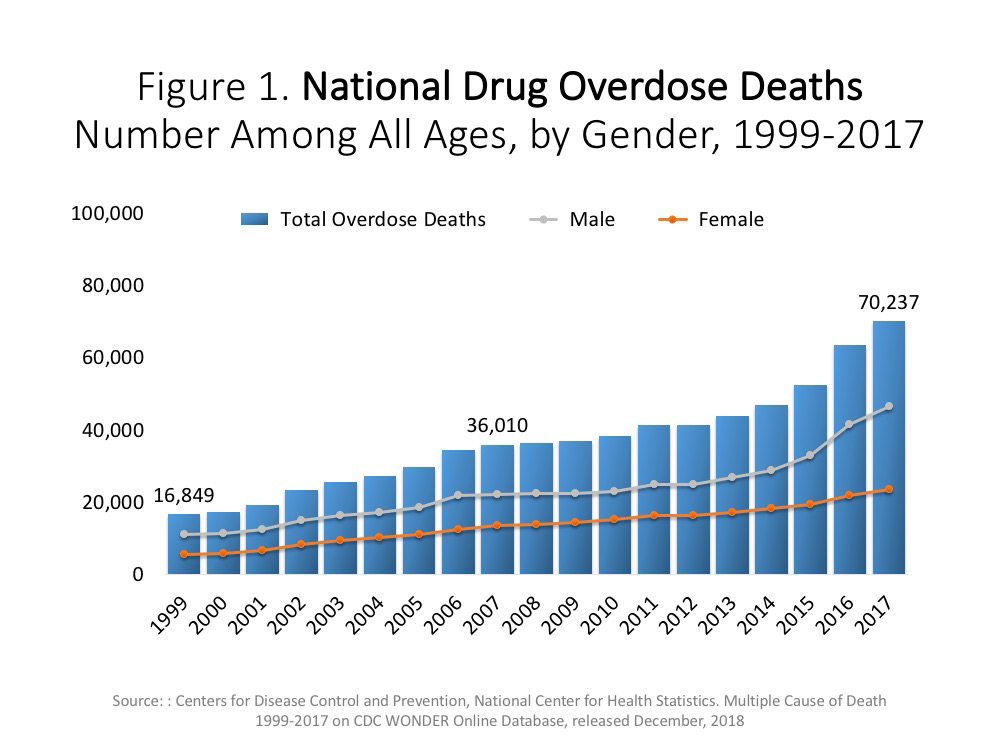
0 Opioid-related harms, including accidental or intentional overdose, addiction, and death, have risen over the past 25 years, particularly in Canada and the United States. [3, 8, 29, 43, 56, 65] In Canada, the most recent estimates indicate that there were, on average, 15 hospitalizations, 67 Emergency Department visits, 99 Emergency Medical Services responses (ie, paramedic or 9-1-1 calls), and 20 deaths, per day, due to opioid-related causes between January 1, 2024, and December 31, 2024. [29] In the United States, as of July 6, 2025, there were over 50,000 opioid-related deaths reported in the past 12 months. [3] The Centers for Disease Control and Prevention estimated the annual cost (including direct and indirect expenses) of the opioid crisis at over $1 trillion USD in 2017, equivalent to 5% of the US gross domestic product. [43, 53]
Establishing the relative contribution of prescribed, diverted, and illicit opioids to the current opioid crisis in North America and elsewhere [43] is complex. However, a study of 2,910 opioid-related deaths in Ontario, Canada, found that, in 2016, a third of those who died had an active opioid prescription and more than 75% had been dispensed an opioid within 3 years of death. [35] Consequently, there is increasing interest in management strategies to reduce reliance on opioids for patients with acute or chronic spine pain. [30]
Current clinical practice guidelines recommend optimizing nonopioid pharmacotherapy and nonpharmacologic treatments, such as exercise, education, cognitive behavioural therapy, acupuncture, soft-tissue massage, and spinal manipulation, rather than prescribing opioids as a first-line therapy for noncancer back or neck pain. [16, 23, 30] However, prescription opioid use among patients with noncancer spine pain remains high. [26, 76, 80] Several studies have reported that utilization of chiropractic services for spine-related pain may be effective in reducing opioid prescribing1, [26, 34, 40, 47, 78, 79] and long-term opioid use1, [27, 40, 47, 51, 60]; however, the magnitude of these effects and overall quality of the evidence are uncertain.
A 2020 systematic review and meta-analysis of 6 uncontrolled studies19 found a large, inverse association between chiropractic management and receiving prescription opioids among patients with noncancer spine pain (pooled odds ratio [OR] = 0.36; 95% confidence interval [CI], 0.30–0.43). However, the literature search informing this systematic review was last conducted on April 18, 2018, and several studies investigating the effect of chiropractic care on new and existing prescription opioid use have since been published. [1, 26, 27, 34, 40, 47, 51, 61, 78, 79] Moreover, the pooled estimate did not account for potential confounding variables, assessments of risk of bias and heterogeneity were suboptimal, [64] and the certainty of evidence was not assessed. [19]
Objectives
We conducted a systematic review and meta-analysis to assess the impact of chiropractic care on initiation or continued use of prescription opioids among adults with noncancer spine pain. For the identified studies, we also conducted an exploratory analysis of secondary study outcomes that were co-occurring with hypothesized (or potential) effects of chiropractic care on prescription opioid use. We explored whether our results were influenced by the year the study was conducted, methodological quality, and earlier vs later chiropractic exposure.
Methods
We followed the PRISMA 2020 statement [59] (see Appendix A, supplemental digital content, http://links.lww.com/PR9/A364) and MOOSE guidelines [69] to report our findings, and registered our protocol [28] on PROSPERO (registration number: CRD42023432277).
Eligibility criteria

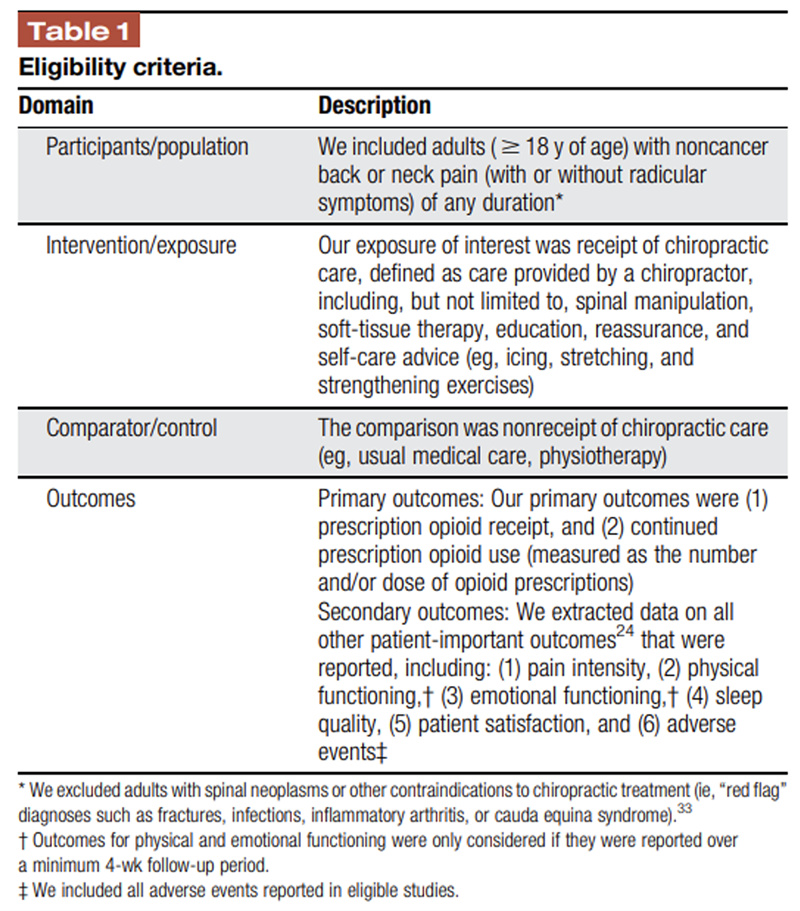
Table 1 Our eligibility criteria [24, 33] are listed in Table 1. We included randomized and nonrandomized (quasi-experimental) controlled trials and observational studies (including cohort and case-control studies) that reported an adjusted analysis exploring the association between receipt of chiropractic care for noncancer spine pain and prescription opioid use.
We excluded case reports, case series, cross-sectional studies, pre/post designs (eg, time series, single cohort), protocols, letters, editorials, commentaries, books and book chapters, gray literature (eg, dissertations, conference abstracts, pre-print/non-peer-reviewed publications), qualitative studies, and secondary sources of evidence (eg, clinical practice guidelines or any type of review article).
Information sources
We searched MEDLINE, Embase, AMED, CINAHL, Web of Science, and the Index to Chiropractic Literature without geographic or language restrictions from the inception of each database to March 20, 2025. Our search strategy was developed by an academic librarian (R.J.C.) and reviewed by a second librarian using the PRESS checklist [57] (see Appendix B, supplemental digital content, http://links.lww.com/PR9/A364). We hand-searched the bibliographies of eligible articles and contacted 2 content experts to identify any additional references.
Study selection
Pairs of reviewers (P.C.E., C.C., J.D.) independently screened titles and abstracts of identified citations and full texts of potentially eligible studies using online systematic review software (DistillerSR, Evidence Partners, Ottawa, Canada; https://www.distillersr.com/). Disagreements on eligibility were resolved by discussion or adjudication by a third reviewer (K.L.C. or B.C.C.). We assessed agreement for title/abstract and full-text screening using an adjusted kappa (k) statistic. [49]
Data collection process
Pairs of reviewers (P.C.E., A.L.B., C.C., J.D.) independently extracted data from included studies using standardized, prepiloted data extraction forms. Extracted information included: (1) first author's name; (2) year of publication; (3) study design; (4) country where the study was conducted; (5) time period of data collection; (6) sample size; (7) participant demographics (ie, age, sex, primary pain complaint); (8) chiropractic care and control group information (ie, proportion of patients receiving chiropractic or usual medical care; type of usual medical care provided, such as primary or specialist care; number of days between the index visit date and initiation of chiropractic care); (9) details on opioid use (ie, proportion of sample prescribed opioids and, when available, total number and dose of opioid prescriptions); (10) all patient-important outcomes that were reported (eg, pain intensity, physical and emotional functioning, sleep quality, patient satisfaction, adverse events [36, 54]); (11) length of follow-up; and (12) source of funding.
If a study reported outcomes at several time points, we used data from the longest follow-up in our analyses unless there was ≥20% missing data, in which case we used the next longest follow-up that had <20% missing data. We only included data from studies with the best adjusted model (ie, best model fit) or largest sample size in instances where 2 or more articles' study populations overlapped by ≥50%. Discrepancies between reviewers were resolved as previously described. We contacted study authors when necessary to request unpublished or missing data or to seek clarification regarding eligibility.
Risk of bias in individual studies
Pairs of reviewers (P.C.E., K.L.C., B.C.C.) independently assessed risk of bias of eligible randomized controlled trials (RCTs) using a risk-of-bias tool developed by the CLARITY group (https://www.distillersr.com/resources), according to the following domains: sequence generation; allocation concealment; blinding of patients, healthcare providers, data collectors, outcome assessors, and data analysts; infrequent missing data (>20% was considered high risk of bias); selective outcome reporting; and other sources of bias (eg, industry funding). To assess for selective outcome reporting, we identified all eligible studies that had been registered and then reviewed information provided on clinical trial registries (eg, clinicaltrials.gov) to compare studies' prespecified outcomes with their published results.
When protocols were not available, we compared the methods and results in each trial publication. Response options for each item were dichotomized as “definitely or probably yes” (assigned as low risk of bias) and “definitely or probably no” (assigned as high risk of bias) (see Appendix C, supplemental digital content, http://links.lww.com/PR9/A364).
We also used criteria suggested by the CLARITY group to assess the risk of bias of observational studies, including: selection bias, assessment of exposure, temporality of exposure and outcome, control of confounding variables (with adjustment for age, sex, and severity or duration of noncancer spine pain, at a minimum, considered as an adequately adjusted model), assessment of prognostic factors, validity of outcome assessment(s), loss to follow-up (≥20% was considered high risk of bias), and assessment of co-interventions (including other pharmacologic and nonpharmacologic therapies) (see Appendix D, supplemental digital content, http://links.lww.com/PR9/A364). Disagreements between reviewers were resolved by consensus or adjudication by a third reviewer (P.C.E., K.L.C., or B.C.C). If a reviewer was an author on an included article, the study was reviewed by the other 2 members of the research team.
Data synthesis
We pooled all binary outcomes on opioid use (ie, prescribed opioid receipt, long-term opioid use) that were reported by more than 1 study using ORs and associated 95% CIs. When studies provided hazard ratios (HRs) or relative risks (RRs), we converted these to an OR using a baseline risk (ie, proportion of patients in the non-chiropractic care control group who experienced an event) before pooling. [75] We pooled the effect of chiropractic care on adverse events in RCTs using RRs and their associated 95% CIs. Continuous outcomes (ie, pain intensity and physical functioning) were pooled as weighted mean differences (WMDs) with associated 95% CIs after converting different instruments that reported on the same domain (eg, pain) into the most commonly reported scale among studies eligible for review. [46, 71]
We used change scores from baseline rather than end-of-study scores to account for interpatient variability. If the study authors did not report change scores, we calculated them using the baseline and end-of-study scores and the between-group end-of-study standard deviation (SD). [41] If SDs were not reported directly, we estimated these from standard errors (SEs) or CIs. [41] For all outcomes, we conducted separate analyses for RCTs and observational studies and prioritized adjusted over unadjusted associations if both sets of data were available in the same study.
We conducted all meta-analyses of 3 or more studies using random-effects models [41] with the DerSimonian-Laird method, [21] and fixed-effects models when pooling 2 studies. [22] We performed a qualitative synthesis when data could not be pooled. To facilitate interpretation of outcomes amenable to meta-analysis, we calculated the absolute risk for each binary outcome using the median control group risk across studies. We used the mean control group risk when there were only 2 studies. For continuous measures, we modelled the risk difference (RD) of achieving at least the minimally important difference (MID) (ie, the smallest amount of improvement in a treatment outcome that patients recognize as important). [46, 71] We used anchor-based MIDs in our analyses for pain intensity (1.5 cm on a 10-cm visual analogue scale [VAS] [74]) and physical functioning (3 points on the 0–24 point Roland-Morris Disability Questionnaire [RMDQ] scale [12]).
Modelling assumptions for estimating the RD of achieving the MID assume that the SDs of outcome measurements are the same in both the treatment and control groups, and that change scores in both groups are normally distributed. To verify modelling assumptions, we compared SDs between treatment and control groups, and calculated the mean effect score ± 2 SDs in each treatment group for all trials that contributed to our analyses to identify any cases in which the distributions were substantially skewed. [41, 71] All analyses were performed using Stata V.18 (StataCorp, College Station, TX), and comparisons were 2-tailed using a statistical significance threshold (α) of 5%.
Subgroup, meta-regression, and sensitivity analyses
Heterogeneity was examined using I2 for all fixed-effects models and τ2 for random-effects models, [64] as well as through visual inspection of forest plots. [44] We considered heterogeneity of a pooled estimate to be problematic if I2 was ≥75% for pooled effects from RCTs, [41] or if the range of estimates was beyond the pooled estimate ±2 τ for pooled effects from observational studies. [67]
We explored sources of heterogeneity with 2 prespecified subgroup hypotheses, assuming larger associations with: (1) higher vs lower risk of bias, evaluated on a criterion-by-criterion basis, and (2) early vs later chiropractic exposure. We defined “early” chiropractic exposure as receipt of chiropractic services within the first 30 days after an index visit for acute or chronic noncancer spine pain. [1, 26, 40, 78, 79]
We used meta-regression to explore the impact of time period on the association between chiropractic care and prescription opioid use, [28] assuming larger associations with studies conducted in earlier vs later calendar years — a proxy for increased pressure on physicians to reduce opioid prescribing. [16, 23] In instances where study data were collected over a range of years, we used the median year of data collection. Tests for interaction were performed to establish whether subgroups differed significantly from one another, and we assessed the credibility of all significant subgroup effects (test for interaction P < 0.05) using modified ICEMAN criteria. [66]
We performed sensitivity analyses to test the robustness of our results by excluding studies in which we derived measures of association from HRs or RRs, or effect estimates from converted change scores.
Certainty of evidence
We evaluated the certainty of evidence for all measures of association using the GRADE approach. [37, 39, 44] With this approach, RCTs begin at high certainty evidence, and observational studies reporting on treatment effects begin at low certainty evidence, and both can be rated down based on risk of bias, inconsistency, indirectness, imprecision, and publication bias. We rated down for imprecision if the 95% CI included the null effect, but did not rate down the same effect estimate twice for both inconsistency and imprecision when inconsistency was the cause of imprecision. [81] The certainty of evidence for observational data can also be rated up 1 or 2 levels because of a strong association, a dose-response gradient, or when all plausible confounders or other biases increase our confidence in the estimated effect. [38] When there were ≥10 studies available for meta-analysis, [41] publication bias was assessed for each outcome by visual assessment of funnel plots for asymmetry and calculation of Egger test. [25]
Results
Of 952 unique citations,2 RCTs [11, 34] and
18 cohort studies [1, 4, 6, 9, 10, 26, 27, 31, 40, 42, 47, 50, 52, 62, 73, 77–79]were included in our analyses.
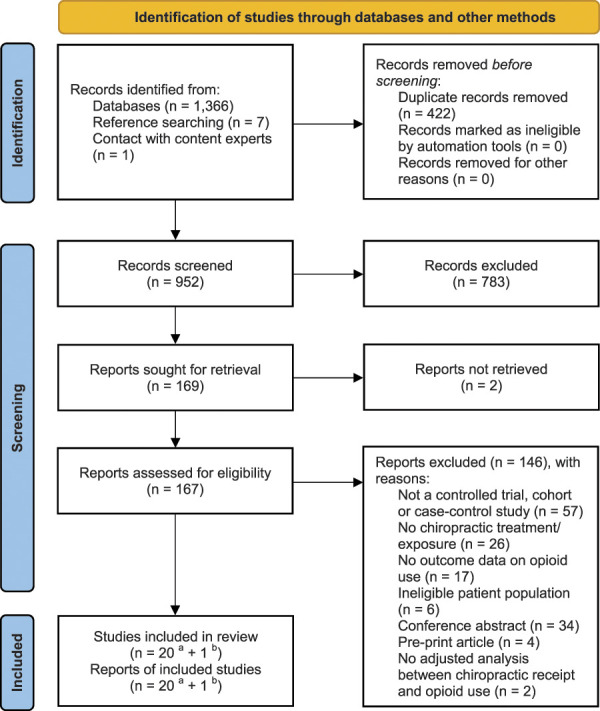
Figure 1
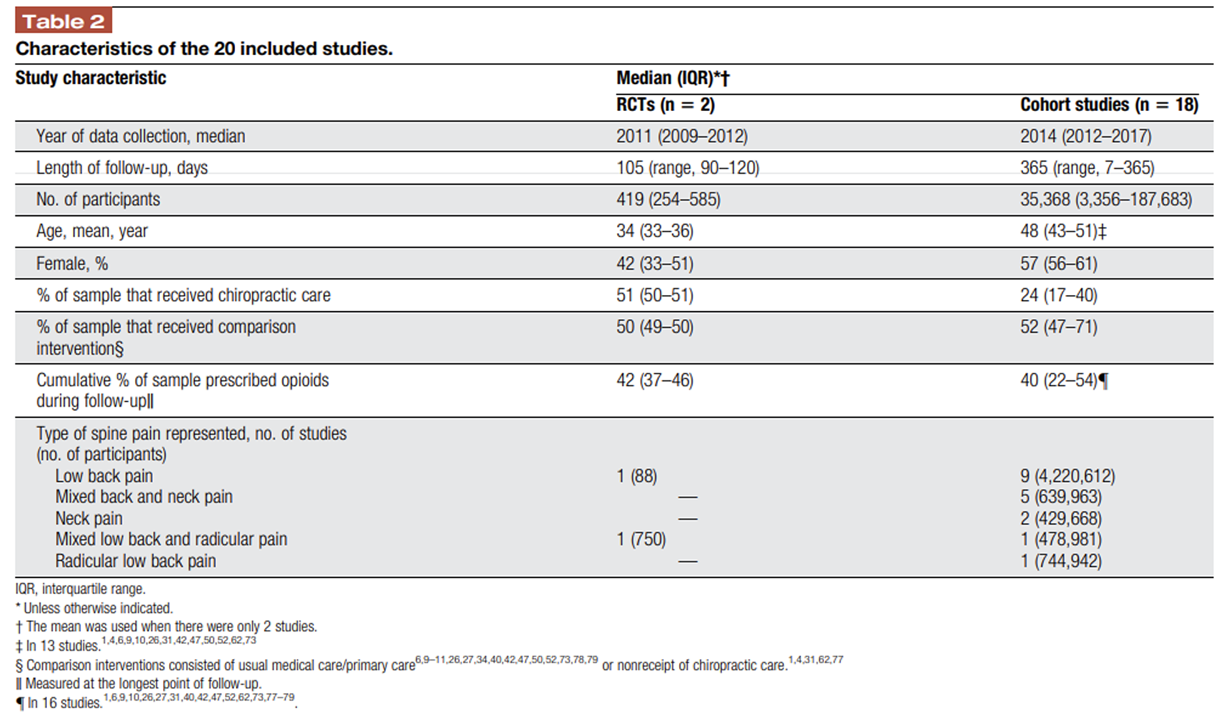
Table 2 We excluded 1 eligible cohort study [72] as their study population overlapped with a larger cohort study [73] exploring the association between receipt of chiropractic care and prescription opioid use (Figure 1). Agreement between reviewers at the title/abstract (k = 0.65) and full-text screening (k = 0.70) stages was substantial. A list of all excluded full-text articles is provided in supplemental digital content (see Appendix E, http://links.lww.com/PR9/A364). We contacted 3 authors, all of whom responded, 1 for clarification on eligibility [61] and 2 who provided additional data for analysis. [4, 34]
Study characteristics
Characteristics of the 2 RCTs and 18 cohort studies are provided in Table 2 and supplemental digital content (see Appendix F, http://links.lww.com/PR9/A364). The median of the mean age of participants across all 20 included studies was 47 years (interquartile range [IQR], [42–51]), and 57% of participants were women. Most studies (1 RCT34 and 16 cohort studies1, [4, 6, 9, 10, 31, 40, 42, 47, 50, 52, 62, 73, 77–79]) were conducted in the United States, and the remainder (1 RCT [11] and 2 cohort studies [26, 27]) were conducted in Canada.
Among the 18 cohort studies that were included, 1 used prospective data collection methods [31] and the other 17 were retrospective reviews of administrative data. [1, 4, 6, 9, 10, 26, 27, 40, 42, 47, 50, 52, 62, 73, 77–79] Follow-up in the 2 RCTs ranged from 3 to 4 months, and from 7 days to 12 months across cohort studies (Table 2 and see Appendix F, supplemental digital content, http://links.lww.com/PR9/A364).
Risk of bias in studies
Both included RCTs were at low risk of bias for allocation sequence generation and concealment, blinding of data collectors and outcome assessors, loss to follow-up, selective outcome reporting, and other sources of bias; however, 1 RCT [11] did not blind data analysts, and neither RCT blinded patients or healthcare providers (see Appendix G, supplemental digital content, http://links.lww.com/PR9/A364). All 18 cohort studies were rated at low risk of bias for cohort selection, assessment of prognostic factors, and assessment of outcome (see Appendix H, supplemental digital content, http://links.lww.com/PR9/A364). Most (94%) were at low risk of bias for assessment of exposure and adequacy of follow-up, 9 (50%) clearly reported that the outcome of interest was absent at baseline, and 3 (17%) were at low risk of bias for assessment of co-interventions. Only 1 cohort study (5%) reported an adjusted regression model adequately controlling for the minimum set of identified potential confounders (see Appendix H, supplemental digital content, http://links.lww.com/PR9/A364).
Primary outcomes for receipt of chiropractic care
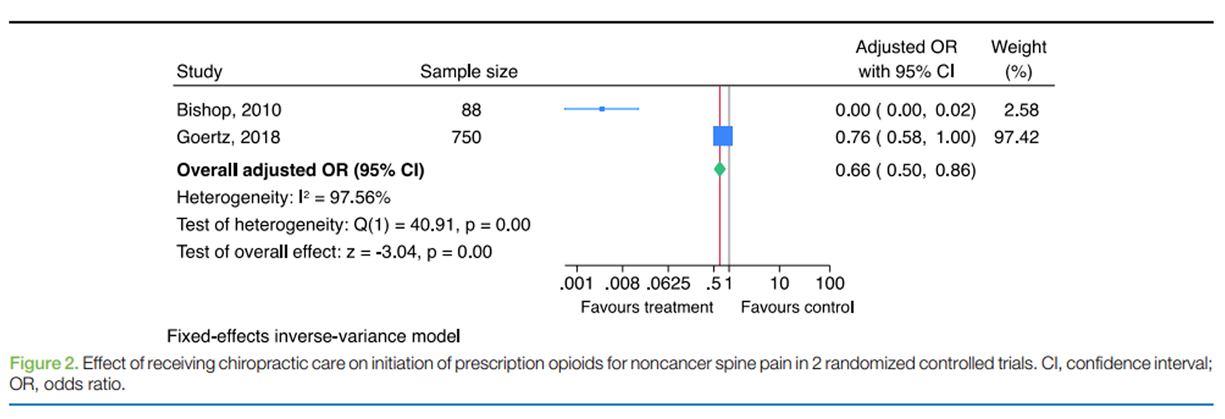
Figure 2
Table 3
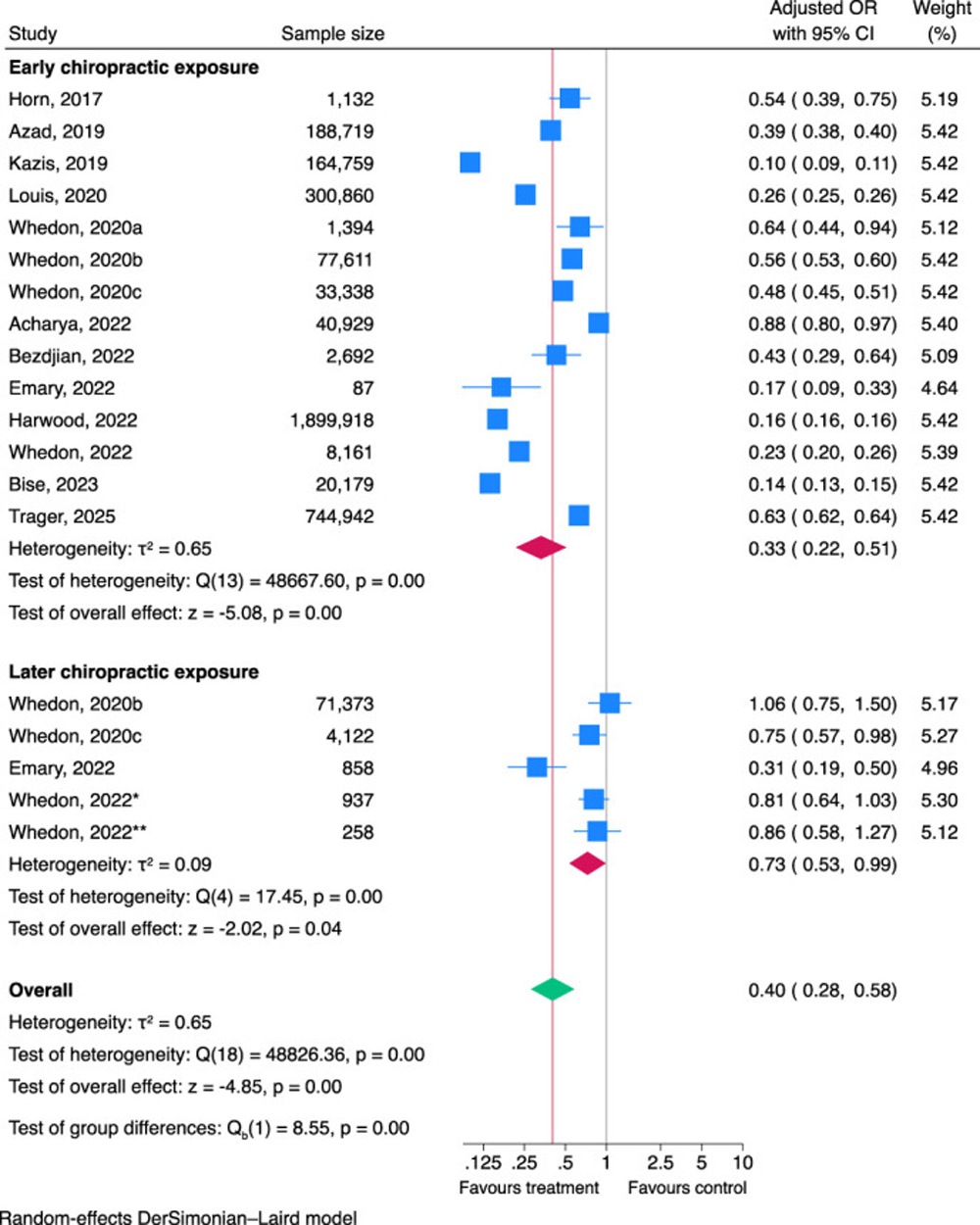
Figure 3
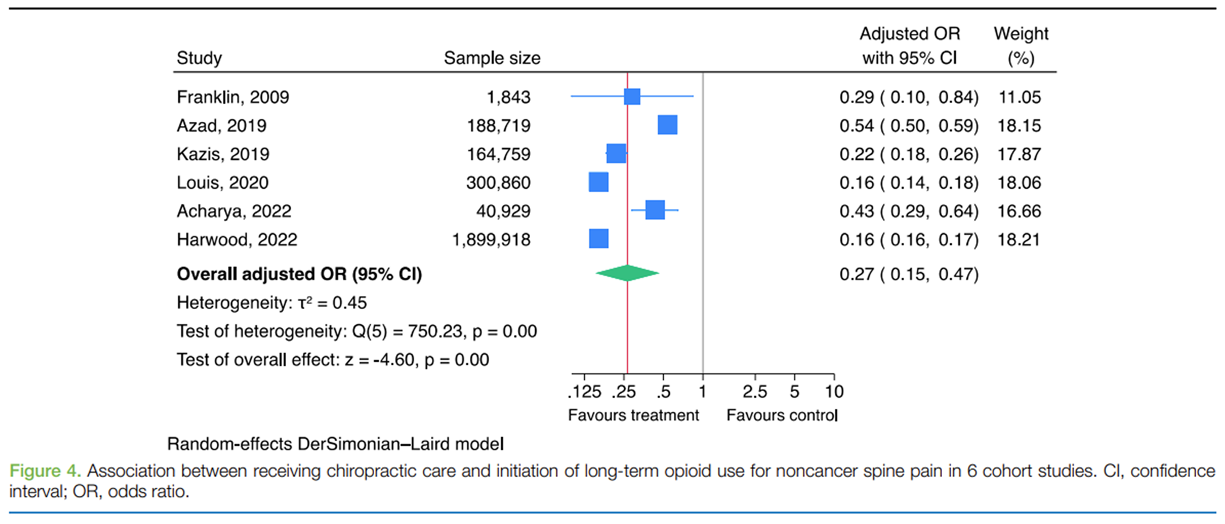
Figure 4
Initiation of prescription opioids
We found very low certainty evidence from 2 RCTs involving 838 participants11,34 that, compared with usual medical care alone, receipt of chiropractic care may result in a 34% lower odds of receiving prescription opioids for noncancer spine pain (OR = 0.66; 95% CI = 0.50–0.86). The absolute risk reduction (ARR) among chiropractic recipients was 10% less initiating prescription opioids (95% CI = 4%–17%) compared with nonrecipients (Figure 2, Table 3, and see Appendix I, supplemental digital content, http://links.lww.com/PR9/A364).
We also found very low certainty evidence from 18 cohort studies (involving 3,669,280 participants) [1, 4, 6, 9, 10, 26, 40, 42, 47, 50, 52, 62, 73, 77, 78a-c, 79] that, compared with usual medical care alone, receipt of chiropractic care may be associated with a 64% lower odds of initiating prescription opioids for noncancer spine pain (OR = 0.36; 95% CI = 0.25–0.52), with an ARR of 15% (95% CI = 11%–18%) (see Appendix J, supplemental digital content, http://links.lww.com/PR9/A364).
We found a credible subgroup effect in 14 cohort studies [6, 10, 26, 40, 42, 47, 52, 73, 78a-c, 79] for timing of chiropractic exposure, with significantly lower odds of receiving prescription opioids among participants who received chiropractic services within 30 days (OR = 0.33; 95% CI = 0.22–0.51; ARR = 15%; 95% CI = 10%–18%) vs later (OR = 0.73; 95% CI = 0.53–0.99; ARR = 8%; 95% CI = 0.3%–15%) in their complaint (test of interaction, P < 0.001; moderate credibility for subgroup effect) (Figure 3 and see Appendix K, supplemental digital content, http://links.lww.com/PR9/A364).
Very low certainty evidence from 6 cohort studies involving 2,597,028 participants [1, 6, 31, 40, 47, 52] suggested that, compared with usual medical care alone, receipt of chiropractic care may be associated with a 73% lower odds of initiating long-term opioid therapy for noncancer spine pain (OR = 0.27; 95% CI = 0.15–0.47). The ARR among chiropractic recipients vs nonrecipients was 3% less initiating long-term opioid use (95% CI = 2%–3.4%) (Figure 4, Table 3, and see Appendix I, supplemental digital content, http://links.lww.com/PR9/A364).
Continued prescription opioid use
We identified very low certainty evidence from 1 cohort study involving 210 participants [27] that investigated the association between initiating chiropractic care and continued prescription opioid use among adults receiving opioid therapy for noncancer spine pain (see Appendix F and I, supplemental digital content, http://links.lww.com/PR9/A364). Compared with receiving usual medical care alone, patients who initiated chiropractic services may receive between 34% and 73% fewer opioid prescriptions (ie, opioid fills: incidence rate ratio [IRR] = 0.66; 95% CI = 0.52–0.83; opioid refills: IRR = 0.27; 95% CI = 0.17–0.42), and may be 78% less likely to receive a higher (ie, >50 mg morphine equivalents daily) opioid dose (OR = 0.22; 95% CI = 0.08–0.62), over 12-month follow-up. [27] Patients who initiated chiropractic services may also be more than 3 times as likely to discontinue using opioids by 12 months compared with nonrecipients (29/49 vs 50/161, respectively; OR = 3.22; 95% CI = 1.66–6.23).
Secondary outcomes for receipt of chiropractic carePain intensity
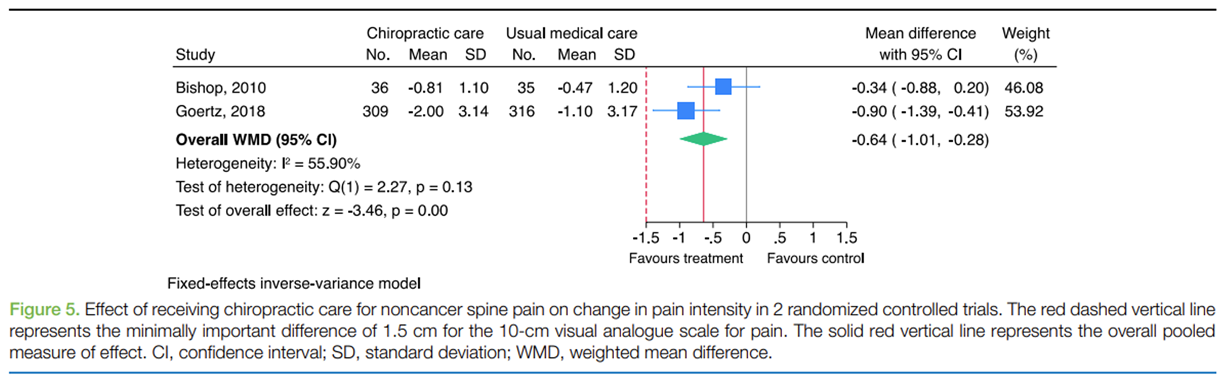
Figure 5 Moderate certainty evidence from 2 RCTs (838 participants)11,34 showed that, compared with usual medical care alone, receipt of chiropractic care for noncancer spine pain probably results in a small decrease in pain intensity (WMD = –0.64 cm on a 10-cm VAS; 95% CI = –1.01 to –0.28 cm), which equates to 8% (95% CI = 3%–14%) more patients experiencing pain relief at or above the MID (modelled RD for achieving at least the MID of 1.5 cm on a 10-cm VAS, [74] Figure 5 and Table 3).
Physical functioning
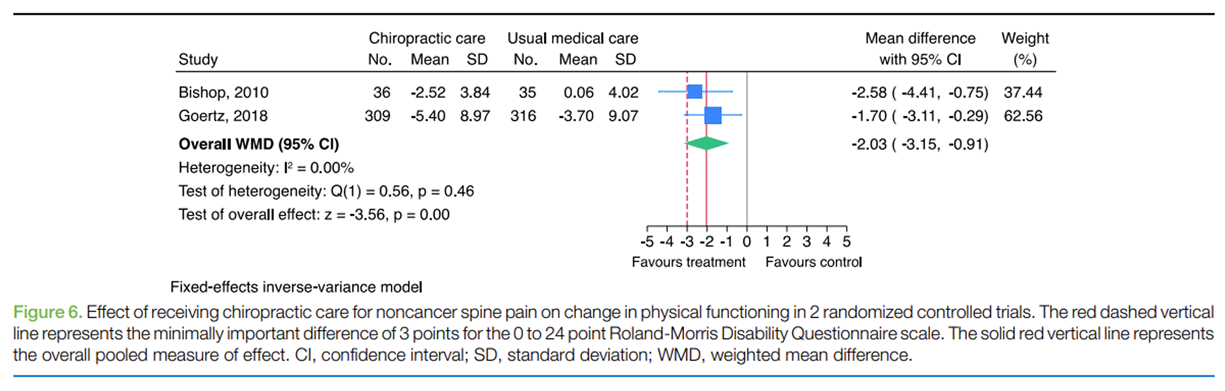
Figure 6 Moderate certainty evidence from 2 RCTs (838 participants) [11, 34] showed that, compared with usual medical care alone, receipt of chiropractic care for noncancer spine pain probably results in improved physical functioning (WMD = –2.03 points on the 0–24 point RMDQ scale; 95% CI = –3.15 to –0.91 points), which equates to 9% (95% CI = 3%–15%) more patients experiencing an improvement in physical functioning at or above the MID (modelled RD for achieving at least the MID of 3 points on the 0–24 point RMDQ scale, [12] Figure 6 and Table 3).
Patient satisfaction
Moderate certainty evidence from 1 RCT (750 participants) [34] showed that, compared with usual medical care alone, receipt of chiropractic care for noncancer spine pain probably results in clinically important greater patient satisfaction [68] (mean difference favouring chiropractic care = 2.5 points on a 0–10 point satisfaction scale; 95% CI = 2.1–2.8 points).
Adverse events
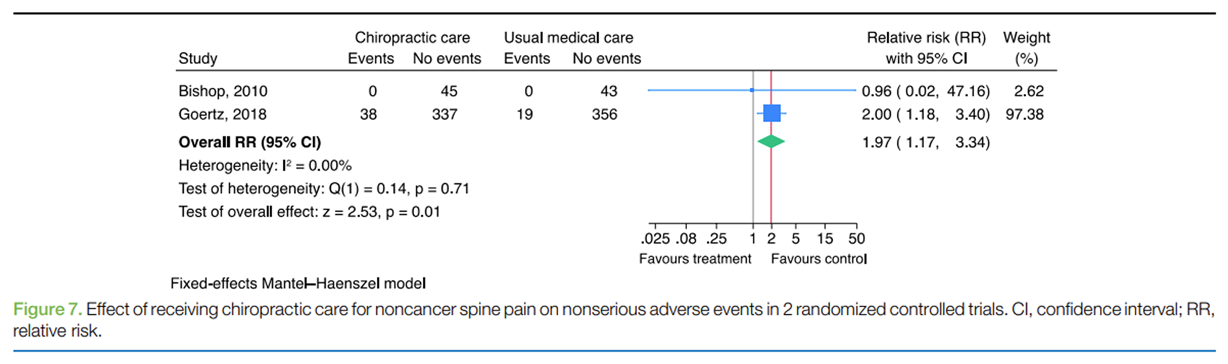
Figure 7 Low certainty evidence from 2 RCTs (838 participants) [11, 34] suggested that, compared with usual medical care alone, receipt of chiropractic care for noncancer spine pain may result in a small increase in the proportion of patients experiencing nonserious adverse events (eg, transient stiffness or muscle soreness) (RR = 1.97; 95% CI = 1.17–3.34; absolute risk increase [ARI] 5%; 95% CI = 1%–8%) (Figure 7 and Table 3).
Very low certainty evidence from 1 cohort study (involving 744,942 participants) [73] suggested a 71% reduced incidence of serious opioid-related adverse drug events (ie, opioid-related poisoning, overdose, or death) over 1-year follow-up among adults who initially received chiropractic services compared with matched controls who initially received standard medical care (no. of serious opioid-related adverse drug events: 335/372,471 vs 1,117/372,471, respectively; RR = 0.29; 95% CI = 0.25–0.32; ARR = 0.2%; 95% CI = 0.2%–0.2%) (Table 3).
Additional analyses
Both trials [11, 34] that were used for modelling the RD of achieving the MID for pain intensity and physical functioning reported mean effect scores with an associated SD or SE, or MD and 95% CI, suggesting that trial authors concluded their data met normal distribution assumptions. When we calculated the mean effect scores ± 2 SDs in each treatment group for all trials that contributed to our analyses, we found no case in which the results exceeded the range of the study's pain intensity or physical functioning instruments, providing support that distributions were not substantially skewed (see Appendix L, supplemental digital content, http://links.lww.com/PR9/A364). SDs between the treatment and control groups for both outcome measures also proved to be very similar (Figures 5 and 6, and Appendix L, supplemental digital content, http://links.lww.com/PR9/A364).
Meta-regression showed no significant relationship between the time period of data collection and the association of chiropractic care on initiating prescription opioids for noncancer spine pain (P = 0.99; Appendix M, supplemental digital content, http://links.lww.com/PR9/A364). Aside from the timing of receipt of chiropractic care, we found no other credible subgroup analyses (see Appendices N and O, supplemental digital content, http://links.lww.com/PR9/A364) or evidence of publication bias among outcomes reported by at least 10 studies (Table 3, see Appendices P and Q, supplemental digital content, http://links.lww.com/PR9/A364). Our findings were robust to sensitivity analyses; however, the effect of chiropractic care on pain intensity became nonsignificant when the larger of the 2 RCTs in which change scores were calculated from baseline and end-of-study scores was excluded (see Appendix R, supplemental digital content, http://links.lww.com/PR9/A364).
Discussion
Summary of main findings
We found very low certainty evidence that, compared with standard medical care alone, adults who receive chiropractic services for noncancer spine pain may be between 34% and 64% less likely to be prescribed opioids compared with nonrecipients and may be 73% less likely to initiate long-term opioid therapy. Furthermore, the impact of chiropractic care on reducing the odds of initiating prescription opioids for spine-related pain may be larger if access is provided within the first 30 days of presentation for care. We found moderate certainty evidence that, compared with standard medical care alone, receipt of chiropractic services for noncancer spine pain probably increases the proportion of patients experiencing important improvements in pain intensity (RD 8%) and physical functioning (RD 9%), as well as patient satisfaction. Low certainty evidence suggests that receipt of chiropractic care may double the risk of nonserious adverse events (eg, transient stiffness or muscle soreness) compared with not receiving chiropractic care. Very low certainty evidence suggests that access to chiropractic services may decrease the risk of serious opioid-related adverse drug events (ie, opioid-related poisoning, overdose, or death) by 71%.
Strengths and limitations
Strengths of our review include a comprehensive search for eligible studies in any language that identified 2 RCTs and 14 cohort studies not included in the most recent prior review. [19] We excluded 2 observational studies that were included in this review [19] because these studies did not meet our eligibility criteria. One was cross-sectional and the other did not provide an adjusted analysis between chiropractic receipt and opioid use (see Appendix E, supplemental digital content, http://links.lww.com/PR9/A364). We converted all pooled associations and mean effects in our current review to absolute risks to facilitate interpretation, used predefined subgroup analyses to explore sources of heterogeneity, and assessed the credibility of all potential subgroup effects. We conducted sensitivity analyses to confirm the robustness of our findings and used the GRADE approach to appraise the certainty of evidence.
Our review has limitations. First, the evidence for our primary outcomes was only of very low certainty, which limits the strength of inferences from our results. Second, although pain severity, symptom duration, chiropractic visit frequency, and type of opioid prescriber(s) (eg, general practitioner vs specialist/Emergency Department physician) may influence treatment effects, [28] there was either insufficient data or lack of variability among included studies to explore these issues. Third, most of our data were from observational studies, and patients accessing chiropractic services may be more resistant to using opioids than those not receiving chiropractic care. [26, 27]
Fourth, all studies eligible for our review enrolled patients presenting for care in North America, and the generalizability of our findings to other jurisdictions is unclear. Finally, we only included studies with outcome data for opioid use. As such, we did not capture all RCTs and observational studies investigating the impact of chiropractic care on other patient-important outcomes, including pain intensity, physical functioning, patient satisfaction, and adverse events.
Comparison with relevant literature
Our findings are consistent with a 2020 systematic review of 6 observational studies that found adults with noncancer spine pain who received chiropractic services were 64% less likely than nonchiropractic users to be prescribed opioids. [19] This review reported large heterogeneity associated with their pooled effect (I2 = 93%) that they were unable to explain; however, we found a credible subgroup effect that largely explained between-study variability. Specifically, we found that receipt of chiropractic care within 30 days of presenting with noncancer spine pain was associated with much larger effects vs receiving chiropractic care later.
Furthermore, the prior review only explored the impact of chiropractic care on initiation of prescription opioids, whereas we captured all patient-important outcomes, including pain intensity, physical functioning, patient satisfaction, long-term opioid use, and adverse events. Our findings on the impact of chiropractic care on these outcomes were consistent with previous research. [14, 20, 45, 51, 54, 60, 61, 63]
Only 2 [11, 34] studies included in our review identified the specific treatments that patients received during chiropractic care (eg, spinal manipulation, soft-tissue therapy, exercise, education, reassurance, self-care advice), and the association with reduced opioid prescribing may be similar to care by other nonpharmacological healthcare providers (eg, physiotherapists). [1, 15, 19, 62] If so, then patient preferences may be an important consideration. Patients are more willing to engage in treatments that match their preferences, [48] and show improved results when receiving preferred care. [7]
Furthermore, with respect to the use of nonpharmacologic care to help reduce opioid use among patients with noncancer spine pain, the results may differ whether augmented care is provided in isolation or as part of a coordinated effort between a prescriber, a patient interested in opioid tapering, and a nonpharmacological healthcare provider. [70] Several studies have shown that involuntary opioid tapering for chronic musculoskeletal pain is associated with net harms. [2, 55, 58]
We anticipated that recent policy changes aimed at reducing opioid prescribing [5, 13, 16, 23] would attenuate the relationship between chiropractic care and opioid use among studies in our review that were conducted in later vs earlier calendar years; however, we found no effect modification for time period with meta-regression. This is consistent with 2 previous cohort studies involving participant data from an Ontario community health centre between January 1, 2014, and December 31, 2020, [26, 27] that found receipt of chiropractic care was associated with less prescription opioid use even after controlling for calendar year. [26, 27]
We also found that the results did not differ in our review between studies that did and did not control for co-interventions (eg, nonopioid analgesics, other pharmacotherapies, nonpharmacologic treatments). These findings suggest that the inverse relationship between receipt of chiropractic services and initiating [1, 4, 6, 9–11, 26, 31, 34, 40, 42, 47, 50, 52, 62, 73, 77–79] or continuing [27, 34] prescription opioids across studies in our review was independent of confounding by time or use of co-interventions.
There are several reasons why the utilization of chiropractic services might lead to reduced opioid use in adults with spine-related pain. First, chiropractic care, including spinal manipulation, has been found effective for some patients with back or neck pain. [14, 20, 32, 45, 63 ]
Patients who obtain pain relief from chiropractic treatment might therefore be less likely to require prescription opioids or, in collaboration with their prescribing physician, choose to taper opioid prescriptions. Physicians might also delay or prescribe fewer opioid medications or choose lower dosages if they can refer patients to chiropractors as a first-line treatment for pain management. This notion was supported in our review, where the impact of chiropractic care on initiating prescription opioids was found to be most pronounced among studies in which patients saw a chiropractor within the first 30 days of treatment.
Furthermore, we found preliminary evidence to suggest that initiating chiropractic services among patients already receiving opioid therapy for noncancer spine pain may result in lower rates of opioid prescriptions (ie, fills and subsequent refills), and reduced odds of being prescribed a higher opioid dose. [27]
Implications and future research
Our findings suggest that early receipt of chiropractic services for spine-related pain is associated with reduced odds of opioid prescribing and long-term opioid use. Among studies that met our inclusion criteria, chiropractic services were also associated with improvement in pain intensity, physical functioning, and patient satisfaction. Findings from our review further suggest that early receipt of chiropractic services for spine-related pain may increase the incidence of nonserious adverse events but reduce the risk of serious opioid-related harms.
As such, our study represents a timely contribution to the important broader question of how to tackle the ongoing opioid crisis in North America and beyond [43] and the potential role that guideline-concordant nonpharmacologic treatments for pain, such as chiropractic care, can play in this process. [16, 30, 33]
However, because the current evidence informing the impact of chiropractic care on new or continued prescription opioid use for noncancer spine pain is only of very low certainty, rigorously designed RCTs are needed to confirm these findings. Future studies should report all recommended patient-important outcomes for spine-related pain (eg, pain intensity, physical and emotional functioning, sleep quality, patient satisfaction, adverse events). [24, 36, 54] Studies should also incorporate objective outcome measures for prescription opioid use (eg, electronic medical records, pharmacy claims). Both trials in our review [11, 34] captured patient-reported opioid use, which is susceptible to respondent and recall bias. [17, 18]
Conclusion
Our systematic review found very low certainty evidence that receipt of chiropractic care may be associated with lower odds of receiving prescription opioids or initiating long-term opioid use among adults with noncancer spine pain, particularly when chiropractic care is provided earlier vs later. Low certainty evidence shows that receipt of chiropractic care may increase the risk of nonserious adverse events, such as transient stiffness or muscle soreness; however, very low certainty evidence suggests the likelihood of serious opioid-related harms may be reduced. Rigorously designed RCTs are needed to confirm these results.
Appendix.
Multimedia Appendix 1
Patient-reported outcome measure (PROM) span match and note
[DOCX File, 24 KB]
Disclosures
P.C.E. was supported by a postdoctoral fellowship from the Michael G. DeGroote Institute for Pain Research and Care (IPRC) at McMaster University. P.C.E. is also supported by grants from the Canadian Institutes of Health Research (CIHR), the Michael G. DeGroote IPRC, and the Canadian Chiropractic Research Foundation for postdoctoral research outside of the submitted work.
J.W.B. is supported, in part, by a CIHR Canada Research Chair in the prevention and management of chronic pain. The remaining authors have no conflict of interest to declare.
Acknowledgements
This manuscript was awarded the Scott Haldeman Award for Outstanding Research at the 18th World Federation of Chiropractic Biennial Congress on May 7 to 10, 2025, in Copenhagen, Denmark.
The authors thank Sadaf Ulla for their recommendations and peer review of our electronic database search strategies and the Pain, Research, Informatics, Multimorbidities, and Education (PRIME) Center for their content expertise.
The datasets used and/or analyzed during this study are available from the corresponding author on reasonable request. This project was supported by a research grant from D'Youville University and a postdoctoral award from the Michael G. DeGroote Institute for Pain Research and Care at McMaster University.
The funders had no role in the design and conduct of the review; collection, management, analysis, and interpretation of the data; preparation, review, and approval of the manuscript; or decision to submit the manuscript for publication.
Concept development: P.C.E., K.L.C.;
Design: P.C.E., J.W.B.;
supervision: J.W.B.;
methods/statistical consultation: L.W., J.W.B.;
data collection/processing: P.C.E., K.L.C., B.C.C., A.L.B., C.C., J.D.;
analysis/interpretation: P.C.E., J.W.B.;
literature search: R.J.C.;
writing of the manuscript: P.C.E.;
critical review of the manuscript for intellectual content: P.C.E., K.L.C., B.C.C., A.L.B., C.C., J.D., L.W., R.J.C., A.S., J.W.B.
All authors read and approved the final manuscript.
References:
Acharya M, Chopra D, Smith AM, Fritz JM, Martin BC.
Associations Between Early Chiropractic Care and
Physical Therapy on Subsequent Opioid Use Among
Persons With Low Back Pain in Arkansas
J Chiropractic Medicine 2022 (Jun); 21 (2): 67-76Agnoli A, Xing G, Tancredi DJ, Magnan E, Jerant A, Fenton JJ.
Association of dose tapering with overdose or mental health crisis among patients prescribed long-term opioids.
JAMA 2021;326:411–419. JAMA 2022;327:687.Ahmad FB, Cisewski JA, Rossen LM, Sutton P.
Provisional drug overdose death counts.
National Center for Health Statistics. 2025. Available at:
https://www.cdc.gov/nchs/nvss/vsrr/drug-overdose-data.htmAnderson BR, Whedon JM, Herman PM.
Dosing of Lumbar Spinal Manipulative Therapy and
its Association with Escalated Spine Care:
A Cohort Study of Insurance Claims
PLoS One 2024 (Jan 5); 19 (1): e0283252Awadalla R, Liu S, Kemp-Casey A, Gnjidic D, Patanwala A, et al.
Impact of an Australian/New Zealand organisational position statement on extended-release opioid prescribing among surgical inpatients: a dual centre before-and-after study.
Anaesthesia 2021;76:1607–15.Azad TD, Vail D, Bentley J, Han SS, Suarez P, Varshneya K, et a;.
Initial provider specialty is associated with long-term opiate use in patients with newly diagnosed low back and lower extremity pain.
Spine (Phila Pa 1976) 2019;44:211–8.Bieber C, Mόller KG, Blumenstiel K, Schneider A, Richter A, eyt al.
Long-term effects of a shared decision-making intervention on physician–patient interaction and outcome in fibromyalgia.
Patient Educ Couns 2006;63:357–66.Belzak L, Halverson J.
Evidence synthesis—The opioid crisis in Canada: a national perspective.
Health Promot Chronic Dis Prev Can 2018;38:224–233.Bezdjian S, Whedon JM, Russell R, Goehl JM, Kazal LA, Jr.
Efficiency of Primary Spine Care as Compared to
Conventional Primary Care: A Retrospective
Observational Study at an Academic Medical Center
Chiropractic & Manual Therapies 2022 (Jan 6); 30 (1): 1Bise CG, Schneider M, Freburger J, Fitzgerald GK, Switzer G, et al.
First Provider Seen for an Acute Episode of
Low Back Pain Influences Subsequent
Health Care Utilization
Physical Therapy 2023 (Jun 28); 103 (9): pzad067Bishop PB, Quon JA, Fisher CG, Dvorak MF.
The Chiropractic Hospital-Based Interventions
Research Outcomes Study: Consistency of Outcomes
Between Doctors of Chiropractic Treating Patients
with Acute Lower Back Pain
J Manipulative Physiol Ther. 2015 (Jun); 38 (5): 311–323Bombardier C, Hayden J, Beaton DE.
Minimal clinically important difference. Low back pain: outcome measures.
J Rheumatol 2001;28:431–8. [PubMed]Bohnert ASB, Guy GP, Jr, Losby JL.
Opioid prescribing in the United States before and after the Centers for Disease Control and Prevention's 2016 opioid guideline.
Ann Intern Med 2018;169:367–75.Bronfort G, Haas M, Evans RL, Bouter LM.
Efficacy of Spinal Manipulation and Mobilization
for Low Back Pain and Neck Pain: A Systematic
Review and Best Evidence Synthesis
Spine J (N American Spine Soc) 2004 (May); 4 (3): 335–356Brown-Taylor L, Beckner A, Scaff KE, Fritz JM, Buys MJ, et al.
Relationships between physical therapy intervention and opioid use: a scoping review.
PM&R 2022;14:837–54.Busse JW, Craigie S, Juurlink DN, Buckley DN, Wang L, et al.
Guideline for Opioid Therapy
and Chronic Noncancer Pain
CMAJ. 2017 (May 8); 189 (18): E659–E666Choi BC, Noseworthy AL.
Classification, direction, and prevention of bias in epidemiologic research.
J Occup Environ Med 1992;34:265–71.Cook PF.
Scientific inquiry. Study designs for program evaluation: how do we know what works?
J Specialists Pediatr Nurs 2009;14:70–2.Corcoran KL, Bastian LA, Gunderson CG, Steffens C, Brackett A, Lisi AJ.
Association Between Chiropractic Use and Opioid
Receipt Among Patients with Spinal Pain:
A Systematic Review and Meta-analysis
Pain Medicine 2020 (Feb 1); 21 (2): e139–e145Coulter ID, Crawford C, Hurwitz EL, Vernon H, Khorsan R, st al.
Manipulation and Mobilization
for Treating Chronic Low Back Pain:
A Systematic Review and Meta-analysis
Spine J. 2018 (May); 18 (5): 866–879DerSimonian R, Laird N.
Meta-analysis in clinical trials.
Control Clin Trials 1986;7:177–88.Dettori JR, Norvell DC, Chapman JR.
Fixed-effect vs random-effects models for meta-analysis: 3 points to consider.
Global Spine J 2022;12:1624–6.Dowell D, Ragan KR, Jones CM, Baldwin GT, Chou R.
CDC clinical practice guideline for prescribing opioids for pain—United States, 2022.
MMWR Recomm Rep 2022;71:1–95.Dworkin RH, Turk DC, Farrar JT, Haythornthwaite JA, et al.
Core outcome measures for chronic pain clinical trials: IMMPACT recommendations.
PAIN 2005;113:9–19.Egger M, Smith GD, Schneider M, Minder C.
Bias in meta-analysis detected by a simple, graphical test.
BMJ 1997;315:629–34.Emary PC, Brown AL, Oremus M, Mbuagbaw L, Cameron DF.
Association of Chiropractic Care With Receiving an Opioid
Prescription for Noncancer Spinal Pain Within a Canadian
Community Health Center: A Mixed Methods Analysis
J Manipulative Physiol Ther 2022 (May); 45 (4): 235–247Emary PC, Brown AL, Oremus M, Mbuagbaw L, Cameron DF.
The Association Between Chiropractic Integration in an Ontario
Community Health Centre and Continued Prescription Opioid
Use for Chronic Non-cancer Spinal Pain: A Sequential
Explanatory Mixed Methods Study
BMC Health Serv Res 2022 (Nov 3); 22 (1): 1313Emary PC, Corcoran KL, Coleman BC, Brown AL, Ciraco C.
The impact of chiropractic care on prescription opioid use for non-cancer spine pain: protocol for a systematic review and meta-analysis.
Syst Rev 2024;13:232.Federal, provincial, and territorial Special Advisory Committee on the Epidemic of Opioid Overdoses.
Opioid- and stimulant-related harms in Canada.
Ottawa: Public Health Agency of Canada. 2025. Available at:
https://health-infobase.canada.ca/substance-
related-harms/opioids-stimulants/Foster NE Anema JR Cherkin D Chou R Cohen SP Gross DP et al.
Prevention and Treatment of Low Back Pain:
Evidence, Challenges, and Promising Directions
Lancet. 2018 (Jun 9); 391 (10137): 2368–2383Franklin GM, Rahman EA, Turner JA, Daniell WE, Fulton-Kehoe D.
Opioid use for chronic low back pain: a prospective, population-based study among injured workers in Washington state, 2002-2005.
Clin J Pain 2009;25:743–51.Gevers-Montoro C, Provencher B, Descarreaux M.
Clinical Effectiveness and Efficacy of Chiropractic
Spinal Manipulation for Spine Pain
Frontiers in Pain Ressearch 2021 (Oct 25); 2: 765921Globe G, Farabaugh RJ, Hawk C, Morris CE, Baker G.
Clinical Practice Guideline:
Chiropractic Care for Low Back Pain
J Manipulative Physiol Ther 2016 (Jan); 39 (1): 1–22Goertz CM, Long CR, Vining RD, Pohlman KA, Walter J, Coulter I.
Effect of Usual Medical Care Plus Chiropractic Care
vs Usual Medical Care Alone on Pain and Disability
Among US Service Members With Low Back Pain
A Comparative Effectiveness Clinical Trial
JAMA Network Open. 2018 (May 18); 1 (1): e180105Gomes T, Khuu W, Martins D, Tadrous M, Mamdani MM.
Contributions of prescribed and non-prescribed opioids to opioid related deaths: population based cohort study in Ontario, Canada.
BMJ 2018;362:k3207.Goshua A, Craigie S, Guyatt GH, Agarwal A, Li R, Bhullar JS.
Patient values and preferences regarding opioids for chronic noncancer pain: a systematic review.
Pain Med 2018;19:2469–2480.Guyatt G, Oxman AD, Akl EA, Kunz R, Vist G, Brozek J.
GRADE guidelines: 1. Introduction-GRADE evidence profiles and summary of findings tables.
J Clin Epidemiol 2011;64:383–94.Guyatt GH, Oxman AD, Sultan S, Glasziou P, Akl EA, Alonso-Coello P.
GRADE Working Group. GRADE guidelines: 9. Rating up the quality of evidence.
J Clin Epidemiol 2011;64:1311–6.Guyatt GH, Oxman AD, Vist GE, Kunz R, Falck-Ytter Y.
GRADE: an emerging consensus on rating quality of evidence and strength of recommendations.
BMJ 2008;336:924–6.Harwood KJ, Pines JM, Andrilla CHA, Frogner BK.
Where to start? A two stage residual inclusion approach to estimating influence of the initial provider on health care utilization and costs for low back pain in the US.
BMC Health Serv Res 2022;22:694.Higgins J, Thomas J, Chandler J, Cumpston M.
Cochrane handbook for systematic reviews of interventions version 6.3 (updated August 2023). Available at:
www.training.cochrane.org/handbookHorn ME, George SZ, Fritz JM.
Influence of Initial Provider on Health Care Utilization
in Patients Seeking Care for Neck Pain
Mayo Clinic Proc Innov Qual Outcomes 2017 (Oct 19); 1: 226–33Humphreys K, Shover CL, Andrews CM, Bohnert ASB, Brandeau ML.
Responding to the opioid crisis in North America and beyond: recommendations of the stanford-lancet commission.
Lancet 2022;399:555–604.Iorio A, Spencer FA, Falavigna M, Alba C, Lang E.
Use of GRADE for assessment of evidence about prognosis: rating confidence in estimates of event rates in broad categories of patients.
BMJ 2015;350:h870.Jenks A de Zoete A van Tulder M Rubinstein SM.
Spinal Manipulative Therapy in Older Adults
with Chronic Low Back Pain: An Individual
Participant Data Meta-analysis
European Spine Journal 2022 (Jul); 31 (7): 1821–1845Johnston BC, Patrick DL, Thorlund K, Busse JW, da Costa BR.
Patient-reported outcomes in meta-analyses-part 2: methods for improving interpretability for decision-makers.
Health Qual Life Outcomes 2013;11:211.Kazis LE, Ameli O, Rothendler J, Garrity B, Cabral H.
Observational Retrospective Study of the Association of
Initial Healthcare Provider for New-onset Low Back Pain
with Early and Long-term Opioid Use
BMJ Open 2019 (Sep 20); 9 (9): e028633King M, Nazareth I, Lampe F, Bower P, Chandler M, Morou M.
Impact of participant and physician intervention preferences on randomized trials: a systematic review.
JAMA 2005;293:1089–99.Landis JR, Koch GG.
The measurement of observer agreement for categorical data.
Biometrics 1977;33:159–74Lin CC, Callaghan BC, Burke JF, Kerber KA, Bicket MC.
Prescription opioid initiation for neuropathy, headache, and low back pain: a US population-based medicare study.
J Pain 2023;24:2268–82.Lisi AJ, Corcoran KL, DeRycke EC, Bastian LA.
Opioid Use Among Veterans of Recent Wars
Receiving Veterans Affairs Chiropractic Care
Pain Medicine 2018 (Sep 1); 19 (suppl_1): S54–S60Louis CJ, Herrera CNS, Garrity BM, McDonough CM.
Association of Initial Provider Type on Opioid Fills
for Individuals With Neck Pain
Archives of Phys Med and Rehab 2020 (Aug); 101 (8): 1407–1413Luo F, Li M, Florence C.
State-level economic costs of opioid use disorder and fatal opioid overdose—United States, 2017.
MMWR Morb Mortal Wkly Rep 2021;70:541–6.Maiers M, Evans R, Hartvigsen J, Schulz C, Bronfort G.
Adverse Events Among Seniors Receiving Spinal Manipulation
and Exercise in a Randomized Clinical Trial
Manual Therapy 2015 (Apr); 20 (2): 335–341Magnan EM, Tancredi DJ, Xing G, Agnoli A, Jerant A, Fenton JJ.
Association between opioid tapering and subsequent health care use, medication adherence, and chronic condition control.
JAMA Netw Open 2023;6:e2255101.Manchikanti L, Helm S, Fellows B, Janata JW, Pampati V.
Opioid epidemic in the United States.
Pain Physician 2012;15:ES9–ES38McGowan J, Sampson M, Salzwedel DM, Cogo E, Foerster V, Lefebvre C.
PRESS peer review of electronic search strategies: 2015 guideline statement.
J Clin Epidemiol 2016;75:40–6.Oliva EM, Bowe T, Manhapra A, Kertesz S, Hah JM.
Associations between stopping prescriptions for opioids, length of opioid treatment, and overdose or suicide deaths in US veterans: observational evaluation.
BMJ 2020;368:m283.Page MJ, McKenzie JE, Bossuyt PM, Boutron I.
The PRISMA 2020 statement: an updated guideline for reporting systematic reviews.
BMJ 2021;372:n71.Passmore S, Malone Q, Manansala C, Ferbers S, Toth EA, Olin GM.
A Retrospective Analysis of Pain Changes and
Opioid Use Patterns Temporally Associated
with a Course of Chiropractic Care at a
Publicly Funded Inner-city Facility
J Can Chiropr Assoc 2022 (Aug); 66 (2): 107–117Prater C, Tepe M, Battaglia P.
Integrating a Multidisciplinary Pain Team and Chiropractic
Care in a Community Health Center: An Observational
Study of Managing Chronic Spinal Pain
J Primary Care & Community Health 2020 (Sep 10)Rhee Y, Taitel MS, Walker DR, Lau DT.
Narcotic drug use among patients with lower back pain in employer health plans: a retrospective analysis of risk factors and health care services.
Clin Ther 2007;29:2603–2612.Rubinstein SM, de Zoete A, van Middelkoop M.
Benefits and Harms of Spinal Manipulative Therapy for the
Treatment of Chronic Low Back Pain: Systematic Review
and Meta-analysis of Randomised Controlled Trials
British Medical Journal 2019 (Mar 13); 364: 1689Rόcker G, Schwarzer G, Carpenter JR, Schumacher M.
Undue reliance on I2 in assessing heterogeneity May mislead.
BMC Med Res Methodol 2008;8:79.Rummans TA, Burton MC, Dawson NL.
How good intentions contributed to bad outcomes: the opioid crisis.
Mayo Clinic Proc 2018;93:344–50.Schandelmaier S, Briel M, Varadhan R, Schmid CH.
Development of the Instrument to Assess the Credibility of Effect Modification Analyses (ICEMAN) in randomized controlled trials and meta-analyses.
CMAJ 2020;192:E901–E906.Serghiou S, Goodman SN.
Random-effects meta-analysis: summarizing evidence with caveats.
JAMA 2019;321:301–2.Singer AJ, Thode HC, Jr.
Determination of the minimal clinically significant difference on a patient visual analog satisfaction scale.
Acad Emerg Med 1998;5:1007–11.Stroup DF, Berlin JA, Morton SC, Olkin I.
Meta-analysis of observational studies in epidemiology: a proposal for reporting. Meta-analysis of Observational Studies in Epidemiology (MOOSE) group.
JAMA 2000;283:2008–12.Sud A, Armas A, Cunningham H, Tracy S, Foat K, Persaud N, Hosseiny F.
Multidisciplinary care for opioid dose reduction in patients with chronic non-cancer pain: a systematic realist review.
PLoS One 2020;15:e0236419.Thorlund K, Walter SD, Johnston BC, Furukawa TA, Guyatt GH.
Pooling health-related quality of life outcomes in meta-analysis-a tutorial and review of methods for enhancing interpretability.
Res Synth Methods 2011;2:188–203.Trager RJ, Cupler ZA, Srinivasan R, Casselberry RM, Perez JA, Dusek JA.
Chiropractic spinal manipulation and likelihood of
tramadol prescription in adults with radicular
low back pain: a retrospective cohort
study using US data
BMJ Open 2024;14:e078105.Trager RJ, Cupler ZA, Srinivasan R, Harper EG, Perez JA.
Association Between Chiropractic Spinal Manipulation
for Sciatica and Opioid-related Adverse Events:
A Retrospective Cohort Study
PLoS One 2025 (Jan 28); 20 (1): e0317663Wang Y, Devji T, Carrasco-Labra A, King MT, Terluin B.
A step-by-step approach for selecting an optimal minimal important difference.
BMJ 2023;381:e073822.Wang Z.
Converting odds ratio to relative risk in cohort studies with partial data information.
J Stat Softw 2013;55:1–11.Wertheimer G, Mathieson S, Maher CG, Lin CWC, McLachlan AJ.
The prevalence of opioid analgesic use in people with chronic noncancer pain: systematic review and meta-analysis of observational studies.
Pain Med 2021;22:506–17.Whedon JM, Toler AWJ, Goehl JM, Kazal LA.
Association Between Utilization of Chiropractic Services
for Treatment of Low-Back Pain and
Use of Prescription Opioids
J Altern Complement Med 2018 (Jun); 24 (6): 552–556Whedon JM, Toler AWJ, Kazal LA, Bezdjian S, Goehl JM, Greenstein J.
Impact of Chiropractic Care on Use of Prescription
Opioids in Patients with Spinal Pain
Pain Medicine 2020 (Dec 25); 21 (12): 3567–3573Whedon JM, Uptmor S, Toler AWJ, Bezdjian S, MacKenzie TA.
Association Between Chiropractic Care and Use of
Prescription Opioids Among Older Medicare
Beneficiaries with Spinal Pain:
A Retrospective Observational Study
Chiropractic & Manual Therapies 2022 (Jan 31); 30: 5Zajacova A, Grol-Prokopczyk H, Limani M, Schwarz C, Gilron I.
Prevalence and correlates of prescription opioid use among US adults, 2019-2020.
PLoS One 2023;18:e0282536.Zeng L, Hultcrantz M, Tovey D, Santesso N, Dahm P, et al.
Rating certainty when the target threshold is the null and the point estimate is close to the null.
BMJ Evid Based Med 2025;30:202–7.

Return to OPIOID EPIDEMIC
Return NON-PHARMACOLOGIC THERAPY
Since 8-18-2026| Home Page | Visit Our Sponsors | Become a Sponsor |
Please read our DISCLAIMER |